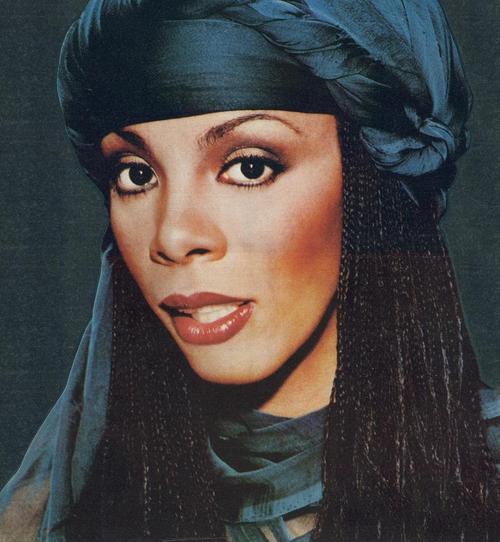
Showing posts with label Giorgio Moroder. Show all posts

Monday, June 15, 2026

Another Setting Radio: Body Rhythm #7

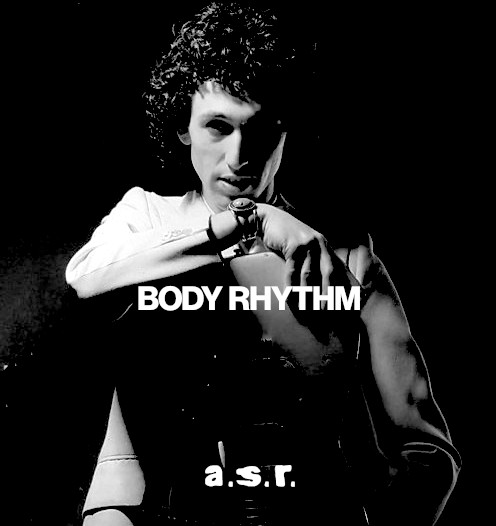
Photo: David Bendeth by André Duval (1979)


Here is Episode 7 of Body Rhythm for Another Setting Radio, broadcast on Sunday June 14, 2026.

Went for a more straight-ahead disco sound all the way through this time. As per usual, kept things fairly loose, a combination of things I had recently acquired and others that were close by. Though most of these songs are from 1977-1979, even the latest selection (from 1984) is still quite disco-esque. A few obscurities may be present, some may be both obscure and well-known at the same time. You'll get what I mean if you listen back.

Further details in the track notes below.


Body Rhythm #7:
Tracklist:


David Bendeth - Feel The Real (Special Disco Version)
Teresa Carpio - Love Hangover
The McCrarys - (Do You Wanna) Dance With Me?
Richie Havens - Going Back To My Roots
Donna Summer - Journey To The Centre of Your Heart
Hello - Feel This Thing (12” Version)
Dennis Dean - Lady Change
Pisces - Touch Me
Jocelyn Brown - Hot Natured Woman
Chain Reaction - Sweet Lady (Dance With Me)
Soul Children - Butt La Rose
Barbara Mason & Bunny Sigler - Locked In This Position (12” Version)
Celi Bee - Alternating Currents
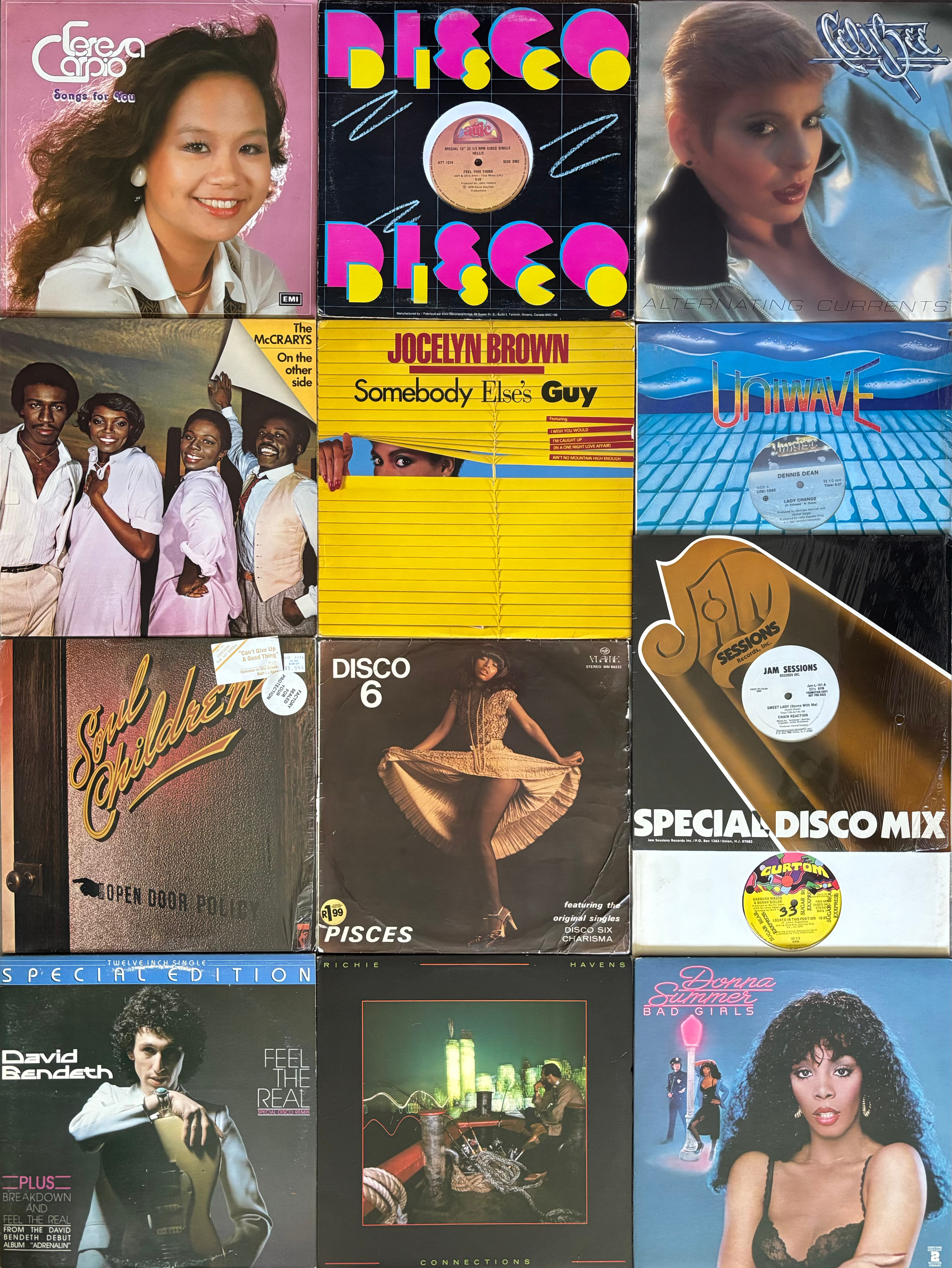

All the records played on show #7


Track Notes:

David Bendeth - Feel The Real (Special Disco Version): Artist/Producer/A&R and all-around music industry veteran David Bendeth released this classic jazz-funk tune in 1979 while working in Canada. Recorded in Toronto, this song eventually went on to become a classic particularly in the UK jazz-funk scene over the years. So much so, Incognito even covered it. Led by the smooth vocals of The Boyer Brothers, it's got a groove that almost perfectly anticipates what Jamiroquai would later do. Though its been revisited in covers and remixes over the years, the original still does it for me though, especially in the extended disco version here. For the curious, Bendeth has posted this song on his YouTube account and regularly responds to comments there.

Teresa Carpio - Love Hangover: From Hong Kong singer Teresa Carpio's 1977 album Songs For You, which I had picked up in a dolllar bin several years back. Sung in English, the album is basically a collection of straightforward covers of popular western songs from the time. Nothing particularly radical, her versions of "I'm Easy," "Fernando," and "Lovin' You" all stay pretty close to the originals. I suppose it's all very much in the vein of southeast asian karaoke culture and being half-Filipino myself, I'm fairly familiar. Of all the songs on the album, her version of "Love Hangover" stands apart for me. Even if they don't take too many liberties, they still lock into a really good groove here. Between the lovely work on the rhodes and Carpio's vocals, which may not be as flagrantly boozy as Diana Ross', but like everything else here - feel just loose and natural enough to make it all work well.

The McCrarys - (Do You Wanna) Dance With Me?: The gospel-inflected opening track from family group The McCrarys fourth album, On The Other Side from 1979. I had this album in storage for some years now, only recently pulled it out and gave it a good listen. Not sure what took me so long, but sometimes you don't need to dig any further than your own collection. The well-travelled Trevor Lawrence produced this album (note: he also produced the opening selection on Body Rhythm #4) and it's solid all the way through.

Richie Havens - Going Back To My Roots: Taken from folk singer Richie Havens' 1979 album Connections, which saw him making a stylistic pivot towards a more contemporary pop/soul sound. Produced by Charles Calello, I find it to be a pretty good effort. This song however, his version of Lamont Dozier's "Going Back To My Roots" is the major standout on the album. The grit and heft of Havens' voice over Calello's slick production turn this song into a real dancefloor burner. Personally, I'd go so far as to say that it even outclasses the original as the definitive version of this song.

Donna Summer - Journey To The Centre of Your Heart: While I'm not entirely sure of the divison of labour here, this feels and sounds to me like a perfect combination of Giorgio Moroder and Pete Bellotte's individual production styles. It has those trademark Moroder synths, plus a full horn section behind it for extra energy and momentum, which reminds me of the work Bellotte was producing for Marsha Hunt and Melba Moore around this time. Additionally, Pete Bellotte's underrated lyrical style, lofty and cinematic are on full display here also. Easily one of my favourite album tracks off Donna's signature Bad Girls album.

Hello - Feel This Thing (12” Version): One of the last singles by British glam band, Hello, heard here attempting to keep up with the times in 1979. Written by the Allen brothers - Jeff who was a member of Hello and Chris (AKA Chris Cross) who was the bassist in Ultravox. Interestingly, producer John Hudson would also later work with Ultravox, Midge Ure, Five Star and Tina Turner among others in later years. Here though, they seem to be going for something of a "Do Ya Think I'm Sexy" vibe, with the sax making things just a little extra sleazy. I found that the synth, sax and bass on this song mixed well with the same motifs present in the previous Donna Summer selection.

Dennis Dean - Lady Change: The second Can-Con entry on this mix, sung by Dennis Dean, who I don't know a whole lot about but who had apparently sang in a group called Black Connection with Geraldine Hunt and Pierre Perpall. Produced by Georges Monnier and Michel Daigle, the most promiment name on here, who had produced a number of Montreal disco records. Somehow the title of this song seems like an error, since he's clearly singing "lady chance," not "lady change." Either way, I thought the noodly synth and heavy vibes worked well coming off the previous selection.

Pisces - Touch Me: Getting a little more sensual here, this is my favourite track from a South African disco record called Disco 6 by an outfit called Pisces. One of those records from labels like EMI's Music for Pleasure imprint, consisting of studio band/s covering mostly popular hits. This particular song is one of the exceptions on the record, a killer original that completely hits the spot for me - deep and sensual with a strong disco tempo. No credit for the vocalist, but produced by Mike Pilot, who had done a number of albums of hit parade re-recordings as well as some now notable disco obscurities like Rene Riche and Blush.

Jocelyn Brown - Hot Natured Woman: A little sleeper track from one of the iconic voices of the past 40+ years in disco and dance music more broadly. This was from the EP bearing her major hit "Somebody Else's Guy," on the Prelude imprint Vinyl Dreams. Though this version was released in 1984, the string sweetening here gives this song more of a classic disco feel than the year would suggest. Interestingly, this song was originally released a couple of years prior in 1982 under the moniker Love Connection, with Jocelyn's vocals initially uncredited. The two Love Connection tracks with Jocelyn's vocals (this song and "Hot Blood") were both remixed and included on her Somebody Else's Guy EP. Though now using a mobility scooter, Jocelyn has been performing again in the UK recently and reminding people about some of the shady business behind her signature hit. All these years later, and she reportedly hasn't seen a dime from it.

Chain Reaction - Sweet Lady (Dance With Me): One of only a few singles released on the Jam Sessions label, and a slice of funky American disco from the band Chain Reaction. Likely led by drummer (and the record's producer) Harold Sargent, Chain Reaction released a handful of singles from 79-89, including what may be their best known (at least to me anyway), "Dance Freak" on one of Peter Brown's P&P labels. As far as this single goes, the groove chugs along so well here, I had to play it until the last note. This also happens to be an early Jellybean Benitez mix, which may also be part of the reason why.

Soul Children - Butt La Rose: Recently picked up a nice copy of Soul Children's second-to-last album, Open Door Policy from 1978 on Stax. Ended up buying it in large part after hearing this song. Written by black country singer/songwriter Obie McClinton the lyrics are frankly silly, extollng the virtues of "Butt LaRose [who] wears them sexy clothes." The groove is undeniably funky, though. "When she starts walkin', the streets start smokin'."

Barbara Mason & Bunny Sigler - Locked In This Position (12” Version): The title track of Barbara Mason and Bunny Sigler's 1977 duet album on Curtis Mayfield's Curtom label, this is one I haven't really played a whole lot. Co-written by T. Life (he who produced Evelyn "Champagne" King's "Shame") and featuring Bunny Sigler's signature tight and busy production style, it goes hard, fast and funky in a way that I love. Grooving at a good 126 BPM, and extended to a generous 10 minutes on the promo-only 12" (I didn't play it all the way through here), it's full-tilt boogie on this one.

Celi Bee - Alternating Currents: Taking things way down here with the title track of Celi Bee's Alternating Currents album from 1978. Recently picked up a nice copy, and this was one of the highlights of the album for me. Lyrically, I'm not sure if I'm enough of an elecrician to fully get the metaphor, but it's sung and arranged well enough that it doesn't fully matter. Lovely piece of slow disco, if you will, with a bit of a latin feel.


PREVIOUS RELATED ENTRIES:
another setting radio: body rhythm #4 (tuesday march 17, 2026)
another setting radio: body rhythm #3 (monday february 16, 2026)
disco delivery #64: melba moore - burn (1979, epic) (saturday april 14, 2012)

LINKS:
another setting radio
instagram: another setting radio
soundcloud: another setting radio archives
another setting radio: artist bio - thomas del pozo


CATEGORIES: BODY RHYTHM, CAN-CON DISCO

Thursday, September 11, 2014

Vintage Articles:
From Sex Goddess to Bad Girl to American Superwoman (An Interview with Donna Summer) -
by Barney Hoskyns //
New Musical Express - December 18, 1982


With all the fan excitement around the recently announced reissues of Donna Summer's back catalogue - starting with a reissue program covering most of her albums from the 1980s and into the early 1990's, as well as a proposed overhaul of her Casablanca catalogue, I thought this would be a good time to post this old article from from 1982. I was in a local record store recently, where they had a small bin of old rock magazines stashed in a corner. Looking through them, I noticed this issue of NME with a Donna Summer feature story. Surely whatever it was would be worth my two dollars or so..

Published right when she was promoting her Quincy Jones-produced self-titled album, her first away from the Moroder team; it seems the writer, Barney Hoskyns, wasn't exactly convinced (and didn't seem to think Donna was either). Seemingly happy to retreat from the craziness of the previous decade, as a born-again Christian, wife and mother yet on the professional side, trying to find her musical footing all over again; whether one agrees with the writer's assessment of her 1982 'Donna Summer' album, the article captures Donna in a definite transitional period in her life and career. Not the most in-depth piece I've read on her, but perhaps one of the sharpest.

____________________________________________


From Sex Goddess to Bad Girl to American Superwoman
Interview: Barney Hoskyns, Photos: Peter Anderson

Donna Summer, once the siren of the G-spot, has grown up to become a wholesome American woman with a religious conscience. Now she's searching for a new musical baby...

“He's okay
He's paid his rent, he's president
She's all right
She's on your TV screen tonight”

         Donna Summer hates Hollywood but tonight she's sitting in its very TV heart.

She's on The Merv Griffin Show, the mid-evening parley session hosted since before you were in diapers by the prime-time personification of homely silver-haired slickness. Out of all America's TV personalities, only Johnny Carson has asked more celebrities more meaningless questions than Merv.

There's an hour to go till taping time, and in her dressing room, making-up from an enormous bag of tubes and pencils, Donna Summer is cursing the trappings of womanhood. Somewhere inside there's still a tetchy Boston tomboy; you can feel the petulance in her sharp, nasal voice. There's no Bel-Air languor, no heavy-lidded resignation to the lifeless ritual that awaits.

If Hollywood is the last intact American community, Summer hasn't settled in. For her, stardom is just a job.

In an adjoining room sit a manager, a mother, a baby and a bodyguard. Baby fails to observe the thin line that divides family from showbiz and tries to bust her way into the dressing-room; Donna's mom, a short, sagacious lady wrapped in a well-to-do ball of matronly plumage, keeps the infant in check.

On this side of the line, Summer slaps some more rouge into her cheekbones.

“This whole business is such a drag for women,” she sighs. “A man can just jump in the shower, wash his hair, and he's ready. For a woman, the preparation takes hours. Sometimes y'know, I really hate being a woman.”


         Strange sentiments, you might think from a woman whose career has run an entire gamut of feminine images from goddess to prostitute to the current nouveau American superwoman. Is the maternal Donna Summer her own girl at last?

“Well, I just want people to know me as I am. I don't want to portray any false images as a person. I don't think there are many sex symbols left – I hope people have a more realistic opinion of me now. It's important that they know that stars, in a worldly sense, have a very important role in life, and it's a big responsibility to other people to conduct yourself in an appropriate way, so that other people who become successful don't think you're supposed to act in a certain way.

“I think that when rock groups act violent or nasty or negative to other people, I don't condone it. It's no good to shun any kind of people, even when they get on your nerves.”


         Through old lip-gloss, Summer's new worldly sense speaks loud, but has anything really changed for the better? Julie Burchill says “few things are such bets chartwise as a Bible-bashing black” but actually 'Donna Summer' isn't doing particularly well. Burchill advises Prince to haul his ass over to Summer's songwriter – but which one of the album's credited 17 does she mean?

Sex may not shock, but if truth is to be told, the last thing Donna sold was that hot Moroder stuff on Sunset Strip.

The fact that Britain has taken 'State Of Independence' to its heart doesn't in itself alter the obvious fact: that the extraordinary pneumatic icon created and patented in a German laboratory – a trans-American goddess of the computer age – has been reduced to a clothes-horse. Style has become a front.

In conjunction with God, inc, Quincy Jones and the Hollywood all-stars have pulled down Moroder's subliminal statue of liberty and given you – Donna Summer, A Woman. Like her transatlantic inversion Grace Jones, the former siren of the G-spot is just... living her life.

All very well, you might say. That Bad Girl riff was degrading, exploitative trash. It turned up some awful good sounds though, didn't it? I mean, like a whole world better than this set. You see, with Moroder and Bellotte and Faltermeyer, Summer was part of a team and a perfect concept: techno-sleaze. Shove the ethics for a moment: it worked. More, it was one of the great moments of American history!

With Jones and Temperton, on the other hand (and as many Porcaros as you can fit in one studio), Donna Summer is just another artiste on another nobodaddy's books. 'Donna Summer' is the album where “the woman” steps out of her shell like Venus reborn from a recording console.

Mind, you could see it coming. 'The Wanderer' was an obvious if bizarre transition state (a high fashion tramp waiting for the train to arrive), and Geffen scrapped a further Moroder-produced album that no one wants to talk about... but to give Donna Summer a once-over Diana Ross job, to make a tasteful superstar record even more brazen than 'Diana', that's nothing short of criminal waste.

Musically, 'Donna Summer' is another case of picking up on the swings of what you lose on the roundabouts. A party bag of jarring, overdone tricks. If you don't like her rocking out with Springsteen (US Bonds meets Boney M), try her off-the-wall ('In Control'); or should you fail to appreciate the meticulous Donna-goes-'40s gloss of 'Lush Life', there's always the full-blown Hare Krishna Hollywood of 'State'.

Folks, there's sommat for everyone, but nothing for someone that worships the lost goddess of 'Once Upon A Time' and swims yet in the rapturous ethereal strains of 'Now I Need You' or 'Working The Midnight Shift'. For the bereft and abandoned, the only consolation is the late Patrick Cowley's 16-minute 'mega-mix' of 'I Feel Love' – discreetly slipped out by Casablanca in a British-only release and clearly pointed at the flourishing meat market of Earl's Court.


         Enough of personal grievances. Let's talk. As it happens, I don't get enough time to press my case with the lady herself. It would have taken a very gentle build up to argue that the hooker of 'Bad Girls' was a more liberated object of our attention than the chic Barby (sic) doll of 'Donna Summer'. Especially with a born-again Christian. So instead, I imagine to myself that I was reporting for People magazine.

Considering Giorgio Moroder replaced unpredictable humans with programmable machines, was it easier working with him or Quincy?

“It was much easier working with Giorgio, for sure, because I kinda grew up with him and Pete (Bellotte), and to make the transition to a new producer is very hard. It's like starting all over again, learning to walk again, learning what to say and what not to say.”

Did you feel comfortable with all the songs, say 'Lush Life', which struck me as a little forced?

“That particular song was real hard. It broke my chops trying to sing it, only because you really have to try to complement the backing without making something that it's not. I had never sung, nor personally heard the song before, so it became a real labour of love.

“As a matter of fact, Quincy produced that album with almost no help from me – which is unlike me, but at the time I was pregnant, so it's really more his album.”

It doesn't surprise me. Did you invite the heavenly choir of Michael Jackson, Kenny Loggins, Dyan Cannon, et al?

“Um. No, Quincy did. When Quincy calls, people drop what they're doing.”

'Lush Life' is a pretty cynical song, isn't it? “Romance is mush, stifling those who strive / I'll live a lush life in some swell dive / And there I'll rot with the rest / Of those whose lives are lonely too...” A lot of Americans today are lush – how many are just plain lonely? Or does love always find them in the end?

“I think generally an awful lot of people are confused about what love is. They're not able to give love because they've never really known it. What they consider love is sex, possessiveness, and juvenile infatuations that don't last very long.

“When I speak of love, I mean love as in 1 Corinthians, 13, which tells you exactly what love is and what it is not. Even now I'm reconstructing my point of view of love. People fight and kill each other in the name of love, and that's wrong. Love doesn't do these things, so they're not love. They're bitterness, they're hatred, they're anxiety.”

Do you really believe what you sing in 'Livin' In America', that it is a country “of the people, for the people, and by the people”?

“That's not what I believe it is, but what it should be. What I believe is we have to go back to the beginning. We shouldn't lose faith because we are the people who can change it. We have the power and we should use it.”

But when you sing “You know the time will come / For each and everyone”, you know that's not true...

“It's symbolic when I say that. Whether it's black or Chinese or Mexican their time will come and they're going to have to focus on that problem and deal with it – unlike, say, Germany, where if they don't like a certain kind of people they just get rid of them.”

Woah! Talking of Germany, do you think the fabled Euro-disco sound was as innovative as most people seem to?

“I think in its time, yeah, it was very different and I'm thankful that I was the person it was designed for. But I don't look back, I look forward, and what I'm searching desperately for now is a baby in music, a new musical baby, as if I was pregnant and waiting for the birth of a child.”

What do you think of 'Once Upon A Time', in my humble opinion your incontestable masterpiece?

“You're one of the first people to have said that, but I think that was structurally the best album I've ever recorded.”

Were you disappointed by the reception and sales of 'The Wanderer'?

“In my opinion the album did great, because prior to 'The Wanderer' album I had always gone out on the road with every album. I'd always been there pushing the record on TV and radio.

“ 'The Wanderer' had no publicity of any kind, not in America at least, and I wasn't even there to give people a new image. As far as image went, it was a blank. It was riding on whatever momentum had been set for two years, plus I was in a law suit here and having babies there.”

So you didn't feel like you were out in the cold?

“No, because you can't always do business. Sometimes your life becomes your life. For a couple a years I was playing real life!”

What's it like being a mom?

“Well, it's kinda confusing, it's hectic, but I still wish I'd started having kids earlier.”

How do you protect your privacy?

“I find the older I get, the longer I've been successful, the easier it becomes. I guess because I feel more comfortable with it, people feel more comfortable with me. I have a bodyguard who lives with me, but he's more for my children. When I go out, I go out alone.”

Does being the mother of three children mean you won't be performing live?

“I don't know. Right now I'm trying to recuperate from the last baby, and I try not to project forward more than a month at a time. If I was just a normal person who didn't have other worldly concerns, maybe it wouldn't be so bad.”

Do you enjoy performing live?

“Oh, it's the best. It's instant reward – or instant disapproval.”

Do you like LA?

“Nope. Not at all. I'd love to live in the country, by a lake someplace, where I could ride horses or just be away from it all.”

Would you say you were a good businesswoman?

“My manager says, yes!”

Is your life isolated? How many close friends would you say you had?

“I have a lot of people that I love, but they're more like my family. Is my life isolated? Oh yes, there's certainly not a lot of freedom. You have to be careful what you say, and even if somebody's nasty to you, you have to be exceptionally nice to them. When you assume a role, you have to continue to portray something that you may not be, so as soon as you feel a person is watching, no matter who it is, you have to be acting that role out.

“But I think my manager would tell you that I'm pretty much the same person at home as when I'm out. I may have more make-up on, but.. hey, don't I seem like a natural person to you?!?”


         Before I can plead ignorance of the meaning of the word “natural”, there's an abrupt knock at the door. It's Nellie, her personal assistant, shouldering her way in and calling time in a curious Eliza Doolittle half way to refinement English accent. She informs Donna that Merv is waiting.

Two minutes later, on camera, Griffin blands out with a chat-show query to end 'em all.

“Tell me, Donna, is it true that every recording star needs an image?”

Openly grimacing at the banality of this question, Summer stalls, but quickly composes herself to meet its bold challenge.

“Well, Merv, even a tomato has an image.”

Donna Summer is no ordinary tomato, but her current phase lacks the necessary fatal glamour, perhaps even a certain subtle vulgarity. With her extra-curricular activities as a mother taking up so much time, nothing is coming from Donna herself. Perhaps the musical baby is a reunion with Giorgio Moroder.

As it says in Corinthians, “when that which is perfect is come, then that which is in part shall be done away”.

____________________________________________


CATEGORIES: VINTAGE ARTICLES, INTERVIEWS

Friday, May 18, 2012

Donna Summer (1948-2012)

Photobucket

This year has already seen so many high-profile losses in the music world: Whitney Houston, Etta James, Don Cornelius and Dick Clark. More recently, Adam "MCA" Yauch. Stax Records' bassist Donald "Duck" Dunn, in the disco realm, singer Belita Woods of the group Brainstorm earlier in the week; as recently as this Wednesday, Chuck Brown, Washington DC's Godfather of Go-Go. And now, Donna Summer.

Feeling emotional over the loss of a celebrity, in the way one would over a death in the family is always slightly uneasy for me. However, truthfully, out of all of them, this is the one which hurts the most. It's hard to fathom the loss of someone like Donna, someone who was so central to disco so much a symbol of it's success, of the times themselves.

I still recall as a ten year old, going to garage sales in our neighbourhood at the time, usually with my cousin in tow, she was a young 20 something girl who had recently immigrated to Canada at the time and had been living with us. She may have been my cousin and not an immediate one, even, but became like the sister I never had. She was so fascinated with these garage sales, these people giving away their possessions for practically pennies, that we would take them in whenever we got a chance. Thanks to these garage sales, she ended up taking an interest in vinyl for a brief moment and came back from one of these expeditions with a copy of Donna Summer's "On The Radio - Greatest Hits, Vol.2." From the groove of "Hot Stuff" and " Bad Girls" to the vocal showcases of "MacArthur Park" and "On The Radio," I would ponder the album cover as I listened (something only really possible with vinyl), wondering who was this woman? This woman with this voice soaring with feeling and clarity. I'm sure that I listened to that album more than my cousin ever did. In fact, I'm certain she barely even got to touch it once I got a hold of it. When I got around to the flipping the record over and hearing the relentless, throbbing pulse of "Sunset People," there was no turning back. I don't think any song had captured and transported my ten year old imagination more than that song did. People made records this forward thinking then? How was that possible!? A few years later, when I started taking a more serious interest in disco and in music generally, Donna Summer was naturally one of the first artists I had sought to explore.

Having fought a private battle with cancer that few knew about until now, her death seemed to come almost completely out of nowhere. She had announced, at the end of 2010, after touring for much of that year, that she was planning to take time off to record and release two albums, an album of standards and a dance record. Reportedly she had been working on one or both of them before she passed. It had been circulating among fans that she was working on her standards record with famed producer, the modern master of MOR, David Foster. Her last major public appearance had been on his David Foster & Friends concert in October of last year, so it seems entirely probable. Her final single, "To Paris With Love," originally recorded for Louis Vuitton, released in 2010, would be her 14th #1 on the Billboard Dance charts.

Since then, there had been precious little news of note. No tour dates on the horizon, no real updates on recording. Viewing one of the Donna Summer fan forums off and on, the relative silence of the past year had left some fans almost apoplectic. It's even more silly to read some of those posts now, fans will be fans, after all (especially on internet forums), however it only reinforces the absolute shock of it all. It's entirely understandable now, the woman probably wanted to avoid the media deathwatch that inevitably preceeds most high-profile deaths today. After all she had given, she was and is entitled to her dignity. It seems she was in control of her circumstances, up until the end. The loyalty of those close to her speaks volumes about her strength of character.

With the torrent of obituaries and celebrity tweets and statements flowing, New Yorker pop critic Sasha Frere-Jones had tweeted in response: "2012, and people feel like they need to save Donna Summer from disco to celebrate her. She WAS disco and disco won the war." He's absolutely right, and it's absolutely true. With Giorgio Moroder and Pete Bellotte, she crystalized the sexual revolution and the hedonism and liberation of disco with "Love To Love You, Baby." Together, they would set one of the most important benchmarks of the genre. In 1977 Summer, Moroder and Bellotte had, to steal a phrase I read years ago, split digital skies with "I Feel Love." Today, those steely synth pulses and sensual vocals are still reverberating across the popular music landscape. Like Disco at large, she defied old boundaries around "black" and "white" music. She had never been R&B, nor strictly pop. A church rooted black girl from Boston, influenced by both Mahalia Jackson and Janis Joplin, she began her career fronting a rock band and later on the German stage and studio, backed by European producers. The varied influences and styles she incorporated, not just in her disco material, but throughout her career embodied the synthesis of influences that lay at the true heart of disco.


Donna Summer - Love to Love You Baby (Live, German TV)
Uploaded by fritz51344

There were many, who in the quest for a popular reappraisal of disco, felt the need to separate disco into two classes. In a refrain that still gets played today, many were often quick to pooh-pooh the popular disco hits of the time in favour of the disco underground. The former was, like everyone had said, the fake, cheesy pop shit that was rightfully disdained; the latter - that was the real deal. In an effort to try and fit disco into some clichéd rockist narrative of authenticity, many seemed to think the only way to do that was to separate disco from itself. However wrong-headed it often was, that dishonour never extended to Donna Summer. It may have extended to Anita Ward, to the Village People, to the Bee Gees, but not Donna. To do so would have likely run the risk of revealing oneself as someone who didn't understand the real weight of her presence and her impact on disco, on popular music, as someone who just missed the point altogether. You didn't touch the Queen. Like the music of Chic, Donna was someone whose records crossed all of those boundaries, someone who was beloved among all walks of the disco faithful. As Alex Needham wrote in The Guardian, Donna Summer's disco was, indeed, as radical as punk.

Certainly, Disco was never short of great singers; auteurs, even. However, aside from her talent and success, what separated Donna Summer from her peers was that Summer was ambitious in ways that few of them were. There weren't many singers at the time inside or outside of disco who could move from one benchmark to another, pulling off expansive concept double-albums like "Once Upon A Time" and "Bad Girls," pursuing these grand artistic ambitions with unprecedented quality and frequency. And yet, she did. And it wasn't just because she had Giorgio Moroder in her corner, either. Surely he deserves a lot of credit, however it's often forgotten that many of Donna Summer's finest moments credited Summer, Moroder and Pete Bellotte equally. Donna was a singer who held artistic ambitions that, for a time, seemed to blossom further with each successive release.

In fact, Donna herself continued to make some good (even sometimes great) records in the 80's after the peak of disco, apart from Moroder and Bellotte. One of her biggest hits (and her most coherent contribution to the MTV age), "She Works Hard For The Money" was made without Moroder or Bellotte. Her final record for the Geffen label, "All Systems Go" (1987) is possibly one of her best from the time and certainly one of her most overlooked. Giorgio Moroder and Pete Bellotte would also make great records apart from Summer and from each other. Moroder's own influential work, especially, needs little introduction here. However, nothing that either of them did apart from each other would ever quite reach that elusive apex of enduring popularity and influence the way their work together with Donna Summer would.

She wasn't just the First Lady of Love, one of the first titles bestowed upon her, the black Marilyn Monroe, cooing breathlessly to the throbbing disco beat; she could belt as soulfully as the best of them, she could tackle rock and country, even (she made her home in Nashville for many years, after all). Creatively, she seemed to chafe at stylistic boundaries, especially later in her career. She attempted to cross them the best way she knew how, without alienating her audience. Her now final album "Crayons" (2008, Burgundy) was proof of that. Her work often displayed an underplayed eclecticism, an eccentricity, even, that belied her 'Queen of Disco' title. Yes, she was that, but she also held a desire to reach beyond it whenever possible.

In the midst of the relative silence of the past year, released barely a month ago, Donna collaborated on a hip-hop track with her nephew, up and coming rapper O'Mega Red, on a track entitled "Angel." A song about lost loved ones watching over the living, with Donna singing the hook and melody, it was to be the very last release she would be part of in her lifetime. As the angel in the background, she had never sounded more comforting, more peaceful. It was to be her first and last hip-hop collaboration, one that was strangely prophetic and all the more poignant now that the voice is no longer with us. Rest in Peace, Donna Summer.

Further reading: Excellent pieces from Eric Henderson at Slant Magazine, Michaelangelo Matos in The Atlantic and Christian John Wikane at PopMatters (reprinted from 2008) on the life and legacy of Donna Summer..


PREVIOUS RELATED ENTRIES:
I LEFT MY HEART IN LOTUSLAND.. (UPDATES AND RE-UPLOADS) (SUNDAY OCTOBER 26, 2008)
COLOUR IT A COMEBACK? (WEDNESDAY MAY 28, 2008)
DONNA SUMMER/CYNDI LAUPER ALBUM UPDATES (THURSDAY MAY 15, 2008)
NEW DONNA SUMMER ALBUM COMING IN MAY.. (WEDNESDAY FEBRUARY 20, 2008)
BBC RADIO 2: CLASSIC SINGLES - I FEEL LOVE (SUNDAY DECEMBER 30, 2007)
TWIGGY DOES DISCO.. (WITH A LITTLE HELP FROM DONNA) (TUESDAY SEPTEMBER 18, 2007)
NEW DEAL FOR DONNA (THURSDAY AUGUST 3, 2006)
DONNA SUMMER - I GOT YOUR LOVE (MONDAY JANUARY 16, 2006)


DISCO DELIVERY #64: MELBA MOORE - BURN (1979, EPIC) (SATURDAY APRIL 14, 2012)
DISCO DELIVERY #52: STAINLESS STEAL - CAN-CAN (1978, WARNER BROS.) (TUESDAY FEBRUARY 5, 2008)
DISCO DELIVERY #40: MUNICH MACHINE - A WHITER SHADE OF PALE (1978, CASABLANCA) (SUNDAY APRIL 29, 2007)
DISCO DELIVERY #14: SUZI LANE - OOH LA LA (1979, ELEKTRA) (SATURDAY APRIL 8, 2006)
DISCO DELIVERY #5: GIORGIO MORODER - FROM HERE TO ETERNITY (1977, OASIS/CASABLANCA) (FRIDAY FEBRUARY 3, 2006)

LINKS:
NEW YORK TIMES - DONNA SUMMER, 1948-2012: THE QUEEN OF DISCO, WHO TRANSCENDED THE ERA (BY JON PARELES) (THURSDAY MAY 17, 2012)
NEW YORK TIMES - MEMORIES OF DONNA'S DISCO NIGHTS (BY JACOB BERNSTEIN) (FRIDAY MAY 18, 2012)
THE TELEGRAPH - DONNA SUMMER, 'QUEEN OF DISCO', DIES AGE 63 AFTER CANCER BATTLE (BY ANDREW HOUGH) (THURSDAY MAY 17, 2012)
THE GUARDIAN - DONNA SUMMER'S DISCO WAS AS RADICAL AS PUNK (BY ALEX NEEDHAM) (THURSDAY MAY 17, 2012)
SLATE - DONNA SUMMER, 1948-2012 (BY JODY ROSEN) (THURSDAY MAY 17, 2012)
THE GUARDIAN - DONNA SUMMER'S DEATH: POP MOURNS SINGER WHO TRANSFORMED DANCE MUSIC (BY TOM MCCARTHY) (FRIDAY MAY 18, 2012)
BBC NEWS - PRESIDENT OBAMA LEADS DONNA SUMMER TRIBUTES (FRIDAY MAY 18, 2012)
MTV HIVE - DONNA SUMMER SAW AND SOUNDED BLISS (BY ANDY BETA) (FRIDAY MAY 18, 2012)
THE ATLANTIC - DONNA SUMMER'S HEAVY-BREATHING BLUEPRINT FOR POP (BY MICHAELANGELO MATOS) (FRIDAY MAY 18, 2012)
SLANT MAGAZINE - DONNA SUMMER (1948-2012) (BY ERIC HENDERSON) (FRIDAY MAY 18, 2012)
POPMATTERS - SHE'S A RAINBOW: A TRIBUTE TO DONNA SUMMER (BY CHRISTIAN JOHN WIKANE)
BILLBOARD - ROCK HALL REGRETS DONNA SUMMER SNUB (BY MARC SCHNEIDER) (FRIDAY MAY 18, 2012)

CATEGORIES: IN MEMORIAM..

Sunday, December 30, 2007

BBC Radio 2: Classic Singles - I Feel Love


Listen: BBC Radio 2: Classic Singles - I Feel Love

Just a couple of things to acknowledge before 2007 draws to a close. First of all, Donna Summer, the Queen of Disco herself turns, believe it or not, 59 on the 31st. Although some of her fans on the message boards out there might fuss about her weight and her wigs lately and, perhaps rightly, lament her recent snub by the Rock & Roll Hall of Fame; by all accounts, at nearly 60, the lady still sounds remarkable in concert. Not to mention, if there was ever a poster girl for "black don't crack," she'd be it.

Secondly, although I'm around eight months late for this, her seminal classic, one of the most iconic Summer/Moroder/Bellotte compositions, "I Feel Love" also turned 30 this year.. Although it was an anniversary that went relatively unacknowledged, its influence certainly has not. Reportedly called "the sound of the future" by Brian Eno upon hearing it for the first time, "I Feel Love" was one of the touchstones of not only disco, or even Donna Summer's career, but of the pop music landscape in general. Along with all the other groundbreaking electronic records of its time, its success seemingly opened the floodgates for all manner of electronic experimentation (and imitation) on the dancefloor and beyond, solidifying the legacy of its producer Giorgio Moroder, perhaps just as much, if not moreso than Donna herself. Arguably much of what could be considered 'electronic music' today owes a debt to its legacy...

Released in May 1977 and included on Donna's "I Remember Yesterday" (1977, Casablanca) LP, "I Feel Love" was, in my opinion, the one shining moment on what was likely the weakest of Donna's otherwise excellent string of disco concept albums. Although not necessarily a bad album, one couldn't help but feel that the whole time travel/nostalgia concept probably sounded much better on paper than on record. Between the cover and its unflattering deer-in-headlights photo of Donna, and a largely unconvincing mish-mash of disco styled nostalgia, "I Feel Love," the album's 'song of the future', with its powerful, pulsing sensuality, placed right at the end of the record, effectively obliterated everything else..

Granted, most people reading this are likely well aware of its significance, so consider this a little bit of preaching to the coverted, so to speak.. However, in honour of its 30th anniversary, I thought this might be a good opportunity to put up the audio from the Classic Singles documentary on "I Feel Love" by the good people at BBC Radio 2. The broadcast, which originally aired November 2005 (which I'd been holding on to ever since), runs approximately 30 minutes and gives what is probably one of the most recent and comprehensive overviews/tributes to this song that I know of. Hosted by the one and only Alison Goldfrapp, herself no stranger to the Moroder influence, the program runs like a documentary on not only the influence and making of "I Feel Love" itself, but also of Giorgio and his evolution as a producer up to that point.

Although not nearly as detailed and in-depth as Radio 2's "The Record Producers" doc on Nile Rodgers from nearly a year ago, they manage to cover a good bit of ground in its 30 minutes, with much of the program being devoted to Giorgio speaking in his own words. Although unfortunately Donna herself didn't take part in it, they included some choice confessionals from the likes of Jimmy Sommerville, Debbie Harry and the Scissor Sisters' Ana Matronic, who manages to sneak in the best quote in the whole thing. I'm sure they could have easily gone an entire hour, but even within the 30 minutes, Giorgio still manages to shed some light on some pretty interesting points regarding the making of "I Feel Love" and his own feelings about its influence..

Although it has been argued that Giorgio could have had anyone sing "I Feel Love" and made it a hit, given the feel of Donna's essential yet often dismissed vocal stamp combined with her immense popularity at the time, it's doubtful whether any other combination could have made quite the same impact or created the same magic. Although not among her most explicit, "I Feel Love" still remains one of Donna's sexiest moments on record, with the effortlessly sensual caress of her voice providing the perfect counterpoint to the cool, mechanical precision of the music. Aside from groundbreaking, it's nonetheless a wonderfully sublime moment of shiny, glittering electro-eroticism; the hypnotic, throbbing pulse of its unforgettable bassline resonating today, just as it did thirty years ago.

Also, just in case anyone's in need of additional visual aid after all that, here's a wonderful vintage live performance of "I Feel Love," complete with synths and robot dance:


Donna Summer - I Feel Love (Live)
Uploaded by DonnaSummerVEVO


..and here's yet another, more recent (and more polished) live performance from her 1999 VH-1 "Live & More..Encore" special:


Donna Summer - I Feel Love (Live & More..Encore! - 1999)
Uploaded by EndlessDonna


PREVIOUS RELATED ENTRIES:
DISCO DELIVERY #40: MUNICH MACHINE - A WHITER SHADE OF PALE (1978, CASABLANCA) (SUNDAY APRIL 29, 2007)
BBC RADIO 2 - THE RECORD PRODUCERS: NILE RODGERS (SATURDAY JANUARY 6, 2007)
NEW DEAL FOR DONNA (THURSDAY AUGUST 3, 2006)
DISCO DELIVERY #14: SUZI LANE - OOH LA LA (1979, ELEKTRA) (SATURDAY APRIL 8, 2006)
DISCO DELIVERY #5: GIORGIO MORODER - FROM HERE TO ETERNITY (1977, OASIS/CASABLANCA) (FRIDAY FEBRUARY 3, 2006)
DONNA SUMMER - I GOT YOUR LOVE (MONDAY JANUARY 16, 2006)

PURCHASE:

DONNA SUMMER - THE DANCE COLLECTION CD (INCLUDES 'I FEEL LOVE' 12'' VERSION)
CD UNIVERSE | AMAZON.CO.UK | AMAZON.COM

DONNA SUMMER - BAD GIRLS (DELUXE EDITION) (2 CD) (INCLUDES 'I FEEL LOVE' 12'' VERSION)
AMAZON.COM | CD UNIVERSE

LINKS:
DONNA SUMMER TRIBUTE SITE
DONNA SUMMER - I FEEL LOVE @ WIKIPEDIA
DONNA SUMMER - I FEEL LOVE 12'' @ DISCOGS
DONNA SUMMER - I FEEL LOVE (PATRICK COWLEY REMIX) 12'' @ DISCOGS
DONNA SUMMER - I FEEL LOVE (PATRICK COWLEY REMIX) 12'' @ DISCOMUSIC.COM
DONNA SUMMER - I FEEL LOVE (REVIEW) @ ALL MUSIC GUIDE
DONNA SUMMER - FEEL LOVE @ ROLLING STONE
DONNA SUMMER - I REMEMBER YESTERDAY LP @ DISCOGS
DONNA SUMMER - I REMEMBER YESTERDAY LP (REVIEW) @ WARR.ORG
GIORGIO MORODER @ WIKIPEDIA
GIORGIO MORODER INTERVIEWS
GIORGIO MORODER @ ALL MUSIC GUIDE
AND WE DANCED - I FEEL LOVE
SONGFACTS - I FEEL LOVE

CATEGORIES: MINI DELIVERIES, ARTICLES & RAMBLINGS, INTERVIEWS, DISCO NEWS, VISUAL DISCO

Sunday, April 29, 2007

Disco Delivery #40:
Munich Machine - A Whiter Shade of Pale (1978, Casablanca)


Listen on Spotify:
Munich Machine - A Whiter Shade of Pale
Munich Machine - It's For You
Munich Machine - It's All Wrong (But It's Alright)
Munich Machine - La Nuit Blanche
Munich Machine - Love Fever
Munich Machine - In Love With Love

It's been a while since I've put some Giorgio Moroder up here and since this album has been a favourite of mine for a little while now and a frequent listen lately, I figure why not now?

Munich Machine was, for the most part, a moniker for the fairly regular cast of studio musicians on many of Giorgio Moroder's productions with Pete Bellotte (and others) which, at least on this album included the likes of Keith Forsey, Geoff Bastow, Mats Björklund, Dino Solera and singers Lucy Neale, Gitta Walther (AKA Jackie Robinson), and Claudia Schwarz among others. Aside from the three albums released as the Munich Machine, the "Machine" would also be anonymously credited for the "accompaniment" on a few of Donna Summer's albums, Roberta Kelly's "Trouble Maker" album and given top billing on the single Moroder produced for his sax player Dino Solera to name a few...

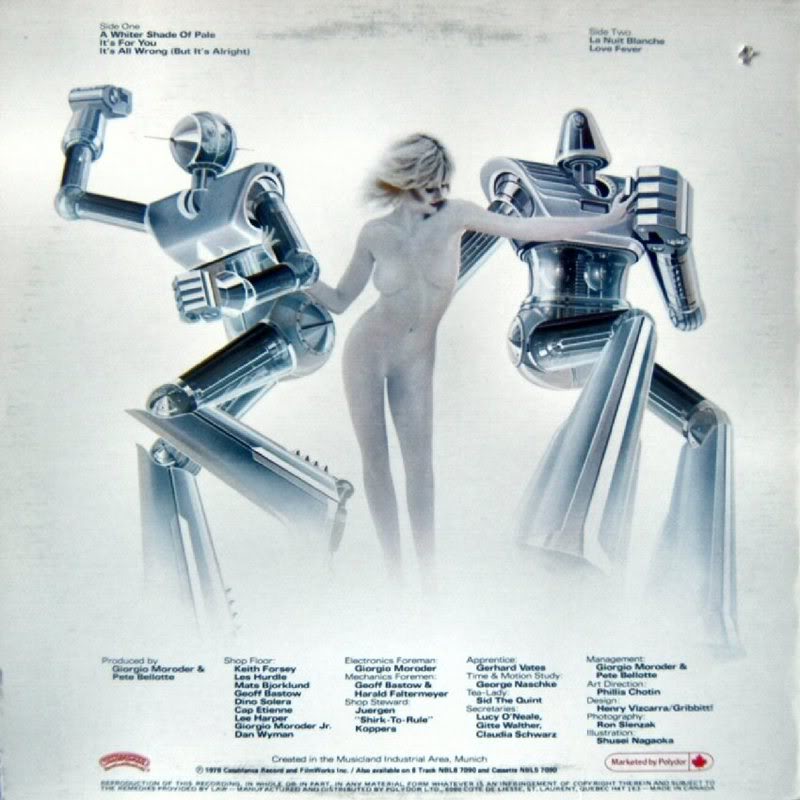
As well, the "Munich Machine" was not just a group of musicians, but also something of a brand for their distinct sound. In a 1978 interview with NME, Moroder branded the distinct sound of his productions and musicians as the "Munich Machine Sound" which the article characterized as their own disco-era, European equivalent of the Motown Sound. Evidently one of the common criticisms of the "Munich Machine Sound" was it's defined, formularized sound, a criticism which as the article points out, doesn't hold up quite as well when compared to the similar assembly-line, organized industrial quality of the Classic Motown sound, for example. Evidently the cover concepts on the first two Munich Machine albums with the dancing robots and the curious credit listings on this LP (musicians credited as the "Shop Floor," singers as the "Secretaries," engineer as the "Shop Steward" etc..) were, at least in part, a reply to that criticism (evidently Rinder & Lewis weren't the only disco producers with a sense of humour). Moroder himself explains it further in some key excerpts from that interview:

"Myself, I liked very much the sound of Motown in the early times, up to seven or eight years ago, but now they do not have such a recognisable feel. Mind you, the actual quality of their first recordings was not good. You know, they recorded in a little building and so on. But the music was good, so very good - and that is why they succeeded."

And quite why Moroder's work should be so disparagingly referred to in some circles as 'product' (as in production line, etc.) when Tamla (Motown) themselves formularised their songwriting - Holland, Dozier, Holland et al - and sound with similar success and without risking culpability is beyond this pair of ears. Tamla even worked out of a similarly and supposedly 'industrial' environment in Detroit.

All of which I put to Moroder, asking more specifically about the relevance of the credit listing on the 'Whiter Shade Of Pale' Munich Machine release (cf. 'shop floor, electronics foreman, mechanics foreman, shop steward, apprentice, time and motion study').

"This, you know, this is just another joke. We know people think this about what we do, so we play up to them. It is the same with the dancing robots on the covers of both Munich Machine records.

"All this talk of machines and industry make me laugh. Even if you use synthesisers and sequencers and drum machines, you have to set them up, to choose exactly what you are going to make them do. It is nonsense to say that we make all our music automatically.

"I know for myself how difficult or how easy it was to get a certain sound. Sometimes it's easy, sure, but as often as not it is at least ten times more difficult to get a good synthesiser sound than on an acoustic instrument. And of course we organise things - who does not? We have to be professional about this. There is nothing wrong with this, surely?"

Looking back today given their success and influence, the Motown comparison rings even more true. Much like Motown had been at it's height, at the time Moroder and company were at the helm of what was undoubtedly one of the most identifiable, defining sounds of the disco era.

As far as 'Munich Machine,' the recording project goes, the best known Munich Machine single would probably be the slick and sexy 15 minute disco workout "Get On The Funk Train" (which reached #7 on the Billboard Disco charts in 1977) off the first and excellent Munich Machine album. Although all three Munich Machine albums are worthwhile (the first two perhaps more so than the last, "Body Shine"), I'd say out of all three, this one has to be my personal favourite. The first album was essentially made up of sped-up, largely instrumental remakes of the so-called "soft-disco" productions from the albums he and Bellotte did for Donna Summer ("Love To Love You Baby," "Try Me I Know We Can Make It"), Roberta Kelly ("Trouble Maker"), as well as from Giorgio's own "Knights In White Satin" LP ("I Wanna Funk With You Tonite") which were all augmented with some heavy, loopy synths here and there for good measure.. This particular album, however, bears less resemblance to that earlier Munich euro-disco sound and a great deal more of the cooler, sharper and decidedly progressive electronic stamp of "I Feel Love" and "Chase" that would eventually become Moroder's most enduring trademark.

Looking back at his output, 1977 and 1978 especially seemed like banner years for Moroder and company. Between "I Feel Love," the first Donna Summer double-album "Once Upon A Time," "From Here To Eternity," the Midnight Express soundtrack and his Battlestar Galactica album which spawned the extended electro symphony that is "Evolution," Moroder seemed to be at the height of an extraordinarily fruitful period, both creatively and commercially.

In addition to all of that, last but certainly not least, I'd also include the "Whiter Shade of Pale" album in that list of notable Moroder productions from that time. Written (aside from the title track, of course) and produced by Giorgio Moroder and Pete Bellotte, this album is perhaps not as well-known as some of the other Moroder-produced works from the time, yet it's not only an excellent, cohesive album but one which seemed to perfectly bridge elements of his more conventional euro-disco/pop leanings with his more adventurous electronic ones ("Evolution," "From Here To Eternity")..

Additionally, this album also seemed like something of a springboard from which to launch vocalist and Moroder protégé, Chris Bennett, who appears beautifully and artfully photographed (along with Shusei Nagaoka's amazing dancing robot artwork, reprised from the first Munich Machine album) on both the front and back covers. Despite that and the album's subtitle ('Introducing Chris Bennett'), this wouldn't be her first release with Moroder. Prior to this, Moroder's earliest collaboration with Chris Bennett was a little-known 7'' single from 1976 called "Disco Man" produced by Giorgio & Pete and released in the UK on a label called Bradley's Records. Although this may not have been her first showcase and, in my opinion, her best vocal performances would come later on the Giorgio & Chris album and Midnight Express soundtrack; nevertheless, this album still represented the first true and full introduction to both her image and her crystal clear voice..

As far as the music goes, moreso than any of the other Munich Machine albums, this one also displayed, perhaps most boldly and beautifully, a flawless combination between that cool, forward-looking, hypnotic electro pulse and the exquisite orchestration and instrumental arrangements, which seem somewhat overlooked these days given Moroder's reputation as a pioneer in electronic music. Putting that aside for a moment, it was not just the electronics, but often the combination between the orchestral and electronic which not only set him apart as a producer, but also, generally speaking, disco as a genre.

One track which displays that combination especially well would be the second track on the album, "It's For You." The combination is evident right from the beginning, which starts off captivating the listener with a heavy robotic pulse and spacey synth, which is then quickly augmented by what sounds like a flute along with those gracefully sublime string arrangements. The beautiful juxtaposition between the two elements practically define this track, with the dreamy elegance of those strings both complimenting and contrasting the mechanical synth sounds, making this track both gentle and intense all at once.. Bennett's vocals exhibit a similar sort of juxtaposition, alternating between a calculated cool on the verses, and an almost pleading intensity on the title refrain with those echoed, multiplied vocal effects..

The title track, a cover of the Procul Harum classic "A Whiter Shade of Pale," with it's brilliant melody and elaborate lyrics (which no one really seems to understand), is perhaps the best display of Bennett's graceful vocals on the album.. Out of all the others, her vocals on this one seem to be more dynamic, expressing a greater range and seemingly hinting at things to come on future efforts.. Granted, the thought of a disco version of this track might seem a little far-fetched at first, but somehow everything seems to gel and the whole thing just seems to work (quite beautifully, I might add). Beyond their jaunty pulse on the surface, the synths, especially further down in the mix seem to have this certain airy, albeit robotic elegance to them that manages to marry elements of the original's misty ambience with the crisp energy of this electronic remake. That, combined with the classic melody of the track; Bennett's clear, unpretentious vocal affectations and the colouring from the sax and strings also give a definite warmth to this track, despite it's energetic electronic sheen. While electronic sounds are often associated with being cold and detached, the kind of electronic warmth found on this track was one especially unique quality that other excellent Moroder productions seemed to have as well (ie. Suzi Lane's "Harmony" to name one). "A Whiter Shade Of Pale" was apparently released as a single in both the US and the UK, making the lower reaches of the UK charts as well as the top 30 of the Billboard Disco Charts..

While the tracks on side one showcased a more conventional vocal style along with a more balanced electronic approach, side two on the other hand (with the exception of "Love Fever") seemed to take things to another level altogether. Opening with "La Nuit Blanche," Moroder's propulsive electronic interpretation of (part of) Richard Strauss'' "Also sprach Zarathustra" (as popularized by "2001: A Space Odyssey") and ending with "In Love With Love," which appears to have been a vinyl-era equivalent of a hidden bonus track (not listed on the back sleeve, but very much in the grooves and printed on the label), side two on the other hand seemed to be more of a showcase for Giorgio's more ambitious, electronic instrumentals.. Overall for me, "In Love With Love" with it's heavily vocodered vocals and beautiful, entrancing variety of shiny synth sounds and changes is the definite standout on side two. One of the things I love is how the track builds in the beginning with those beautiful, blissful synth textures and later seamlessly segues into this intense trance towards the end, with those darker synth sounds replacing the electro-sparkles of the first part. The sounds that they used along with the vocodered vocals on the track seemed to foreshadow (among other things) the direction he would take on both "Chase" and his own "E=mc²" (1979, Casablanca) album, not to mention a certain synth passage (at around 2.11) which bears an uncanny resemblance to something I've heard on a Eurythmics record at some point. Either way, the intricate electronics of "In Love With Love" certainly made a great ending for the album, almost like a kind of musical cliff-hanger ending things on a high point, leaving the listener with an expectation, an exciting glimpse of the future..

Despite the fact that Moroder gets a great deal of credit as an innovator these days (and rightfully so), some of his close collaborators like Pete Bellotte for example, seem to get lost in the shuffle, so to speak. Judging from interviews and the division of credits on his productions, Moroder seems to fall into that category of producers with a 'hands-off' production style, those who prefer to work with a team, leaving some of the details of their vision to an able, ensemble cast of musicians. As opposed to a hands-on producer putting their hands in practically every aspect of the recording, Moroder, judging in part from a 1996 interview with Future Music admitted: "I`ve rarely done a whole recording by myself." Despite the hands-off style, it certainly seems to speak to his ideas and his abilities as a producer that the sound of most of his productions still clearly bear his stamp more than anything else. Although as a result, it may be difficult at times to know just where Moroder's input ended and his co-producers' came in, it at least seems to explain the equal credit given to his co producers (usually Pete Bellotte or Harold Faltermeyer) on albums like this one and others.

Aside from the lyrics where Bellotte's contribution is much more clear, judging from Bellotte's style on his own solo productions (ie. Melba Moore's "Burn" LP, Marsha Hunt, Trax etc..), I can only speculate that his input also seemed to be pretty strong on the more acoustic, instrumental elements when it came to his productions with Moroder. Given that, Bellotte's stamp on this record is perhaps most evident on the two most instrumentally elaborate tracks on the album: "It's All Wrong (But It's Alright)" on side one with it's lyrical narrative and dramatic Spanish-inspired horn section, and "Love Fever" on side two. Although perhaps debatable on "It's All Wrong..," "Love Fever" seems to bear the closest resemblance to his solo productions with the quick intricacy of those background guitars and the dynamic, prominent horn arrangements, all of which seem to bear Bellotte's signature style.

This album would probably the last actual Munich Machine album that could be considered a guise for Moroder's backup band. The final Munich Machine album "Body Shine" (1979, Casablanca) seemed to move away from the original more anonymous concept of the first two albums and and into more of a conventional "band" formula. By that point, the 'band' officially consisted of Günter Moll, Stefan Wissnet along with singers Judith Jones and Yolande Howard with all four actually pictured on the back cover. With Moll and Wissnet also having production credit alongside Moroder, that record also had a significantly different sound to this one as well as to many of the other things Moroder was putting out at the time. In 1996, all the tracks from the first Munich Machine album along with this one were released on a CD compilation called "Get On The Funk Train," (1996, Oasis/Bud Music). Long out of print, it's not one which shows up often, in fact I've only ever seen the CD once on eBay. Needless to say, it was completely out of my price range at the time but I did manage to save a picture of it, in case anyone's curious about what it looks like. Luckily, I'd also acquired a CD rip of the compilation later on which is the next best thing, I suppose (and is where all the tracks up here come from)..

On future albums Chris Bennett would go on to be one of Moroder's most frequent collaborators, not only as a singer but as a songwriter, contributing lyrics and vocals for quite a few of his projects, most notably the Midnight Express soundtrack for which she'd share in it's Academy Award nomination. Another notable collaboration would be the duet album they'd do together as Giorgio & Chris, "Love's In You, Love's In Me" (1978, Casablanca), which given the romantic tone of much of it, makes me wonder if they were more than just creative collaborators at the time.. Based in Los Angeles these days, Bennett had reinvented herself as a contemporary jazz chanteuse in the 1990's, having recorded some seven albums since then in addition to her disco work. If anything, I'd say that the lady still looks and sounds great today. You can see and hear for yourself on her Myspace page and on her official website.

Given not only Moroder's legacy but the excellence of much of his disco output, hopefully this along with the other Munich Machine albums (and other out of print Moroder-produced records) will be revisited for future reissue at some point. Although like many disco producers at the time, Moroder seemed to be putting out records with such frequency, it seems inevitable that a few would have gotten lost in the shuffle, which probably explains why this one doesn't seem to be talked about or cited too often these days. While this album may not be among his more iconic productions, it was nonetheless an excellent record showing one of disco's greatest producers and production teams at the top of their game.

PREVIOUS RELATED ENTRIES:
DISCO DELIVERY #14: SUZI LANE - OOH LA LA (1979, ELEKTRA) (SATURDAY APRIL 8, 2006)
DISCO DELIVERY #5: GIORGIO MORODER - FROM HERE TO ETERNITY (1977, OASIS/CASABLANCA) (FRIDAY FEBRUARY 3, 2006)

LINKS:
MUNICH MACHINE @ DISCOGS
MUNICH MACHINE - A WHITER SHADE OF PALE LP (REVIEW) @ ALL MUSIC GUIDE
MUNICH MACHINE - A WHITER SHADE OF PALE LP @ DISCOGS
MUNICH MACHINE - A WHITER SHADE OF PALE LP @ DISCOMUSIC.COM
GIORGIO MORODER @ ALL MUSIC GUIDE
GIORGIO MORODER @ DISCOGS
GIORGIO MORODER @ WIKIPEDIA
GIORGIO MORODER @ JAHSONIC
MORODER'S MUSIC
GIORGIO MORODER: FATHER OF COMPUTER DISCO
MORODER-SUMMER TRIBUTE
GIORGIO MORODER COVER GALLERY
GIORGIO MORODER INTERVIEW WITH FUTURE MUSIC (1996)
MORODER'S MUSIC: GIORGIO MORODER INTERVIEW WITH NME (DECEMBER 9, 1978)
PETE BELLOTTE @ ALL MUSIC GUIDE
PETE BELLOTTE @ DISCOGS
BBC NEWS: IN TUNE WITH BRITAIN'S DISCO KING (PETE BELLOTTE INTERVIEW) (SEPTEMBER 19, 2004)
CHRIS BENNETT @ DISCOGS
CHRIS BENNETT @ WIKIPEDIA
CHRIS BENNETT @ ALL MUSIC GUIDE
CHRIS BENNETT'S OFFICIAL WEBSITE
CHRIS BENNETT'S OFFICIAL MYSPACE

PROCUL HARUM - BEYOND THE PALE: MEANINGS IN "A WHITER SHADE OF PALE"
PROCUL HARUM - BEYOND THE PALE: COVER VERSIONS OF "A WHITER SHADE OF PALE"
SONGFACTS: A WHITER SHADE OF PALE BY PROCUL HARUM
BBC NEWS: WHAT IS THE LIGHT FANDANGO? (NOVEMBER 14, 2006)
"A WHITER SHADE OF PALE" @ WIKIPEDIA
SHUSEI NAGAOKA GALLERY

CATEGORIES: DISCO DELIVERIES, WHAT EVER HAPPENED TO..

Sunday, April 09, 2006

Disco Delivery #14:
Suzi Lane - Ooh La La (1979, Elektra)


Suzi Lane - Ooh, La, La
Suzi Lane - Givin' It Up
Suzi Lane - No One Home In The City
Suzi Lane - Harmony
Suzi Lane - Morning, Noon and Night
Suzi Lane - Free Me

First off, sorry for this late post, I usually post the Disco Delivery entries earlier than this, but it's been a busy week with term papers due and finals coming up real soon, but I guess better late than never..

Anyway, with that out of the way... This week I'm putting up one of my favourite and possibly one of the most overlooked Giorgio Moroder productions out there.. I got turned on to this album several years ago by a guy I met at Recordland here in Calgary. He was from out of town and was also checking for disco records, so we struck up a little conversation about what we were looking for and so on, and among other things he strongly recommended this album. Immediately after finding it, I was struck by that amazing cover shot; quite possibly one of the most sexy, stunning cover photos I've ever seen and for sure one of my favourite album covers period..

Cover aside, once I got home and listened to it, I was immediately hooked after hearing the first few minutes of the title track.. Those sparse, yet intense synths building and pulsing with those sharp, layered drum beats and handclaps; classic Moroder right from the start. One other thing I found interesting about this song was this amazing sound, it seems to be either a prominent synthesized or manipulated, multi-tracked horn progression that they use throughout the song to great effect.. I could really go on and on, but to put it simply, everything about this song is exquisite; from the diverse arrangement, seamlessly combining electronic elements with light strings and horns; to Suzi's cool, yet willowy voice and even to the excellent lyrics. Those lyrics are probably some of the most well-written, poetic odes to love on the dancefloor that I've ever heard.. That said, I decided to put up the side one medley in it's entirety, but 'cause I love this song so much, took "Ooh La La" out into it's own stand-alone file, just in case anyone wants to hear this one by itself.

The second track in the medley, "Givin' It Up," is another great piece of songwriting; a gently hopeful yet melancholy song about new beginnings, culminating in a sharp, self-affirming chorus. Here's a sample of some of the lyrics:

take out your picture
and throw out your mail..
open the curtains
and let in the sun..
add up the bills
and divide them by one..

get out my best dress
and brush back my hair..
look in the mirror,
that's me standing there.
put on my make up
to face something new..
clear up the spaces
left empty by you..

Talking about the lyrics, one thing I noticed about the songwriting credits is that on all the side A tracks, Moroder protégé Chris Bennett (who is now an L.A. based jazz singer) is co-credited on all of them, which seems to explain the lyrical style of these songs. Bennett, in my opinion, seemed to write some of the best lyrics that were ever put to Giorgio's music. The vocal version of the Midnight Express theme and "Burning The Midnight Oil" from the Giorgio & Chris album to name two of my favourite examples..

Moving on to the final song in the medley, "No One Home In The City," which is probably self-explanatory.. After the hopeful "Givin' It Up" comes a song about the lonely city life, no one to call, afraid of the night's darkness with nowhere to go. A song that, as far as theme goes anyway, probably would have fit with the concept on Donna Summer's "Once Upon a Time" album..

The side B opener, "Harmony" was the single and the major hit off this album, reaching number one on the Billboard disco charts in 1979. In actuality, while "Harmony" was the A-side, it was listed together with it's B-side "Ooh La La" on the chart, so technically both were at number one at the same time, but since "Harmony" was the A-side I'll give it the distinction.. One thing they say on her otherwise barren Wikipedia entry is that this song reached number one partly because many seemed to think it was a Donna Summer track. Not hard to imagine I guess, given the gospel-esque vamps and heavy synth-driven production.. Nevertheless, it's a great song on it's own terms, yet it also seems to prove just how much weight Donna Summer's name carried at the time, that even the notion of it possibly being a Donna Summer record would be enough to carry it to the top..

The last track I included here, "Morning, Noon and Night" is another favourite of mine from side B. Just to give a frame of reference, it's one song that I think could have probably fit on Donna Summer's "Bad Girls," or perhaps "The Wanderer" albums quite easily.. It's disco with a few rock elements thrown in, plus a great melody and a nice, dramatic horn and string driven buildup halfway through..

About Suzi's voice, one thing I will say is that, unlike the Madleen Kane album Giorgio produced, this time around Giorgio manages to bring out the best quailties in Suzi Lane's voice.. That soft, graceful and sexy quality that seems to shine despite her limitations, which, after listening closely, do become apparent from time to time.. Which also makes me wonder who exactly sings that gospel-ish vamp in "Harmony".. It sounds vaguely like Suzi, although I suspect probably not. If it is indeed her, I guess that would pretty much cancel out anything I say about her limitations. Whatever the case, no one is specifically credited for it on the album..

Another thing the gentleman at the record store told me was that this album had evidently came out at the beginning of the disco backlash, which had pretty much killed it's chances. I suppose that was probably the reason why the album seemed to sink without a trace on the charts... Speaking of sinking without a trace, in disco circles Suzi Lane herself remains, to this day, one of the most enigmatic disco singers that has ever come along. Who she is, how this album came to be and what ever happened to her are, so far, complete mysteries. The one tidbit I did find was that she was a former model, which would be easy to imagine anyway given her stunning looks, but that's about it really. So if there's anyone, by chance, who knows anything about Ms. Lane or what ever happened her, I'd love to find out..

LINKS:
SUZI LANE - OOH LA LA LP @ DISCOMUSIC.COM
SUZI LANE - HARMONY 12" @ DISCOMUSIC.COM
GIORGIO MORODER COVER GALLERY: SUZI LANE - OOH LA LA
SUZI LANE @ WIKIPEDIA
CHRIS BENNETT BIOGRAPHY

CATEGORIES: DISCO DELIVERIES

Search this blog