Friday, October 09, 2026

Vintage Articles:
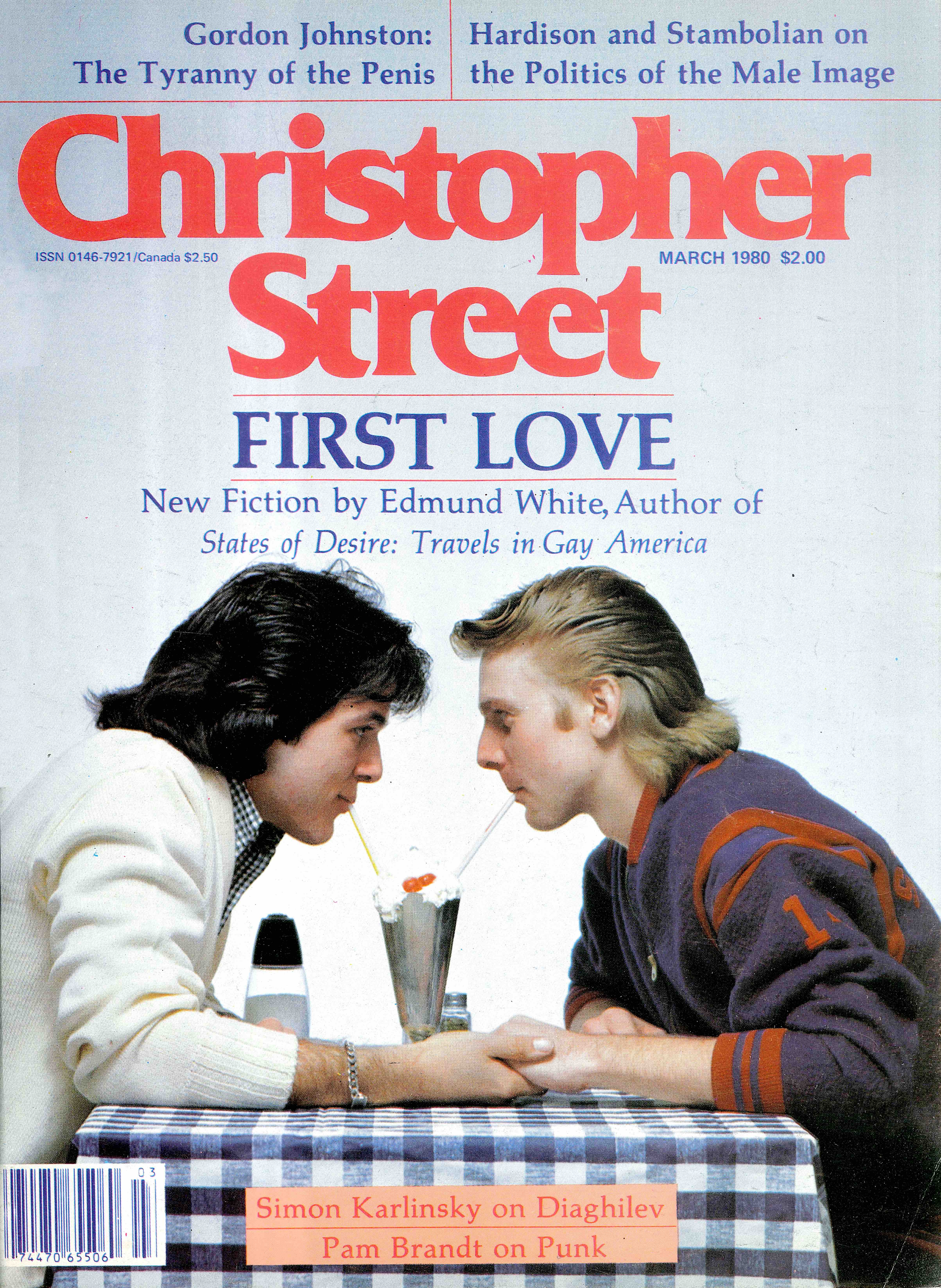
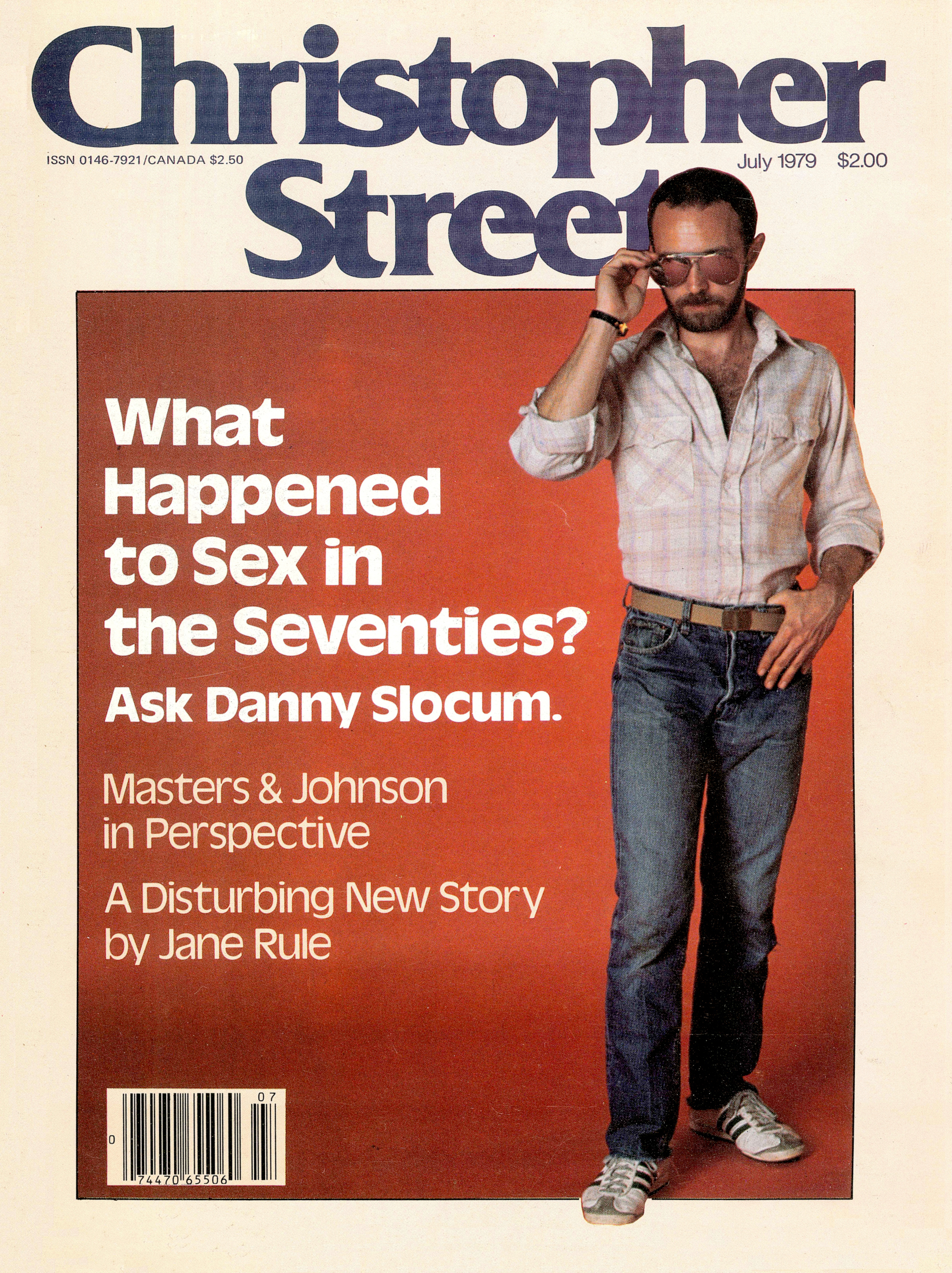
Interview with Ray Caviano - by Vincent Nicolosi // Christopher Street - March, 1980


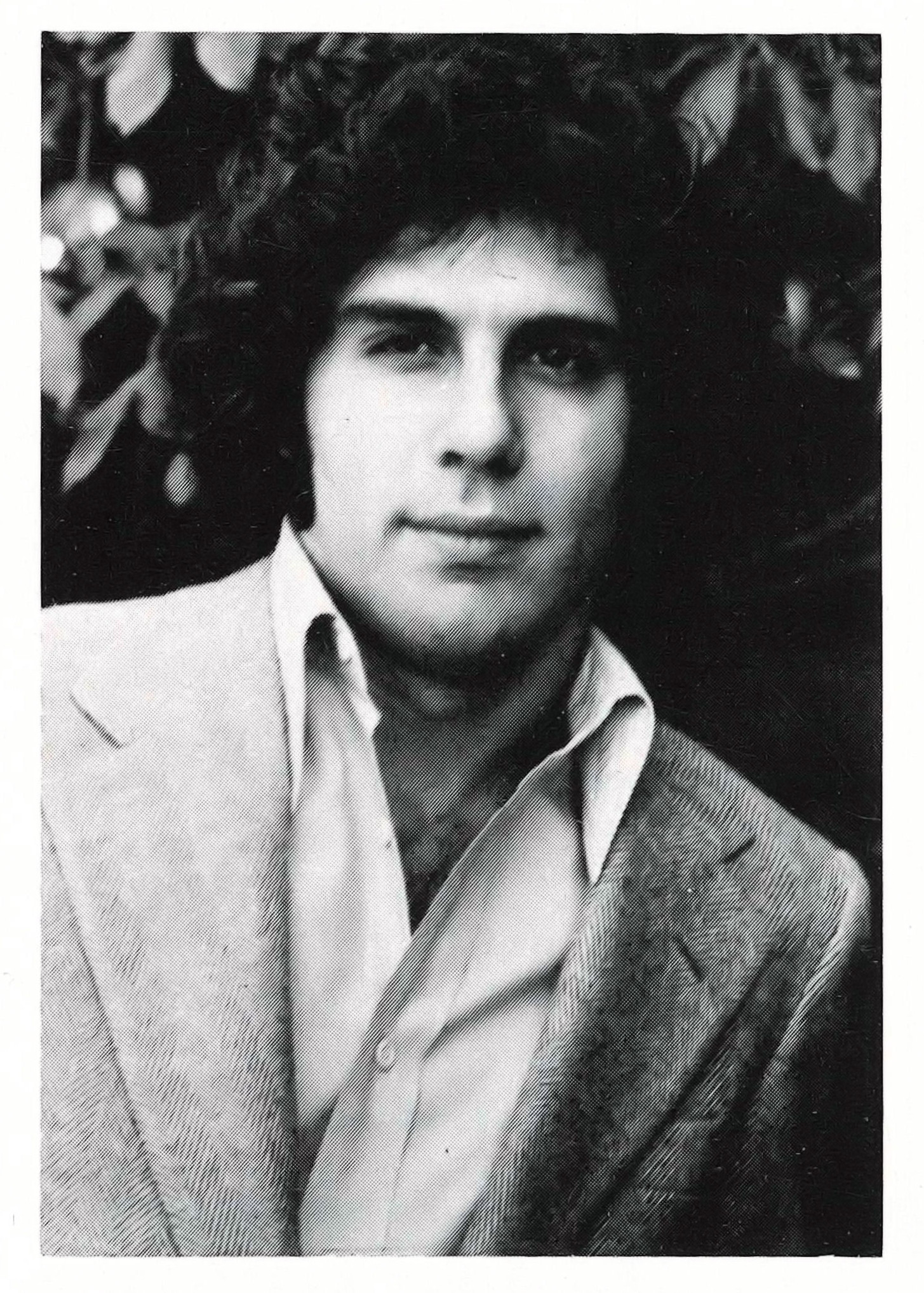
Sadly, Ray Caviano passed away last week at the age of 75. As is bound to happen with the passage of time, this is happening with unfortunate frequency with disco veterans lately. There are certain people I regret not being more proactive in talking to, and he's one of them.

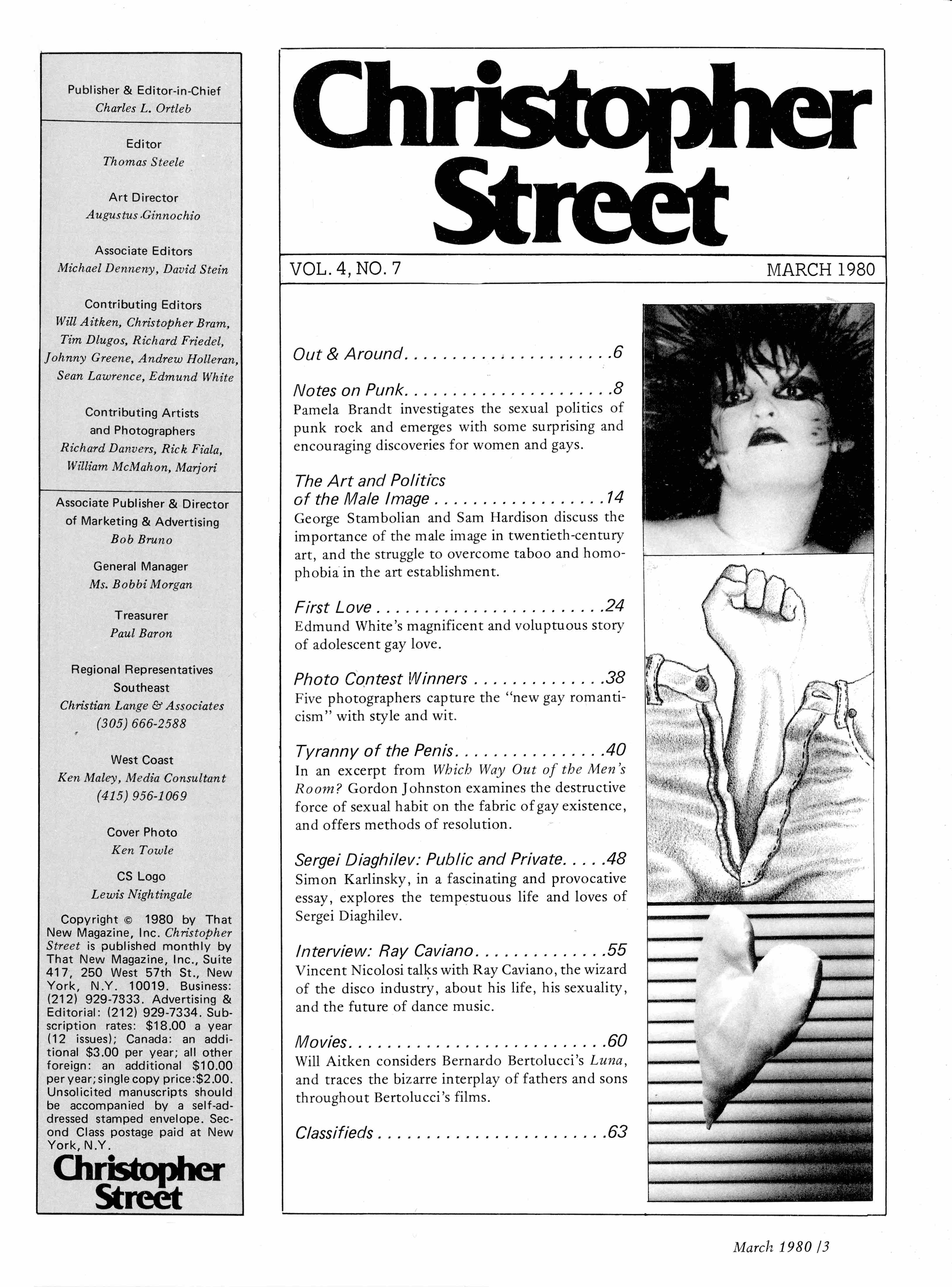
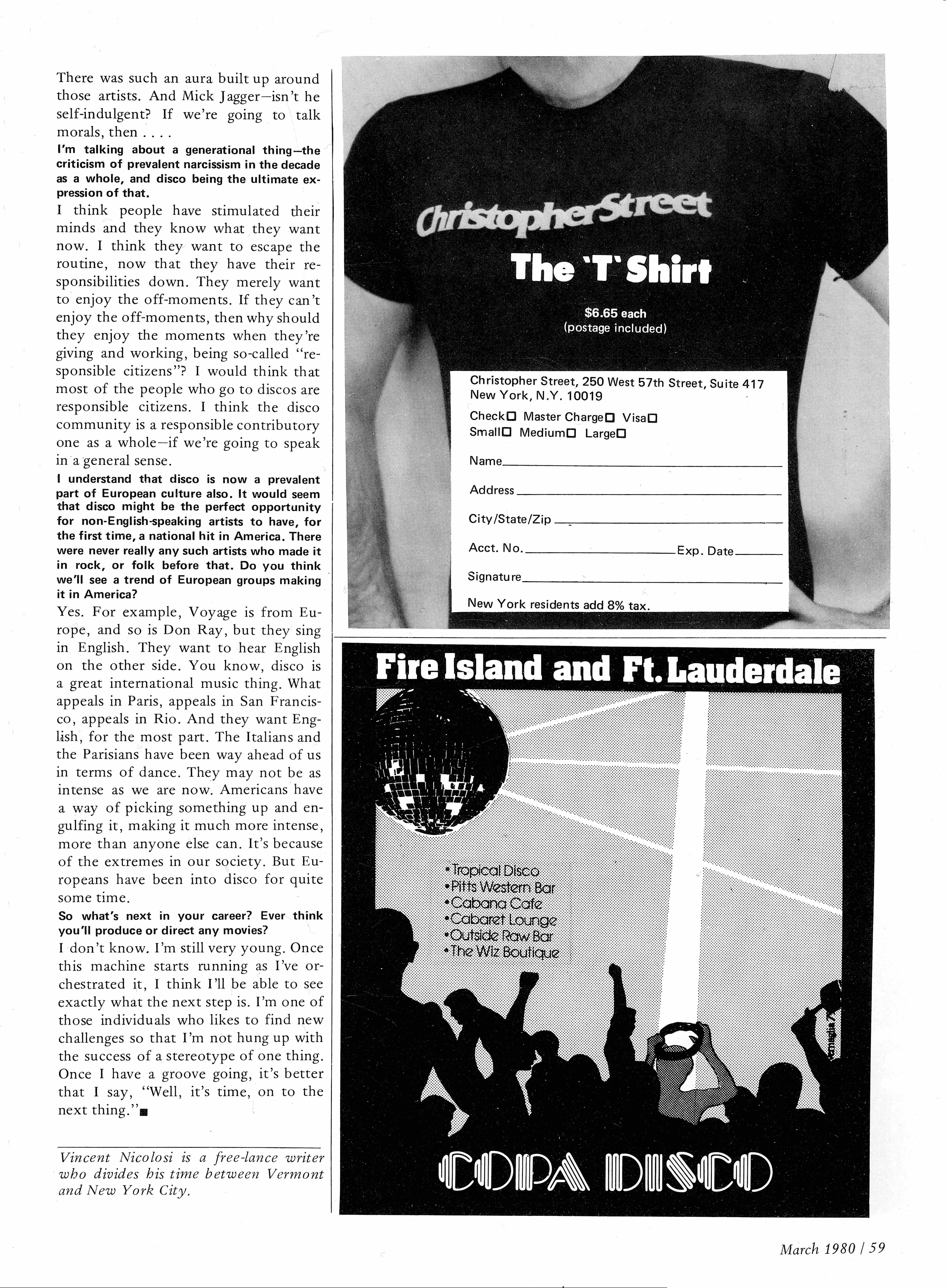
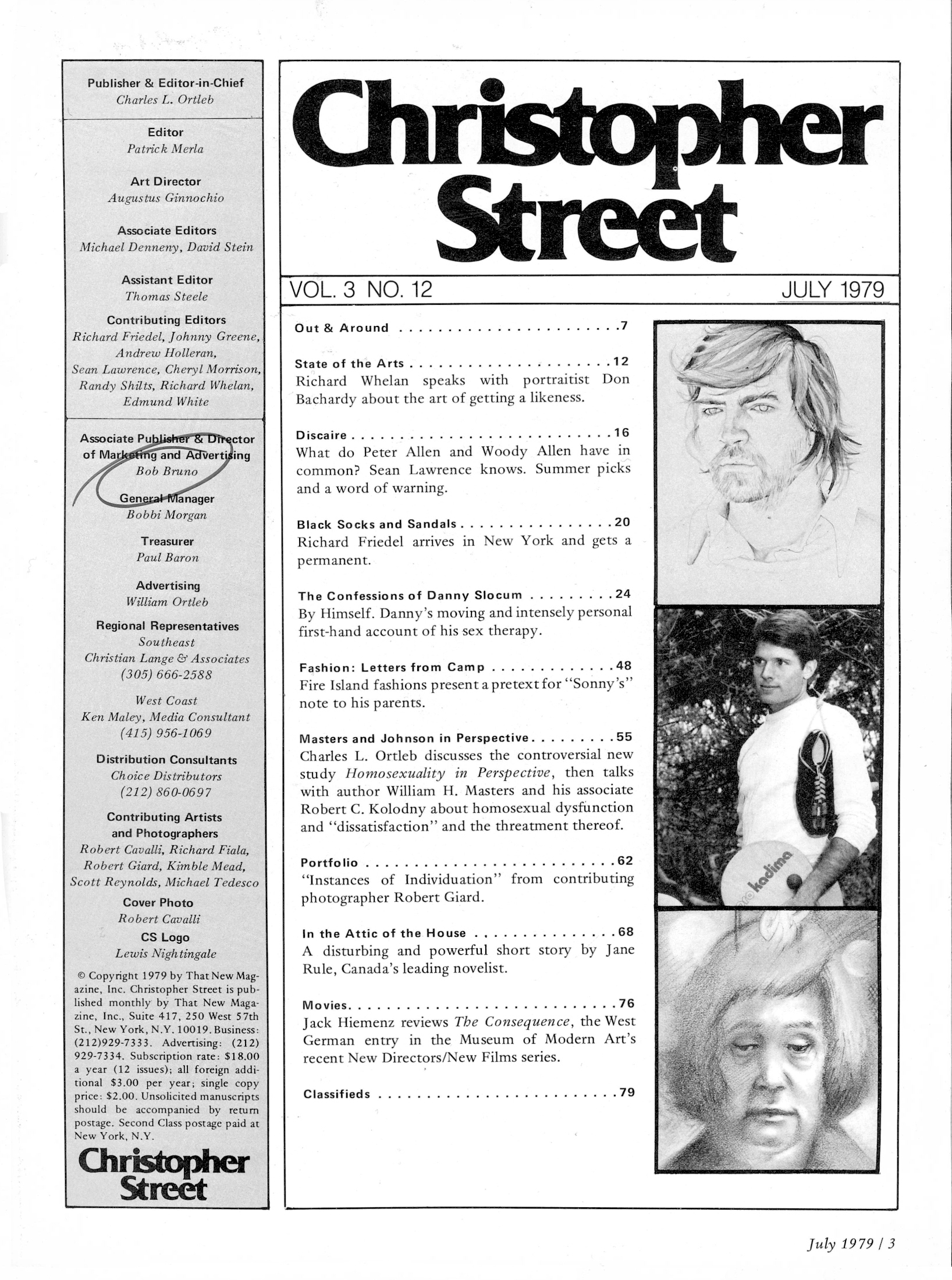
While looking through my archives, I found this interview with Ray from the March 1980 issue of Christopher Street Magazine. At the top of the issue, they called him "the wizard of the disco industry," and he was undoubtedly at a high point in his career by this time having just established his RFC Records label with Warner Brothers. Speaking to Vincent Nicolosi, it's an interesting discussion about how he got where he was, and where disco might be going at the time. On the subject of Christopher Street, I should also mention at a time when few major corporations would advertise with gay magazines, one of their biggest advertisers in the late 1970s was T.K. Records. As T.K.'s man in New York for much of that time, I'd imagine Caviano would have had a lot to do with that.

Whether you know who he was or not, as one of the most influential promoters in US disco business he was directly or indirectly responsible for popularizing countless signature disco hits. On T.K. Records he would promote hit singles by K.C. & The Sunshine Band, George McCrae, Peter Brown and The Ritchie Family. He was also instrumental in picking up more Euro-disco sounds for the label, like Voyage, Amant and Boris Midney. Later, he would promote singles as varied as Yoko Ono's "Walking On Thin Ice," to "Cherchez la Femme" by Dr. Buzzard's Original Savannah Band, Vicki Sue Robinson's "Turn The Beat Around," to ruffling feathers at Warner Brothers' rock department by successfully promoting Rod Stewart's "Da Ya Think I'm Sexy" as a disco single, to name a few highlights. While his imprint is all over disco; as this interview details, his history goes back well before - having worked for Jann Wenner at Rolling Stone magazine and also having promoted Wendy Carlos' landmark Switched-on Bach album in the late 60s.

As a young, handsome and ambitious gay man in 1970s New York City, he was uniquely positioned to promote disco in the places where it really mattered. A high school drop-out, he nevertheless rose through through the ranks of the music business both as an independent promoter and at labels like London Records, before moving on to T.K. Records. He was not even 30 when Mo Ostin, chairman of Warner Bros. snapped him up to start Warner's disco/dance division. As part of the deal, Caviano would be given his own label, where he would sign Change and Gino Soccio. At the time, he would be the youngest division president in Warner Brothers' history.

Unfortunately, things would go down-hill in rather dramatic fashion by the mid 80s. He was even the subject of a 1986 Village Voice cover story detailing his downfall. The story called Caviano the "kingpin of disco" who had gone from making a reported 6-million a year to forging cheques and stealing to support a supposed $500-a week drug habit, which would eventually land him in jail.

During much of this time, his twin brother Bob Caviano was also a major player in the music business as a booking agent and a manager for Grace Jones and The Village People. Bob Caviano would found LifeBeat before succumbing to AIDS complications in 1992. Ray Caviano had also faded from view during that period; so much so, many assumed he had also passed around that time. In 2013, he would be interviewed for a Waxpoetics piece on Gino Soccio by Jered Stuffco (AKA Jex Opolis) who tracked him down working as an addictions counsellor.

Since that 2013 interview, he had begun to re-emerge, returning to his first love—promoting music. In recent years, Caviano had been suffering from kidney problems, and yet he had continued his promotional efforts right up until his passing. He had been a prolific poster on Facebook, particularly on his History of Dance Music Page.

I'll post links to some good, more recent interviews with Caviano at the bottom of the post, which detail more of his history. But for now, enjoy this piece from the archives, documenting one of the most influential disco promoters, riding high at the top of his game, as one of the most powerful gay men in the business.

______________________________________________________________________________


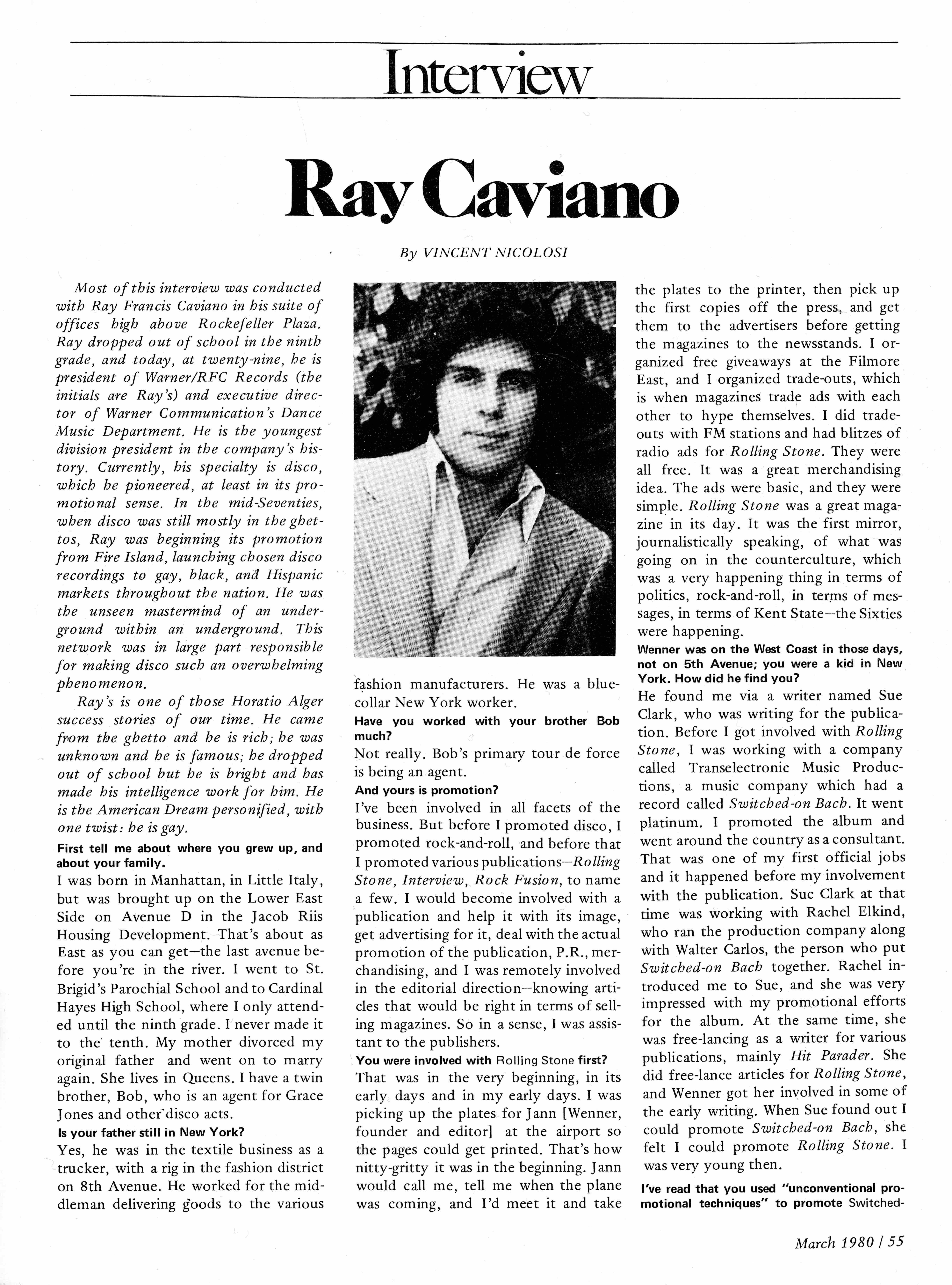
Interview: Ray Caviano

by Vincent Nicolosi

   Most of this interview was conducted with Ray Francis Caviano in his suite of offices high above Rockefeller Plaza. Ray dropped out of school in the ninth grade, and today, at twenty-nine, he is the president of Warner/RFC Records (the initials are Ray’s) and executive director of Warner Communications’ Dance Music Department. He is the youngest division president in the company’s history. Currently, his specialty is disco, which he pioneered, at least in its promotional sense. In the mid-Seventies, when disco was still mostly in the ghettos, Ray was beginning its promotion from Fire Island, launching chosen disco recordings to gay, black and Hispanic markets throughout the nation. He was the unseen mastermind of an underground within an underground. This network was in large part responsible for making disco such an overwhelming phenomenon. Ray’s is one of those Horatio Alger success stories of our time. He came from the ghetto and he is rich; he was unknown and he is famous; he dropped out of school but he is bright and has made his intelligence work for him. He is the American Dream personified, with one twist: he is gay.


First tell me about where you grew up, and about your family.

I was born in Manhattan, in Little Italy, but was brought up on the Lower East Side on Avenue D in the Jacob Riis Housing Development. That’s about as East as you can get—the last avenue before you’re in the river. I went to St. Brigid’s Parochial School and to Cardinal Hayes High School, where I only attended until the ninth grade. I never made it to the tenth. My mother divorced my original father and went on to marry again. I have a twin brother, Bob, who is an agent for Grace Jones and other disco acts.

Is your father still in New York?

Yes, he was in the textile business as a trucker, with a rig in the fashion district on 8th Avenue. He worked for the middleman delivering goods to the various fashion manufacturers. He was a blue-collar New York worker.

Have you worked with your brother Bob much?

Not really. Bob’s primary tour de force is being an agent.

And yours is promotion?

I’ve been involved in all facets of the business. But before I promoted disco, I promoted rock-and-roll, and before that I promoted various publications—Rolling Stone, Interview, Rock Fusion, to name a few. I would become involved with a publication and help it deal with its image, get advertising for it, deal with the actual promotion of the publication, P.R., merchandising, and I was remotely involved in the editorial direction—knowing articles that would be right in terms of selling magazines. So in a sense, I was assistant to the publishers.

You were involved with Rolling Stone first?

That was in the very beginning, in its early days and in my early days. I was picking up the plates for Jann [Wenner, founder and editor] at the airport so the pages would get printed. That’s how nitty-gritty it was in the beginning. Jann would call me, tell me when the plane was coming, and I’d meet it and take the plates to the printer, then pick up the first copies off the press, and get them to the advertisers before getting the magazines to the newsstands. I organized free giveaways at the Filmore East, and I organized trade-outs, which is when magazines trade ads with each other so hype themselves. I did trade-outs with FM stations and had blitzes of radio ads for Rolling Stone. They were all free. It was a great merchandising idea. The ads were basic, and they were simple. Rolling Stone was a great magazine in its day. It was the first mirror, journalistically speaking, of what was going on in the counterculture, which was a very happening thing in terms of politics, rock-and-roll, in terms of messages, in terms of Kent State—the Sixties were happening.

Wenner was on the West Coast in those days, not on 5th Avenue; you were a kid in. New York. How did he find you?

He found me via a writer named Sue Clark, who was writing for the publication. Before I got involved with Rolling Stone, I was working with a company called Transelectronic Music Productions, a music company which had a record called Switched-on Bach. It went platinum. I promoted the album and went around the country as a consultant. That was one of my first official jobs and it happened before my involvement with the publication. Sue Clark at that time was working with Rachel Elkind, who ran the production company along with Walter Carlos, the person who put Switched-on Bach together. Rachel introduced me to Sue, and she was very impressed with my promotional efforts for the album. At the same time, she was free-lancing as a writer for various publications, mainly Hit Parader. She did free-lance articles for Rolling Stone, and Wenner got her involved in some of the early writing. When Sue found out I could promote Switched-on Bach, she felt I could promote Rolling Stone. I was very young then.

I’ve read that you used “unconventional promotional techniques” to promote Switched-on Bach. What is meant by “unconventional”?

It was unconventional in that Switched-on Bach is a classical album which I promoted to FM rock stations, and it worked. Therefore, that record became more than just a classical record. The album today, as I understand, is platinum. How many classical albums do you know that have gone platinum?

You also did promotion in Thompson [my note: Tomkins?] Square Park?

I got involved in free concerts in the park and helped organize concerts for Blues Project and Country Joe and the Fish. These were Sixties rock bands that came out of the consciousness of what was happening on the Lower East Side, the East Village, and the Fillmore East. I was going to the parks department, working with management, just putting everything together. Both of those groups went on to become big progressive rock bands of the Sixties. They were a cult consciousness, Timothy Leary, East Village kind of thing.

You were deeply involved in the Sixties for being so young.

Well, obviously if I didn’t finish high school then I had to get involved on a nitty-gritty level. I was reading Billboard every issue in the eighth grade.

Did you make it to Woodstock?

Yes, I went to Woodstock, to Strawberry Fields in Canada, and to Powder Ridge in Connecticut, which never happened as a festival, but Melanie performed for free. I went through that whole thorough introspective look at the counterculture, subjectively and objectively. In my head I was looking at the whole thing, saying, “What’s going on? What are these people doing? What are they saying? Where are they heading? They’re going to get older and where are they going to be?”

Are you much different from who you were in the Sixties?

Well, back then I had long hair and wore horned-rimmed glasses. Now my hair is shorter and I wear contact lenses.

But even though you’ve been deeply involved in what’s happening now, would you still consider yourself a product of the previous decade, a survivor, so to speak? Or are you in fact a man of the Seventies who sojourned in the Sixties?

What I am is a person of the Fifties television boom. I was brought up by television in the Fifties. It was future shock at its best, taking advantage of living in New York, survival in that sense. It was not having things and having to fight for them. Before I did these other things I worked in a grocery store, I delivered things for a cleaner, delivered newspapers, and worked in a newsstand, and worked in a lawyer’s office. I’ve always been into a work ethic, even at an early age. This ethic was coupled with the energy and the desire to go a step further with what was happening around me; being aware, and using that awareness in a media sense, in a McLuhan sense. Being aware of future shock, aware that things are changing and that we can be a product of those times. It all fits into America right now, which is jigsaw at the moment, because of our capitalistic society, and the things we’re locked into. So I’m out of the Fifties from television, into the Sixties and here I am alive and well in the Seventies. It’s a whole other trip, simply because I lived in three distinct decades, all having distinct implications, and all bringing different social changes.

On the topic of decades, let’s turn to disco. Where do you see it in the Eighties?

Well, I see disco in the Eighties just being involved as it’s been in the Seventies, as rock has been involved in the Seventies. Rock is bigger than ever in a sense, in a remote sense, but still it’s there and very much relevant and I think disco is doing that. I just think we need to get into the music a little bit more and understand how it’s changing, and how it’s evolving, and how people are looking for different things. At the same time, a lot of it is contingent upon what is happening in our time and what statements are being made through music, as disco moves to address itself more to the spirit and still to the dance floor. Essentially, it is dance music. So it was always have tempo and rhythm, but I think it can also appeal in a more sophisticated, full-sounding, lyrically better-structured way, giving us more interesting kinds of records, records which take time out to tell a story, or reveal more emotion and apply their lyrics to things which speak more to overall life, but are made in the context of celebration. That’s what disco—dance music—is. It’s party. It’s good times. It’s escaping. You can sell these messages in the context that’s a blending of a lot of things going on in disco: the homogenization of music, like the rock artists who are using disco. There is a fusion in a sense, one has to look at the ingredients from other areas, and how it can be interwoven. “Hot Stuff,” the new single by Donna Summer, has a guitar break like one from any rock album you’ve ever heard.

Do you think rock is burning out? Do you think one, either rock or disco, will absorb, nullify, or diminish the other?

No, rock is not burning out, not that I see. I see a stabilization between the musical forces now developing, that fusion element.

Do you think words or lyrics will become more important in disco?

They’re already taking on a new importance. Gino Soccio is one example. He wrote his album, Outline, produced, and arranged it. One of his strengths is in his lyrics.

When your label was first formed, you mentioned that development of the artist would be an important part of Warner/RFC. What does artist development entail?

That entails different things. First, it’s simply spending money, developing the artist’s public image. Other than people here at Warner/RFC, we have publicists from outside who arrange interviews with the press and radio, and produce printed advertisements and so forth, to tell the public just who an artist like Gino Soccio is. Beyond the public awareness thing, artist development comes to a personal thing as well—me sitting down, say, with Gino and creating the vibe and an aura that I’ve got with him. It’s a confidence thing. He’s got such a good feeling about Warner/RFC and that gives him a certain security, whereby it enhances his artistic sense, where by he produces. It’s the domino theory of success. I show him that he is a star, that he is hot, that he can produce, that he is being taken care of. He just has to write hit songs. There’s a science in what Gino does, and there’s a science in what I do, and of course there’s an art as well. I pick up where he leaves off, and he leaves off by giving me hit product and I give him hit results. It’s that kind of optimum, as basic and as academic as it sounds.

There’s a lot published about you lately and much mention made off you being gay. Is it an important thing in your life?

It’s not any more important than anything else. The most important thing to me is disco. Period. Paragraph. I’m not using my job in any way to promote gay consciousness. That would be another distinct responsibility. I don’t have time for it. I’m into promoting artists and making hit records. I can talk about the gay market and the fact that gays buy disco records, and again I can look at it from a business point of view. I’m not going to use my position at Warner Brothers to wave a flag and promote gay political power. It’s apples and oranges. If I were to leave Warner Brothers and go out and promote gay consciousness, then that’s a full-time job, and I’d want to achieve very high goals in that arena. I’m promoting records and that’s another whole area. You don’t want to go around the music industry saying this is a gay disco record You want to say this is a hit record. I don’t want to put the onus on one ethical [sic] minority, saying these are the people behind me. I think this would be a very stupid approach. Business is my first priority. My gay life is more of a… of a…

Private life?

No, I don’t know if it’s private as much—I’m not hiding the fact that I’m gay. I’m just not exploiting the fact that I’m gay.

Has being gay had any kind of influence on your success in the disco world?

It’s been an asset in that I’ve been aware of a market that is very sensitive and into disco music People at the record companies know what gay people do in terms of breaking records, not just people at Warner Brothers. Black people play a very influential role, and Spanish people. When you take a place like New York City and add up the gays blacks and Hispanics, you haven’t got a minority any more, you’ve got a majority. If you find a black gay person, you find someone who is even more sensitized. You follow what I mean? The Paradise Garage typifies that. It’s one of the best discos in America, in my opinion. It’s a coming together of all sensibilities and sensitivities, from black and white and gay and straight. It’s a melting pot of music. You can go to some of those other clubs and they’re stereotyped in their sound, based upon who they’re playing to. At the Paradise Garage, programming is the most important thing. It’s what you play that’s important, not just how you play it.

What is it and, in the beginning, what was it that gay culture found so pleasing, so attractive?

It was an environment where birds of a feather could flock together. It provided an environment where people could socially come together and be together. You also must look at it financially. Gays have large discretionary incomes—no families—and leisure time. They can stay out late and they don’t have to worry about getting the kids to school in the morning or whatever. It’s that kind of reality. It’s a more conducive environment for the gay life style. Also, they didn’t stop at disco. Ballet. Publishing. I’m not going to reveal who they are, but I know umpteen people in the music business as agents, managers, promotional people, et cetera. It’s common knowledge that ninety-five per cent of the people who run the national disco promotion departments of the record companies are gay. That’s the reality of it. You have to understand, I’m not trying to convince people to be gay. People who are heterosexual and are happy, that’s great. I think it’s great when people are gay and happy, too. I’m not into this philosophy of selling gay as bring where it’s at. When I tell you that gay clubs are influential with disco music, then if I were straight, I’d be telling you the same thing. Again, I want you to interpret this information in the guise of objectivity. That’s important. It so happens to be coincidental that I’m gay, and that the hottest clubs are gay, as are the trend-setting clubs which break records. I’m interested in clubs that break records. It’s great to have other clubs that play my hits, but I’m going to go first to the guy who will put my record on first and take a shot, because it’s very competitive. Those slubs are the gay clubs and the black clubs. The clubs in suburbia play the hits after they’re established in New York for a long time. As I say, it’s coincidental that I’m gay and that the gay disco power exists the way it does.

In America, there are many different cultures involved in disco, and there have been for some time. You mention the gays, blacks and Hispanics. Do you think disco has helped put aside any ethnic barriers?

It has its obvious ethnic appeal, but I think one has to look at the growth in the importance of black music in our society, and the value of the black artist in our society. It’s something that I appreciate, and I think has merits on its level, just as rock-and-roll has its merits. One can’t put a limitation on the potential of what black people have to offer—or Hispanic, for that matter—in terms of their influence on American contemporary music. I’m not worried about the fact that middle America influences what mass appeal wants. What might concern me more is the scale the other way around.

But why is it that something so ethnic has caught on in such a national way, crossing cultural boundaries?

I think people are tired of pretension in music. And the ethnic appeal in disco bas a very … I don’t know how to describe it … It adds a very earthy kind of perspective to the music. It just breaks away the boundaries and gets to the core that much more quickly. There’s something more soul-raising about soul music or disco music in terms of statement, and the influence of it. One has to look at the blues, at people like Sarah Vaughan, Dinah Washington and Billie Holliday and what they did and had to offer that was so noticed. It was artistic and had things going for it in terms of the statements the artists were making, but it lacked the mass appeal. I think now we’ve loosened up the reigns in the sense of allowing the black artist or the black disco style artist to explore the other possibilities musically. I think we’ve really played out this rock-and-roll thing to the hilt. We’ve hit every riff and we’ve heard every statement, for a minute. I think disco offers an opportunity for people to hear new feelings about themselves and about their lives, in a way that rock doesn’t offer. There’s a disco record now called “Born to be Alive.” Now, that’s a very simple statement, but if people can have the attitude that they’re happy to be alive, and that they can enjoy their jobs and life style, and have a positive outlook on life, then what other statement needs to be said in an older way? The Billie Hollidays of the world had great statements to make, but America wasn’t essentially ready to hear. I think also that being in a disco is like being in a church. It’s like a tribal ceremony. You have the ultimate kinship going on out on the dance floor that seems to be very appealing because you have the human element in disco where you’re dancing on the dance floor and connecting in a sense with your partner. In a sense when the whole floor is on, when they’re up, you can feel that, and in a sense the DJ is putting that all together and you’re connecting with him. There’s such an interaction. Do you see what I mean?

I see the kinship, but I see more of a self-indulgence as well

Well, I don’t know … I mean, this is America. Let’s be realistic. We have these options to be self-indulgent; we have a right to be. It’s the society we live in. In Russia, they’re talking about selling Elton John’s records because he went down as such a hit. I mean, this is America. It didn’t stop people from doing the ultimate rock experience in the Sixties by going to listen to the Grateful Dead and sitting in the sixth row and taking LSD and thinking Jerry Garcia was doing such a special thing with his guitar or certain other rock groups which I can identify with very heavily—Jimi Hendrix or Janis Joplin. I mean, people took these people very seriously. There was such an aura built up around those artists. And Mick Jagger—isn’t he self-indulgent? If we’re going to talk morals, then…

I’m talking about a generational thing—the criticism of prevalent narcissism in the decade as a whole, and disco being the ultimate expression of that.

I think people have stimulated their minds and they know what they want now. I think they want to escape the routine, now that they have their responsibilities down. They merely want to enjoy the off-moments. If they can’t enjoy the off-moments, then why should they enjoy the moments when they’re giving and working, being so-called “responsible citizens”? I would think that most of the people who go to discos are responsible citizens. I think the disco community is a responsible contributory one as a whole—if we’re going to speak in a general sense.

I understand that disco is now a prevalent part of European culture also. It would seem that disco might be the perfect opportunity for non-English speaking artists to have, for the first time, a national hit in America. There were never really any such artists who made it in rock, or folk before that. Do you think we’ll see a trend of European groups making it in America?

Yes, for example, Voyage is from Europe, and so is Don Ray, but they sing in English. They want to hear English on the other side. You know, disco is a great international music thing. What appeals in Paris, appeals in San Francisco, appeals in Rio. And they want English, for the most part. The Italians and the Parisians have been way ahead of us in terms of dance. They may not be as intense as we are now. Americans have a way of picking something up and engulfing it, making it much more intense, more than anyone else can. It’s because of the extremes in our society. But Europeans have been into disco for quite some time.

So, what’s next in your career? Ever thing you’ll produce or direct any movies?

I don’t know. I’m still very young. Once this machine starts running as I’ve orchestrated it, I think I’ll be able to see exactly what the next step is. I’m one of those individuals who likes to find new challenges so that I’m not hung up with the success of a stereotype of one thing. Once I have a groove going, it’s better that I say, “Well, it’s time, on to the next thing.” ■

_________________________________________

Vincent Nicolosi is a free-lance writer who divides his time between Vermont and New York City.

______________________________________________________________________________

PREVIOUS RELATED ENTRIES:
gino soccio speaks (wednesday may 29, 2013)
vince aletti's disco files (wednesday february 4, 2019)

LINKS:
facebook: john luongo - ray caviano RIP (september 29, 2026)
red bull music academy: the rise and fall of ray caviano and rfc records (by jered stuffco) (december 3, 2014)
good timin records: gino soccio was the one-man band behind countless disco gems—until he vanished (by jered stuffco) (may 31, 2013)
village voice archives: lost in music: an oral history of disco (by vince aletti) (july 20, 2020 - originally published summer 1995)
the heartbeat of the dancefloor - episode 008: ray caviano interviewed by marsha stern
yes she did - episode 13: rfc on ysd
facebook: the history of dance music hosted by ray caviano rfc

CATEGORIES: VINTAGE ARTICLES, INTERVIEWS, IN MEMORIAM

Sunday, September 20, 2026

Vintage Articles:
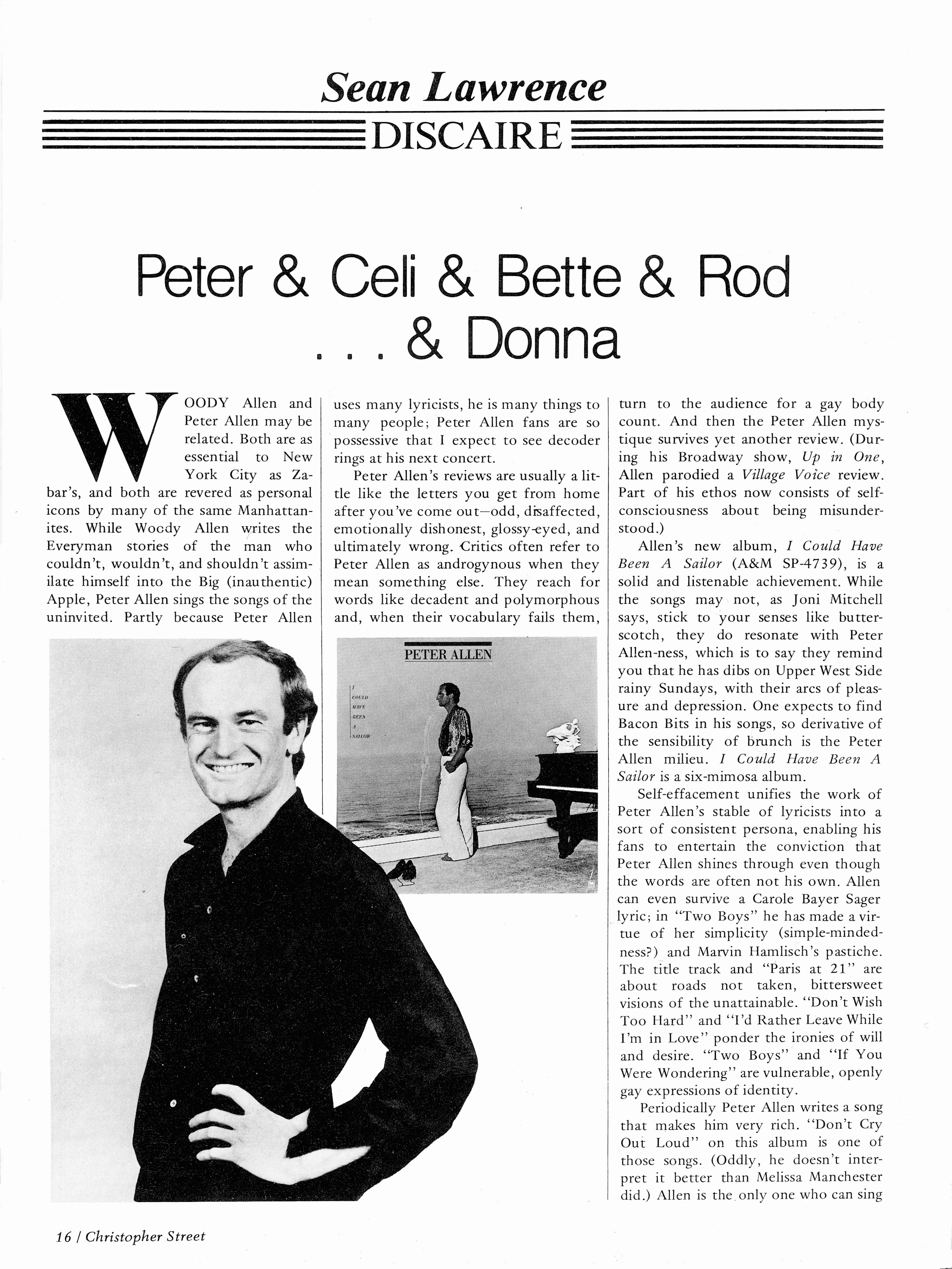
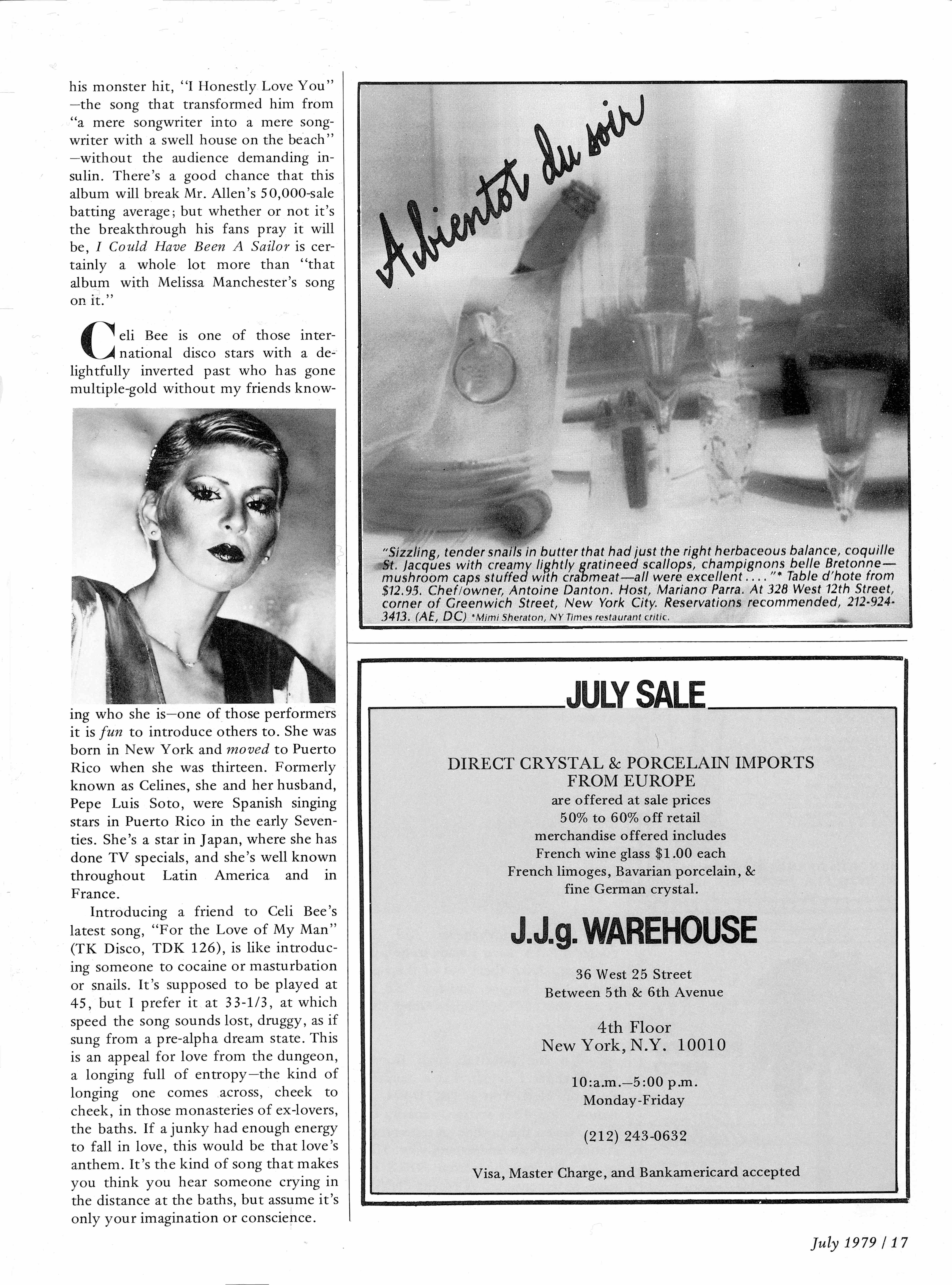
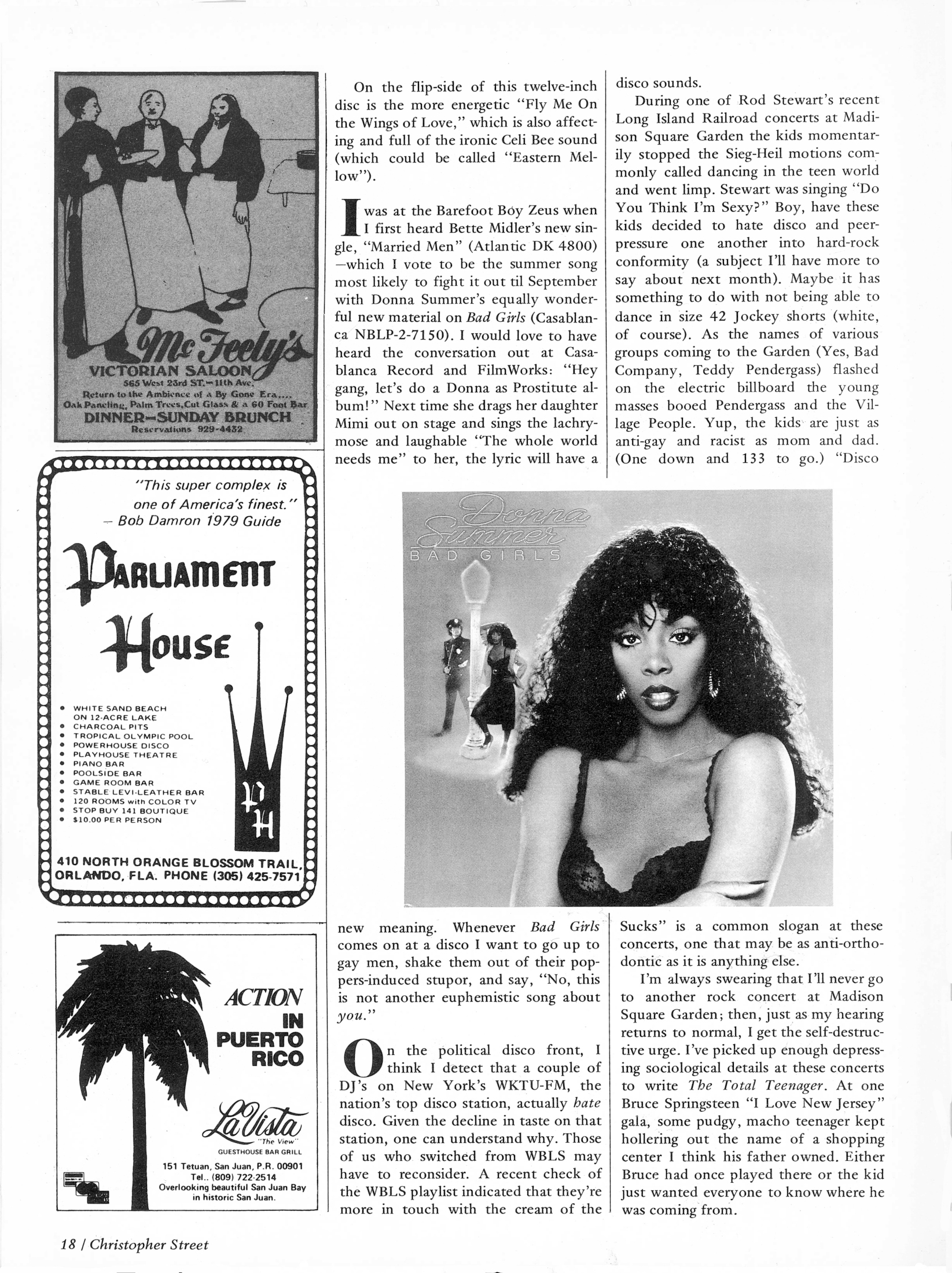
Sean Lawrence's Discaire Column - Peter & Celi & Bette & Rod... & Donna // Christopher Street - July 1979


  It has been some time since I've posted one of Sean Lawrence's Discaire columns from Christopher Street. I've had some moments to delve into the archives lately, and this, to me, is one of the most interesting of Lawrence's Discaire installments.

While the record reviews are, as always, enjoyable in both their style and point-of-view, I love how he implores listeners to play a Celi Bee single at the wrong speed for example. His cultural observations, however, are probably the most interesting part of this particular column. Given the time it was published, (officially July, but likely printed in late June of 1979), it seems he was quite accurately taking the cultural temperature regarding Disco in the US.

Speaking to that, while commercial oversaturation is one part of the Great Disco Backlash(tm), the role that homophobia and racism played, while widely acknowledged these days, wasn't always so. Even still, it remains occasionally downplayed, especially by those who spearheaded it; Lawrence was one of the few, especially from this time, who seemed to clock it straight-on, especially here. It would be a good couple of decades or more before mainstream journalists would catch up and fully recognize it in the same way.

Interesting historical note: Lawrence references Barefoot Boy, or rather "Barefoot Boy Zeus" in the 9th paragraph, a small but legendary gay disco and bar, that would change its name to Zeus, likely not long before this article was printed... Among the DJs who played there was Tony Smith, who passed recently. When I spoke to the late Montreal DJ Robert Ouimet, he mentioned how Smith's selections were always a New York highlight for him.

____________________________________________


Discaire: Peter & Celi & Bette & Rod... & Donna

by Sean Lawrence


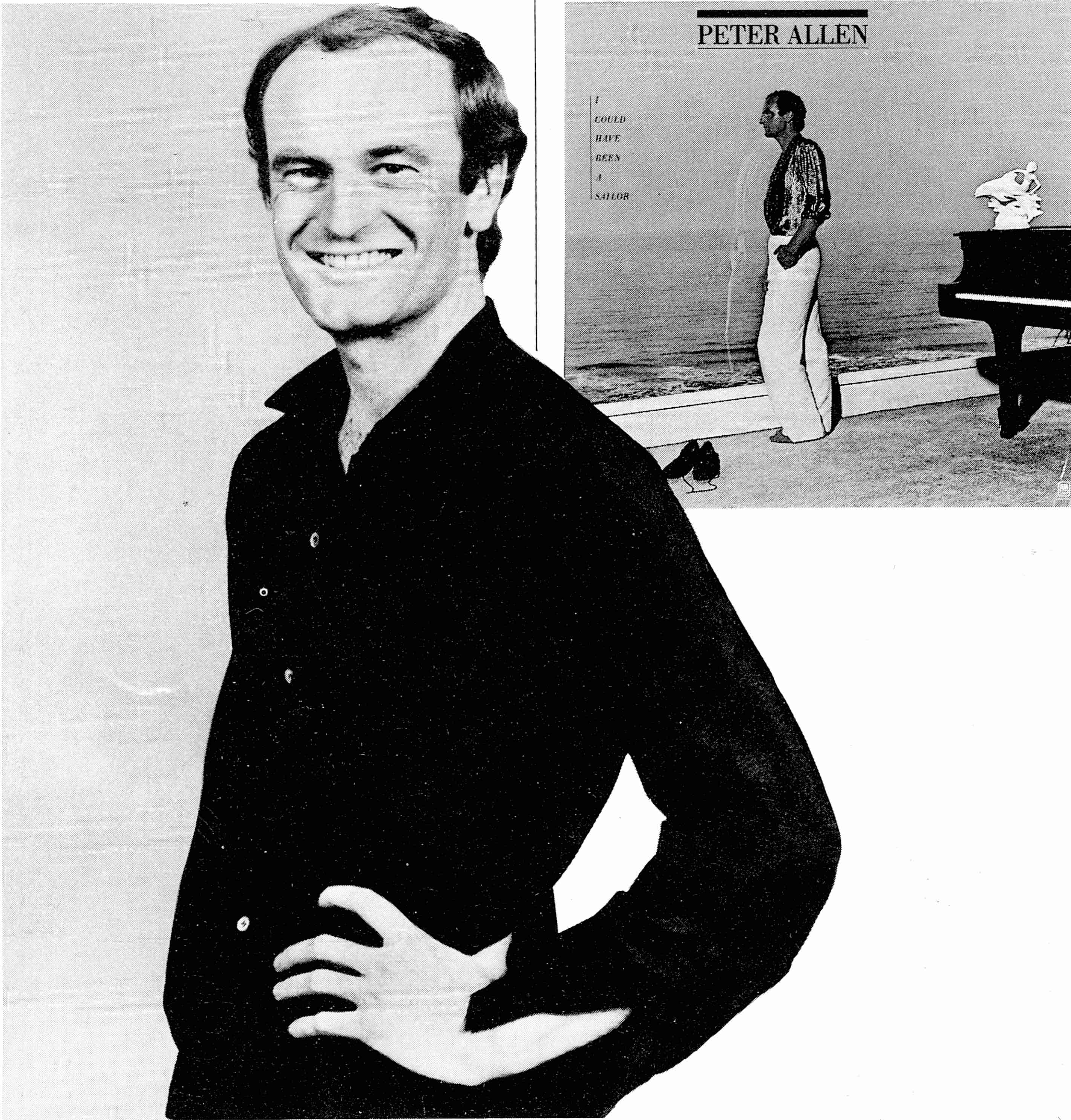
Woody Allen and Peter Allen may be related. Both are as essential to New York City as Zabar’s and both are revered as personal icons by many of the same Manhattanites. While Woody Allen writes the Everyman stories of the man who couldn’t, wouldn’t and shouldn’t assimilate himself into the Big (inauthentic) Apple, Peter Allen sings the songs of the uninvited. Partly because Peter Allen uses many lyricists, he is many things to many people; Peter Allen fans are so possessive that I expect to see decoder rings at his next concert.


   Peter Allen’s reviews are usually a little like the letters you get from home after you’ve come out—odd, disaffected, emotionally dishonest, glossy-eyed, and ultimately wrong. Critics often refer to Peter Allen as androgynous when they mean something else. They reach for words like decadent and polymorphous and, when their vocabulary fails them, turn to the audience for a gay body count. And then the Peter Allen mystique survives yet another review. (During his Broadway show, Up in One, Allen parodied a Village Voice review. Part of his ethos now consists of self-consciousness about being misunderstood.)

   Allen’s new album, I Could Have Been A Sailor (A&M SP-4739), is a solid and listenable achievement. While the songs may not, as Joni Mitchell says, stick to your senses like butterscotch, they do resonate with Peter Allen-ness, which is to say they remind you that he has dibs on Upper West Side rainy Sundays, with their arc of pleasure and depression. One expects to find Bacon Bits in his songs, so derivative of the sensibility of brunch is the Peter Allen milieu. I Could Have Been A Sailor is a six-mimosa album.

   Self-effacement unifies the work of Peter Allen’s stable of lyricists into a sort of consistent persona, enabling his fans to entertain the conviction that Peter Allen shines through even though the words are often not his own. Allen can even survive a Carole Bayer Sager lyric; in “Two Boys,” he has made a virtue of her simplicity (simple-mindedness?) And Marvin Hamlisch’s pastiche. The title track and “Paris at 21” are about roads not taken, bittersweet visions of the unattainable. “Don’t Wish Too Hard,” and “I’d Rather Leave While I’m In Love” ponder the ironies of will and desire. “Two Boys” and “If You Were Wondering” are vulnerably, openly gay expressions of identity.

   Periodically Peter Allen writes a song that makes him very rich. “Don’t Cry Out Loud” on this album is one of those songs. (Oddly, he doesn’t interpret it better than Melissa Manchester did.) Allen is the only one who can sing his monster hit, “I Honestly Love You”—the song that transformed him from “a mere songwriter into a mere songwriter with a swell house on the beach”—without the audience demanding insulin. There’s a good chance that this album will break Mr. Allen’s 50,000-sale batting average; but whether or not it will be, I Could Have Been A Sailor is certainly a whole lot better than “that album with Melissa Manchester’s song on it.”


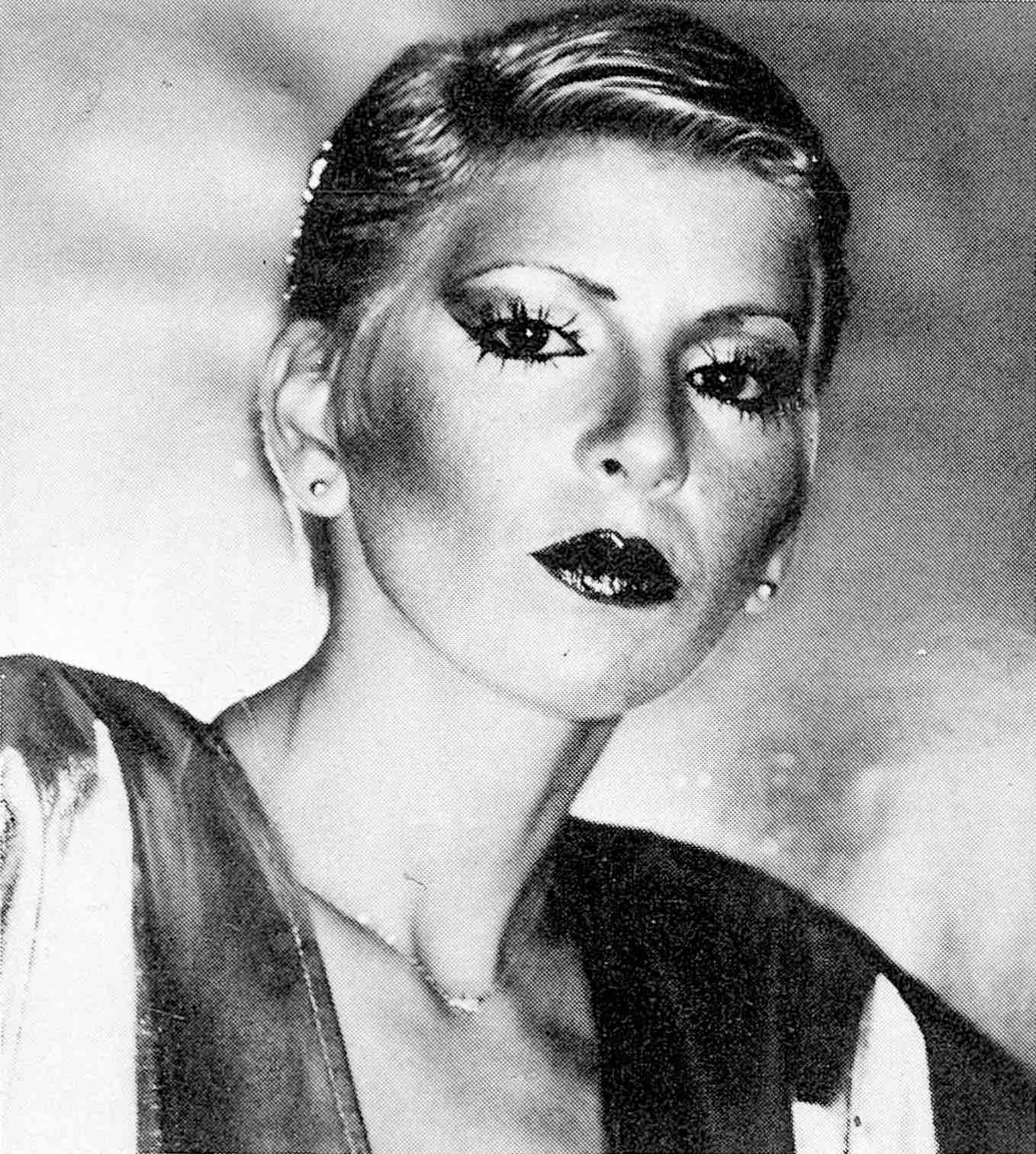
Celi Bee
is one of those international disco stars with a delightfully inverted past who has gone multiple-gold without my friends knowing who she is—one of those performers it is fun to introduce others to. She was born in New York and moved to Puerto Rico when she was thirteen. Formerly known as Celines, she and her husband, Pepe Luis Soto, were Spanish singing stars in Puerto Rico in the early Seventies. She’s a star in Japan, where she has done TV specials, and she’s well known throughout Latin America and France.

   Introducing a friend to Celi Bee’s latest song, “For the Love of My Man” (TK Disco, TDK 126) is like introducing someone to cocaine or masturbation or snails. It’s supposed to be played at 45, but I prefer it at 33-1/3, at which speed the song sounds lost, druggy, as if sung from a pre-alpha dream state. This is an appeal for love from the dungeon, a longing full of entropy—the kind of longing one comes across, cheek to cheek, in those monasteries of ex-lovers, the baths. If a junky had enough energy to fall in love, this would be that love’s anthem. It’s the kind of song that makes you think you hear someone crying in the distance at the baths, but assume it’s only your imagination or conscience.

   On the flip-side of this twelve-inch disc is the more energetic “Fly Me On the Wings of Love,” which is also affecting and full of the ironic Celi Bee sound (which should be called “Eastern Mellow”).
 

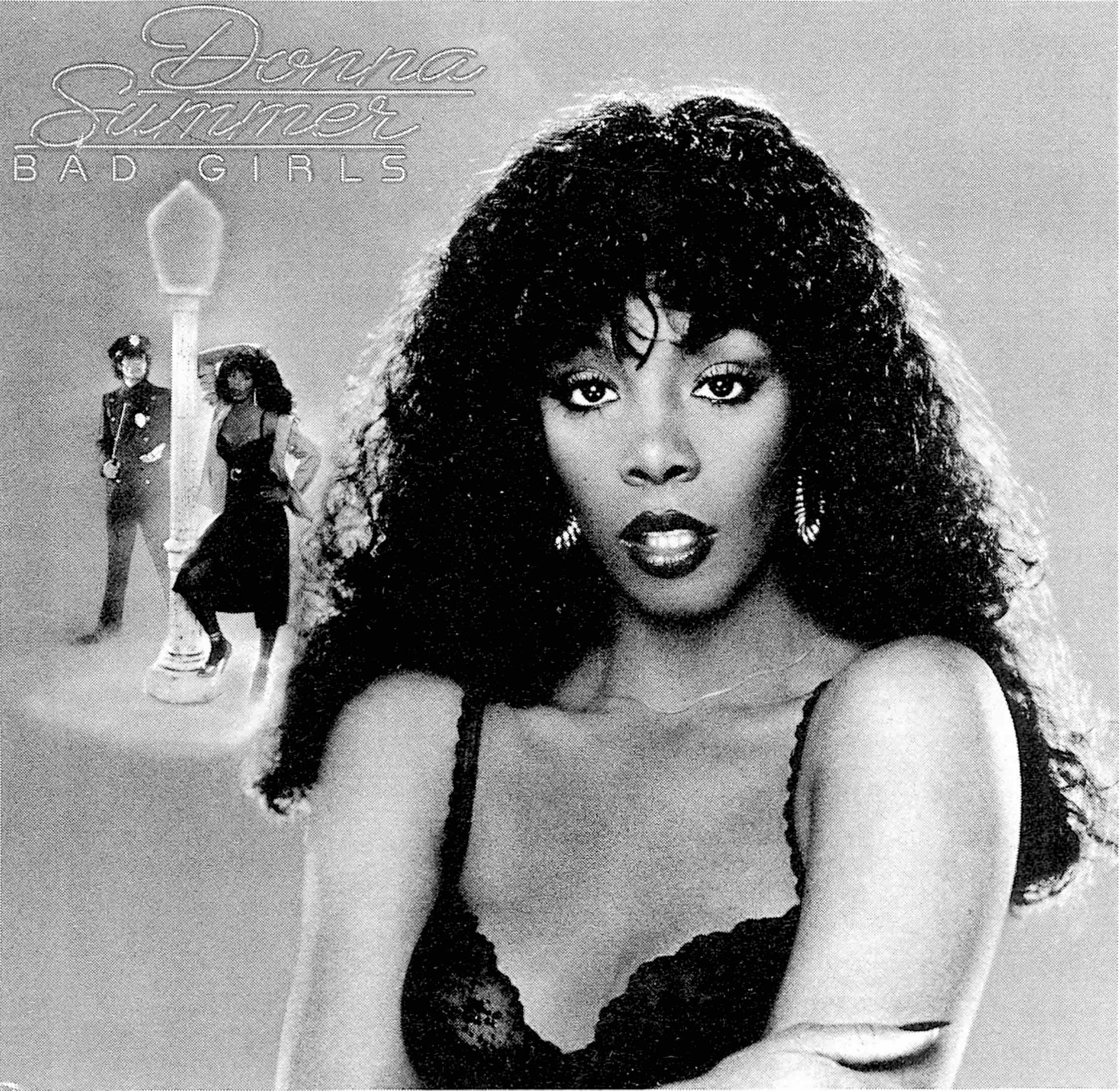
   I was at the Barefoot Boy Zeus when I first heard Bette Midler’s new single, “Married Men" (Atlantic DK 4800)—which I vote to be the summer song most likely to fight it out til September with Donna Summer’s equally wonderful new material on Bad Girls (Casablanca NBLP-2-7150). I would love to heave heard the conversation out at Casablanca Record and FilmWorks: “Hey gang, let’s do a Donna as Prostitute album!” Next time she drags her daughter Mimi out on stage and sings the lachrymose and laughable “The whole world needs me” to her, the lyric will have a new meaning. Whenever Bad Girls comes on at a disco I want to go up to gay men, shake them out of their poppers-induced stupor, and say, “No, this is not another euphemistic song about you.”


On the political disco front, I think I detect that a couple of DJ’s on New York’s WKTU-FM, the nation’s top disco station, actually hate disco. Given the decline in taste on that station, one can understand why. Those of us who switched from WBLS may have to reconsider. A recent check of the WBLS playlist indicated that they’re more in touch with the cream of the disco sounds.

   During one of Rod Stewart’s recent Long Island Railroad concerts at Madison Square Garden the kids momentarily stopped the Sieg-Heil motions commonly called dancing in the teen world and went limp. Stewart was singing “Do You Think I’m Sexy?" Boy, have these kids decided to hate disco and peer-pressure one another into hard-rock conformity (a subject I’ll have more to say about next month). Maybe it has something to do with not being able to dance in size 42 Jockey shorts (white, of course). As the names of various groups coming to the Garden (Yes, Bad Company, Teddy Pendergrass) flashed on the electric billboard the young masses booed Pendergrass and the Village People. Yup, the kids are just as anti-gay and racist as mom and dad. (One down and 133 to go). “Disco Sucks” is a common slogan at these concerts, one that may be as anti-orthodontic as it is anything else.

   I’m always swearing that I’ll never go to another rock concert at Madison Square Garden; then, just as my hearing returns to normal, I get the self-destructive urge. I’ve picked enough depressing sociological details at these concerts to write The Total Teenager. At one Bruce Springsteen “I Love New Jersey” gala, some pudgy, macho teenager kept hollering out the name of a shopping centre I think his father owned. Ether Bruce had once played there or the kid just wanted everyone to know where he was coming from.

____________________________________________


PREVIOUS RELATED ENTRIES:
vintage articles: sean lawrence’s discaire column: kitchen disco // christopher street - june 1979 (friday may 28, 2021)
disco delivery interviews robert ouimet (saturday may 24, 2014)
vintage articles: sean lawrence’s discaire column: supply without demand // christopher street - may 1979 (sunday february 23, 2014)

LINKS:
christopher street - the magazine of gay culture and ideas
wikipedia: peter allen - i'd rather be a sailor (album)
discogs: peter allen - i'd rather be a sailor lp
discogs: celi bee - fly me on the wings of love/for the love of my man (us 12")
wikipedia: married men (song)
discogs: bette midler - married men (us 12")
wikipedia: donna summer - bad girls (album)
discogs: donna summer - bad girls (us lp)
instagram: queer happened here - barefoot boy
discomusic.com: dance clubs & discotheques - barefoot boy, the (web archive)
chelsea community news: eight gay bars and clubs we miss this pride (by michael musto) (june 25, 2022)


CATEGORIES: VINTAGE ARTICLES

Friday, September 18, 2026

Another Setting Radio: Body Rhythm #10

Photo: George Duke and Katia Soghomonian by Laurent Leonard, 1984


Getting back to boogie and disco territory for this month's show. I still had some records out from a recent gig so some of those are on here, along with some new finds and some others I've been wanting to include for a little while now. As always, further details in the track notes below...


Body Rhythm #10:
Tracklist:


Vicki Sue Robinson - Hot Summer Night
James Otis White, Jr. - Baby Come On (Extended Version)
Katia - La Pin-Up Des Pick-Up
Emílio Santiago - O Amigo De Nova York
Starpoint - Wanting You
Aretha Franklin - Every Girl (Wants My Guy)
Herbie Hancock - Ready Or Not
Homegrown Syndrome - Confrontation
Rick James - Ghetto Life
Wardell Piper - Super Sweet (12" Version)
Vivian Reed - Solid Rock
The Supremes - Bend a Little


All the records played on show #10


Track Notes:

Vicki Sue Robinson - Hot Summer Night: Still holding on to the summer! It's technically not over yet, but those hot summer nights are mostly a memory now. Nevertheless, this later single from Vicki Sue Robinson was on my mind and I thought it would make a nice opener here. Perfectly steamy and sleazy, I first heard this on the second volume of the Rare Preludes compilations Unidisc put out in the 1990s. That set had the dubby "Hot Version" (the 12" b-side), but after getting the 12" for myself, I really loved hearing Vicki's full, exuberant vocal here, which even included a few nods to her signature hit, "Turn The Beat Around." Produced by Warren Schatz who seemed to produce most of her material, I'd say this is one of my favourite singles of hers.

James Otis White, Jr. - Baby Come On (Extended Version): Some funky Italo courtesy of Maurizio Sangineto AKA Sangy and vocalist James Otis White, Jr.. White was an American GI stationed in Italy who had also been in The Armed Gang, another group Sangineto produced (I played a selection of theirs on the first Body Rhythm episode). Recently reissued by Best Record Italy, I may be abusing the term 'Italo' in describing this, so I will just say that this is such a smooth, flawless slab of early 80s electro funk, it's hard to tell this came from Italy unless you read the credits.

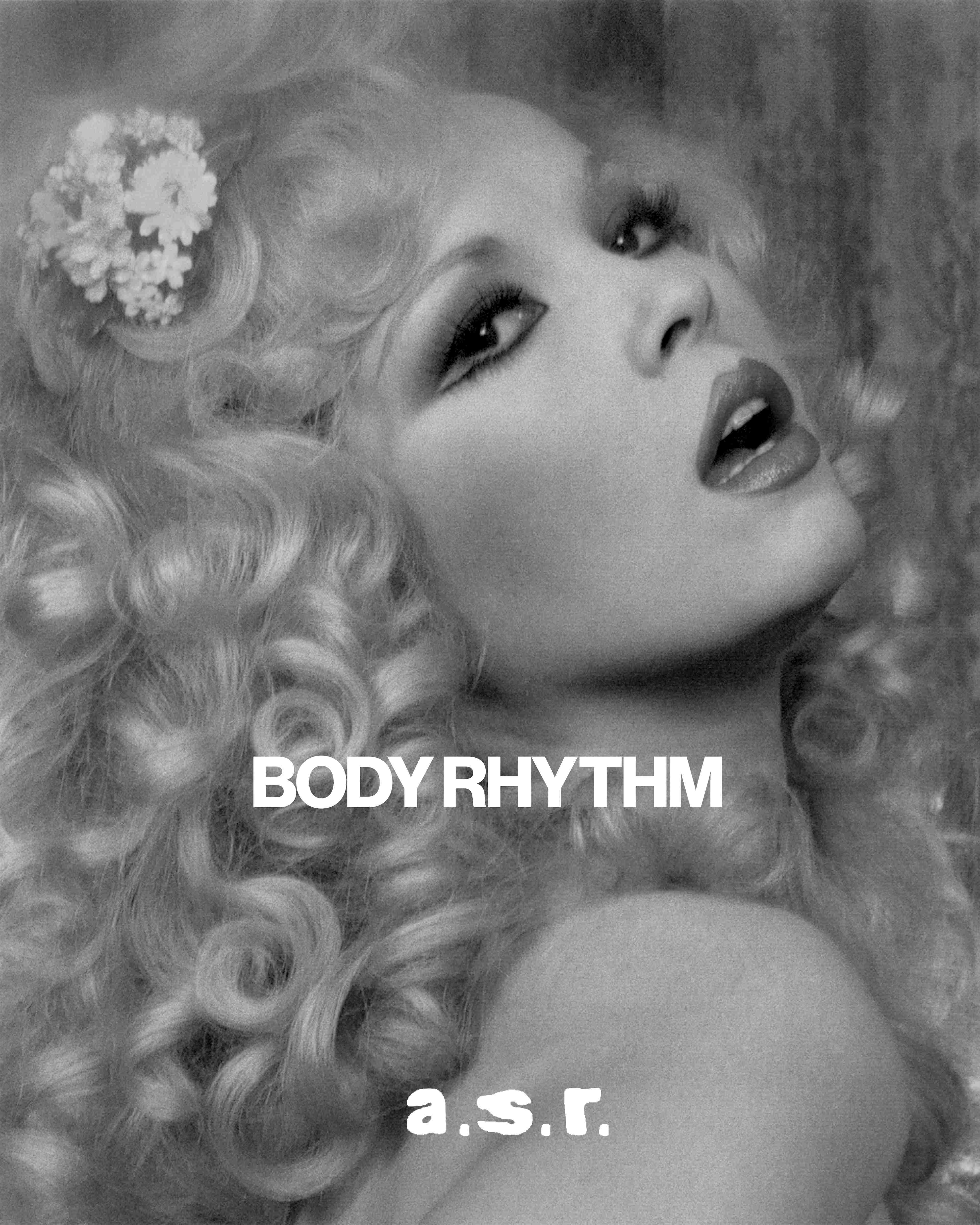
Katia - La Pin-Up Des Pick-Up: This is the B-side from a George Duke (!) produced single by Katia Soghomonian, who recorded under the mononym Katia. I had first heard of this record when I was writing liner notes for a reissue of France Joli's 1985 album Witch of Love, which George Duke also produced. Very much in his pop-producer era at the time, one of the singles from Joli's album was "Party Lights," originally recorded by Katia as the A-side of this single. France Joli's version of that song would win the Grand Prix at the 1984 World Popular Song Festival in Tokyo. In the process of writing those liner notes, I was able to contact George Duke directly to ask how this single came about. He told me that that Katia is/was a French promoter who wanted an original song she could play at her parties. In looking up the single though, I found that I was more taken by the B-side "La Pin Up des Pick Up." Written by François Feldman (who has done some now sought-after disco as FF Yellowhand) and Jean-Marie Moreau, I was finally able to cross this off my vinyl wish list over the summer. Should also note that the title picture for this month's episode is from the back cover of this 12" single.

Emílio Santiago - O Amigo De Nova York: This song by Emílio Santiago had been on my wantlist for some time. I was finally able to cross it off recently when his 1983 album Mais Que Um Momento was reissued by Universal as part of their Hora do Brasil reissue series. The entire LP is solid, but this track is the real standout. Singing about a friend from New York—"from the underground, from the black world" ("É do subterrâneo, é do mundo negro"), who goes to Carnaval and becomes a Brasilian at heart. A beautiful, funky and infectious melding of two worlds.

Starpoint - Wanting You: Best known for their 1985 crossover hit "Object of My Desire," I find that my favourite records of theirs on their earlier albums on Casablanca's Chocolate City imprint. This is one of them—the opener and title track of their third album from 1981. Most of their albums are good for a solid, funky gem or two, and this is one that I've been really enjoying lately. I slowed it down here for beatmatching purposes, but I had this in my record bags from recent gigs and wanted to play it again.

Aretha Franklin - Every Girl (Wants My Guy): One of my favourite tracks from the two albums Aretha did with Luther Vandross in the producer's chair. From her 1983 Get It Right LP, this track is, to me, the true successor to "Jump To It." A reviewer once referred to that as Aretha at her most "anti-woman," yet I have to admit, sassy Aretha is some of my favourite Aretha. Rich Juzwiak penned what is probably one of the best headlines about Aretha in a piece for Gawker entitled "The Queen of Soul and Shade," which documented, in part, a Wall Street Journal interview that has since launched a thousand memes. I mention that only because I feel like this song fits that headline perfectly. Once again, Aretha is on the phone with her friend, "Kitty" ("hey Kitty, girl!" - in case anyone wondered where RuPaul got that from!) talking down the girls chasing her man because "he's been snatched by me, now!" I mixed out of the song just around the time she drops the line "have you looked in your mirror lately!?" Shady and a little bit competitive, while it may not live up to the idealized public image of her, it's probably closer to who she really was. Once again, Marcus Miller just burns up the bass on this song.

Herbie Hancock - Ready Or Not: One of several great dancefloor jams from his 1979 Feets Don't Fail Me Now album, and also on the 12" B-side of "You Bet Your Love." One of those singles which I hadn't flipped over for the longest time, but as soon as I did, was promptly hooked. Co-written by Jeffrey Cohen and Ray Parker, Jr. (!), it's no wonder this is so damn funky. I'm either dancing in my seat, or dancing on the floor whenever this comes on. Produced by the ever-reliable David Rubinson, even if I didn't get a chance to play this one out over the summer, glad to include it here.

Homegrown Syndrome - Confrontation: This band was also known as Memphis and also as Home Grown Funk. Under the latter moniker, they had released "Party Vibes" for/with Ike Turner on his 1980 album, The Edge which included some of his last sessions with Tina. This particular song was a smooth, catchy one-off single for Arista from 1981. Produced and co-written by former A Taste of Honey songwriter and keyboardist Perry Kibble, the original 7" has gone on to become a rarity, with copies selling upwards of $400 US. Thankfully, it was made available again on an officially licensed reissue by Athens of the North, which is the copy I have. At a certain point, even the reissue started to become expensive too, so I'm glad AOTN were able to press another run. While it's perhaps too bad this was one of those singles which didn't do much on its initial release, as far as I'm concerned, those just become musical treasures left for those willing to look.

Rick James - Ghetto Life: This is perhaps the most popular song on this mix in terms of chart singles. Taken from Rick James' landmark 1981 Street Songs album; even if it wasn't the biggest of the album's songs, it is certainly one of the most potent. I recall an interview with Rick—likely just before his passing in 2004—where he starting talking about (and I'm paraphrasing from memory here) how his songs were about "real sh*t, like fire and desire and ghetto life." If I recall correctly, he was trying to counter the one-dimensional typecast labels often used to describe him and his music, like the king of "punk-funk" or whatever else it may have been in that interview. "Ghetto Life" is not only a jam, but as a song and performance feels like the culimination of a lifetime of experience, emotion, rage and ambition. In fact, the whole Street Songs album feels like that, which is a major reason why it is the landmark record that it is. Even the 'party' songs have an element of grit and realness to them; the grooves and the subject matter all just cut straight to the point. I had Street Songs in my record bag from my most recent gig, filling in for Cyclist at Wax Candy Disco one Friday last month. As I recall the most requested artists that night were ABBA, Rick James and Donna Summer, in more-or-less that order. Though I didn't get to play this particular song that night, I'm glad to include it here to make up for that.

Wardell Piper - Super Sweet (12" Version): I wrote a Disco Delivery entry on Wardell Piper's 1979 LP back in 2007, and this is one of my favourite tracks from it. One of those rare instances where the 12" mix (by Jimmy Simpson) is actually shorter than the LP version. Produced by John H. Fitch, Jr. and Reuben Cross, the same guys who wrote Evelyn "Champagne" King's signature hit "Shame," this is just one of those great disco/funk singles that flies under the radar outside disco digger circles, yet packs a lot of heat and isn't hard (or expensive) to find. Great disco bass on here and Wardell's vocals get seriously wild, just shy of delirious in fact, but really deliver the goods.

Vivian Reed - Solid Rock: I've played Vivian Reed on a previous Disco Delivery mix and this is another one of my favourites by her. For me, the standout on her 2nd album from 1976, Brown Sugar—named after her Tony-nominated Broadway debut in Bubbling Brown Sugar that same year. Clocking in as the longest cut on the LP; its gospel-inflected crescendo seems perfectly primed for mid-70s disco play and still packs a punch.

The Supremes - Bend a Little: An originally unreleased disco track from the latter-day Supremes, which was finally given a vinyl release for the first time last year by Dynamite Cuts. They even gave it a picture sleeve, (though unfortunately with the wrong line-up). This song garnered an almost legendary status in Supremes fan circles, where it circulated unofficially for years until its eventual release in 2002 when Motown/Universal released The Supremes' 70's Anthology set. Left off of their 1975 self-titled album for reasons still unspecified, Andy Kellman of the All Music Guide called this song "a would-be disco single so stellar that it must have been shelved due to some form of label politics." Looking at things from that angle, producers Clayton Ivey and Terry Woodford, once on the verge of establishing their own Motown South imprint, were apparently on the outs at Motown by the time The Supremes' LP was released. As a result, none of their productions for the group were released as singles, and their most single-worthy track (this one) was shelved altogether. An instrumental version, however, was released on the second Motown Magic Disco Machine LP and the recent Dynamite Cuts 7" release pairs them both. Either way, I'm glad to play this in my sets whenever I can.


PREVIOUS RELATED ENTRIES:
disco delivery mix #16: guest mix for disco dose society, vol. 43 (tuesday august 4, 2026)
another setting radio: body rhythm #1 (sunday december 21, 2026)
disco delivery mix #15: music you can ride on (thursday june 27, 2024)
disco delivery mix #9: guest mix for sunshine after dark (thursday august 18, 2022)
disco delivery #43: wardell piper (1979, midsong international) (monday august 27, 2007)
disco delivery #26: a taste of honey - another taste (1979, capitol) (saturday september 30, 2006)

LINKS:
another setting radio
instagram: another setting radio
soundcloud: another setting radio archives
another setting radio: artist bio - thomas del pozo


CATEGORIES: BODY RHYTHM

Tuesday, August 11, 2026

Another Setting Radio: Body Rhythm #9

Photo: L.A.T.F., 1983


Had been wanting to make a Italo Disco mix for some time now, so decided I'd do just that for this month's episode of Body Rhythm.

Most of these tracks are from the sonic golden years of 1982-83. I initially included a few instrumental tracks on my first pass at this mix. Decided to do a second try and swap most of those instrumentals for their vocal versions. Even with the sometimes clunky or misplaced English lyrics, the tracks just feel more complete with vocals. Beyond that, those lyrical quirks are an essential part of the music's charm for me.

Further details about these selections in the track notes below... Happy listening!


Body Rhythm #8:
Tracklist:


B.W.H. - Livin' Up
Scotch - Penguins' Invasion (Hot Version)
Trilogy - Not Love (Vocal)
Louise Freeman - Mirage
Marzio Dance D.J. and Gang - Adventure (Theme Version)
Primadonna - Flashing On The Floor (Vocal)
Los Angeles T.F. - Magical Body (Vocal Version)
Vivien Vee - Americano (Vocal)
Annie Anner - Night In The City (Canadian Remix)
I.M.S. (International Music System) - An English '93
Salvy & Giuly - Stop The World (Vocal)
Coco Bill - Evita (Avoid)
Samoa Park - Tubular Affair (Vocal)


All the records played on show #9


Track Notes:

B.W.H. - Livin' Up: One of the marquee productions of DJ/producer Stefano Zito (AKA Blackway) and his wife Helene, the duo behind the acronym B.W.H. (Blackway with Helene). Recently reissued, this is from a 12" which paired two absolute killers. My personal favourite "Stop" is on the B-side, but for this I chose to play "Livin' Up" from the A-side. Its tempo and energy felt like the perfect way to start things off here.

Scotch - Penguins' Invasion (Hot Version): The first single from Scotch, when it was still basically the project of producer/arrangers from Bergamo, David Zambelli and Walter Verdi alongside Manlio Cangelli. They'd have bigger hits with "Disco Band" and "Delirio Mind," but the airy chords and synth pulse of this track is more appealing to me. Both versions on my 12" are basically instrumental, but a vocal does exist. Unlike some of the other selections here, I'll have to say the instrumental works better for me.

Trilogy - Not Love (Vocal): Sung and produced Paul Micioni, with Robert Masala (AKA 'Gloves') and Max Di Carlo (AKA 'Konnor'). Micioni had been in Easy Going and Traks and was one of the most prolific producers in Italo Disco, also working with Mike Francis, Gazebo and Gary Low. With it's hard driving beat, it's easy to see how this was one of those tracks which seems to have crossed-over into early house music. That may explain why this was also given a US release on JDC Records, who were known to license the occasional Italo single at the time.

Louise Freeman - Mirage: Originally released in 1983 and recently given a proper reissue by Disco Segreta, I'm surprised this wasn't a bigger hit for UK-born vocalist/dancer/choreographer Louise Freeman. Nevertheless, it has to be up there as one of my all-time Italo favourites. Produced by Gloves and Konnor who were also behind the previous selection, sonically this just seems to have captured some of the coolest, most ethereral synth sounds of the time in a dance record. Even lyrically, it's a cut above what one might expect from an Italo single at this time, which may be owed to Freeman's writing credit here. Hard to believe a track this good was not only overlooked as a hit, but also relegated to the B-side. Interesting fact: Louise is the sister of Tracy Spencer, (not to be confused with the American singer Tracie Spencer) who had a string of pop hits in Italy in the mid 80s. These days Karen Louise Freeman is a fitness instructor, actor and DJ based in London.

Marzio Dance D.J. and Gang - Adventure (Theme Version): I'm often amused by the preponderance of "gangs" in Italo Disco groups or studio projects, and this is yet another. A project of Marzio Mugnaioni—DJ at the Xenon disco in Firenze, whose logo is prominently displayed on the front cover alongside a photo of what I assume is the Xenon discotheque itself—together with producer/arrangers Fabrizio Simoncini and Marco Masini. Picked this up at a local record fair this past spring, and it's an interesting record—a kind of choose-your-own adventure in terms of RPM/tempo. The stated 33 ⅓ RPM speed on the label feels much too sluggish, making it sound like a disco dirge. Personally, I feel like this sounds best at 45 RPM -3, which is approximately the speed I used here.

Primadonna - Flashing On The Floor (Vocal): "Who are you looking at pretty boy? Where are you going tonight?"... Another one of those songs on which I decided to opt for the vocal instead of the instrumental on my second try. Sung by Giorgio Dolce & Stefania Dal Pino, the lyrics about dancefloor attraction are charming, even in their awkward moments. As an example, the response line "dancing double doors" makes little sense, but still makes me smile! Similarly, I doubt that "flashing" is used here in the English colloquial sense; it more likely describes someome who is catching the eye or catching the light, like the facets of a mirrorball. Even with that, the general sentiment still feels stronger with its vocals. Produced by Dolce and the prolific Romano Bais, interestingly American model/actress Debbie Falconer—one time wife of Robert Downey, Jr.—recorded a cover of this song which was only released in France, but it doesn't hold up to the original.

Los Angeles T.F. - Magical Body (Vocal Version): My favourite of the Los Angeles T.F. singles, so named for it's producers - Tony Travagliante and Franco Zaza. The uncredited vocalist on this track is UK singer Katherine Quaye AKA Taffy (note: not the lady in the photo at the top of the post), best known for her Italo hit "I Love My Radio". As far as the lyrics go, they're odd and yet totally catchy and I kinda love them... "Magical, magical is your body... typical, typical, of a latin lover"... Another selection which I had swapped the instrumental in favour of the vocal.

Vivien Vee - Americano (Vocal): A very tropical piece of Italo sung in English and a bit of Spanish by Vivien Vee. Italian balearic, perhaps? Produced by Giancarlo Meo with the group Radio Movie and released around 1984/85 (depending on the territory), it is a bit later and noticeably brighter than the other selections here from ’82/’83. Yet, those lush synth textures and captivating chord progressions are what really make this for me.

Annie Anner - Night In The City (Canadian Remix): A bit of Swedish Italo from Annie Anner (AKA Anne-Lie Thorslund) that I had fished out of a dollar bin last summer. Produced by her brother Anders Thorslund and Lars Fjellström this is another one of those select Italo/italo-esque singles which received an actual North American release. Picked up by Canada's Power Records and given a remix by Power's chairman, producer/DJ Vince Degiorgio, who gives it a more streamlined mix (hear the original). Well before Sally Shapiro emerged, consider this another testament to Italo's popularity in Sweden.

I.M.S. (International Music System) - An English '93: From the US release of the first International Music System EP, which was one of those surprise finds in my hometown, Calgary Alberta, of all places. Unfortunately, the US release didn't come with a picture sleeve, just a generic 12" company jacket. Still, I was glad to find a genuine original pressing for cheap. To me, IMS was one of those projects that perfectly straddled the line between italo disco and US electro. While "Nonline" is usually the big track on this single, this strangely titled and basically instrumental track is a killer too. Naturally, some Kraftwerk in here also, but with extra tempo and percussion. Two of the principals behind I.M.S. - Giorgio Stefani and Maurice Cavalieri were also behind what is probably one of the most iconic italo hits, "Spacer Woman" by Charlie.

Salvy & Giuly - Stop The World (Vocal): The only single attributed to Salvy Lauria and Giuly Piva (vocals), this was a recent reissue and one that I really love. Again, opted to swap the instrumental for the vocal here. I’m charmed by the Italian-accented English; despite the occasional grammatical oddity, the lyrics feel both genuine and still relevant to the state of the world today. I'm guessing they had good help from Ivana Spagna in that department who's credited as a writer here, along with Ottavio Bacciocchi and the prolific Larry Pignagnoli (who would later write and produce Whigfield's "Saturday Night"). Until this was recently reissued, people were willing to put down nearly €200 for an original copy of this record.

Coco Bill - Evita (Avoid): From DJ/producer Jenny Rocco (AKA Gennaro Rocco), arranger Gianni Miele and American vocalist Larry Paul Emmett, a dystopian disco warning about the computers that would take over our lives? You don't say... It's almost as if they anticipated the social media algorithms that influence what we see, hear and think today. "Avoid the leaders that program the computer"—looking at you, tech broligarchy. Beyond the concept, a great piece of cybernetic paranoia with a driving beat and an affective piano melody. Interesting double meaning in the lyrics too with Evita, being the Italian word for Avoid. Even when the singer misspells A-V-I-O-D in the chorus, that even becomes a hook of its own. Initially, this had been released under Larry Paul Emmett's name. Judging by his partner's words on YouTube and Discogs, Emmett had apparently landed a drug charge in Italy just before this single was released. He would be extradited to back to the US, not really knowing what happened to the single he recorded. Trying to avoid a more practical controversy, the producers quickly re-released and rebranded the project as Coco Bill. Sadly, Emmett would pass away from cancer in Jackson, Mississippi in 2012.

Samoa Park - Tubular Affair (Vocal): A pretty great Italo cover and mash-up of two Mike Oldfield hits - "Tubular Bells" and "Foreign Affair" from 1983. Samoa Park was a project which released mostly italo covers and medleys, some more sucessful than others. This one is easily their best, in my opinion. The two songs pair brilliantly and seamlessly under the steely synth pulse, a feeling which builds on the dystopic note of the previous selection.


PREVIOUS RELATED ENTRIES:
another setting radio: body rhythm #6 (monday may 11, 2026)
another setting radio: body rhythm #4 (tuesday march 17, 2026)
another setting radio: body rhythm #1 (sunday december 21, 2026)
disco delivery mix #14: sign of the times (monday january 22, 2024)
tonight.. (wednesday february 14, 2007)

LINKS:
another setting radio
instagram: another setting radio
soundcloud: another setting radio archives
another setting radio: artist bio - thomas del pozo


CATEGORIES: BODY RHYTHM

Tuesday, August 04, 2026

Disco Delivery Mix #16: Guest Mix for Disco Dose SOCIETY, Vol. 43


Was recently invited to make a guest mix for one of my favourite Instagram disco accounts, Disco Dose and their SOCIETY mix series.

Many thanks to Øhm Sweet Øhm for inviting me to contribute! Kept things mostly in the realm of funky, American disco with some forays into Eurodisco, boogie and soul.

Take a listen below...


Disco Dose SOCIETY Vol. 43: Thomas del Pozo (Disco Delivery)


Tracklist:

The Dells - Face To Face
The Escorts - Make Me Over
Crown Heights Affair - Dance Lady Dance
The Supremes - You're My Driving Wheel
Tommy Tate - Let Me Entertain You
Tschai Prender - I Wanna Dance Forever
Asphalt Jungle - Freakin’ Time Pt. 1
Spirit Band - Keep Your Love Alive (12" Long Version)
Carte Blanche - Get Up Get On Your Feet (12" Version)
Jimmy Maelen - Spirit In The Flesh
Sunny Gale - I Wanna Know
Prince Phillip Mitchell - Star In The Ghetto
Claudia Polley - Tous Les Bateaux Tous Les Oiseaux (12" Version)


All the records played in this mix.


Track Notes:

The Dells - Face To Face: The title track from The Dells' 1979 album on ABC Records. The Sweet Inspirations also did a good version of this song the same year. Not sure which one came first, but The Dells' version here feels a bit more funk-forward and an ideal way to start things off here.

The Escorts - Make Me Over: This one's a recent pickup, from New Jersey group The Escorts self-titled LP from 1981, the only one produced by Herschel Dwellingham on his Helva label. This was the opener and the standout jam on the album.

Crown Heights Affair - Dance Lady Dance: The title track from the group's fifth album from 1979. Immaculately produced by the band with Britt Britton and Freida Nerangis; right from the jump, the slow glistening intro sets the tone for the funky disco elegance to follow... One of my favourites of theirs.

The Supremes - You're My Driving Wheel: Another old favourite of mine from the final Supremes album, Mary, Scherrie & Susaye from late 1976. That album was the subject of my very first blog entry here, and one I still bring out with me whenever I play. Produced by Brian Holland, co-written with his regular collaborator Harold Beatty alongside Reginald Brown and Stafford Floyd, two members of New York Port Authority, another group The Holland Brothers were producing at the time. This is also one song that I love to warm up with.

Tommy Tate - Let Me Entertain You: A little sleeper from soul singer Tommy Tate's self-titled 1981 album on Frederick Knight's Juana label. Written and produced by Knight, the man behind Anita Ward's "Ring My Bell", this is one of at least four versions of this song that I know of. Knight also produced versions of this song with The Controllers in 1980 using what sounds like largely the same backing-track, and with C.L. Blast, several years later in 1984. Fern Kinney also recorded a version the same year as this one, but this is perhaps my favourite of the four, with the heft and directness of Tate's vocals really bringing the groove to life.

Tschai Prender - I Wanna Dance Forever: An obscure single from an obscure singer that I'd picked up for cheap some years back. No production credit on the label, but written by (and likely also produced by) Charles Blackwell. Blackwell was a major British arranger, producer and songrwriter in his day who'd work with everyone from Marlene Dietrich to Tom Jones, to Shirley Bassey. He was also commissioned to arrange Beethoven's "Ode to Joy" as the "Anthem for Europe" for the European Parliament. Besides that, the man also had some success in disco, writing and co-producing The Larry Page Orchestra's major hit, "Erotic Soul," even recording a disco album under his own name in 1976. While not as orchestrated as his pedrigee would suggest, this single is actually a spare, sexy, synthy disco groover. Discogs only lists the Rio 12" release from Canada, which is what I played here, so not sure if this was released anywhere else. Nevertheless, a treasured piece of cheap heat in my collection.

Asphalt Jungle - Freakin’ Time Pt. 1: A nice slab of funky disco from 1979 courtesy of Philadelphia drummer and producer Keith Benson. One of two known, released production credits to his name, the other is "Can You Feel It" by the Funk Fusion Band. Both selections are immaculately solid, immediate buys in my opinion. Benson was the brother of singer Carla Benson and as one of the MFSB players, has appeared on a number records in that nexus of Philly soul and disco. Was holding out for a 12" of this, but in the meantime recently came across this on 7", which is what I played here. As it turns out, the tracks on the 7" are the same length as the 12".

Spirit Band - Keep Your Love Alive (12" Long Version): A slice of funky boogie from 1982 on the RSP label out of the Bronx. One of those small independent labels that released records in the intersection of disco, funk and early hip-hop. Scored this earlier in the year and was totally taken by the drum action on this record. Overall, there's a looseness here that's just outside what you'd expect from disco or even boogie from this time. The version I played here is the original release, there's a later release of this with an early M&M (John Morales & Sergio Munzibai) Mix.

Carte Blanche - Get Up Get On Your Feet (12" Version): Recently got the Canadian 12" of this catchy British disco nugget. Produced by engineer Geoff Calver, with Peter Yellowstone and Steve Voice, the team behind Kelly Marie's disco hits at the time. Unfortunately the Canadan 12" came in a generic company sleeve, not the nude silhouettes on rollerscates like in other territories. Nevertheless, for the princely sum of $1, I wasn't going to pass it up.

Jimmy Maelen - Spirit In The Flesh: Recently picked up the sole album, Beats Workin', by the late percussionist Jimmy Maelen on DJ/Producer John Luongo's Pavillion label. Maelen, before his untimely death in 1988, was likely one of the most well-travelled session musicians in New York at the time. Chances are if you're listening to something recorded in New York in the late 70s on a major label, there's a high chance he's somewhere in the credits. It certainly isn't the greatest disco record by a percussionist that I've heard (that title would go to Candido Camero), but it's got a few decent songs which stand out, like this one.

Sunny Gale - I Wanna Know: A stellar, lesser-known Vince Montana production and also a little known later effort by 50s singing star Sunny Gale. As far as I can tell, this is likely her last released recording. Though Gale had a string of hits in the early-mid 1950s, among them "Wheel of Fortune," like many pop singers of the time, her career waned in the wake of Rock n' Roll. She made a brief return to recording in the mid 70s releasing an album of Dixieland Blues in 1974, followed by this disco single not long after. Unfortunately, as a single, it was only released on a rare, promo-only 12" on RCA. It would later be made more widely available on a very good RCA disco compilation called Disco Express, Vol. 1, which is where I took this from. Montana would revisit this song under his Goody Goody moniker, with daughter Denise Montana on vocals which remained unreleased until 2002.

Prince Phillip Mitchell - Star In The Ghetto: Taking things down a bit with this song, one that I personally love so much. Prince Phillip Mitchell wrote this, but Ben E. King and the Average White Band released their version first. That being said, this version has the edge for me. From his Make It Good album from 1978, Mitchell's interpretation makes this feel extra personal, likely because it is. Broadly speaking—musically, lyrically, emotionally, I feel like this song speaks to anyone who's quietly plugging away at whatever it is they're good at and passionate about. It may not have been what was expected of them, it may not get them famous or recognized, but they can see those who see them.

Claudia Polley - Tous Les Bateaux Tous Les Oiseaux (12" Version): Another record I picked up recently. A French production for American broadcaster and musician Claudia Polley, who had also released records as Claudia Ashley at the time. French chanson set to a disco beatbox, this is a cover of the song made famous a decade earlier by Michel Polnareff and not to mention, a pretty obvious attempt at recreating and recapturing the magic of Grace Jones' version of "La Vie En Rose." While it doesn't quite reach those heights, it's not without its own charms too. Even if the reference is obvious, the fusion of French chanson and disco is a combination I always love. There's also an eccentric—especially for the era—record-scratch effect in the song, which is as curious as it is catchy. Another point of connection with Grace Jones: the song's arranger Gérard Salesses also arranged the original 1975 release of Jones’ first hit, "I Need A Man." Polley would also record an English version of this song entitled "Believe," but even in her American-accented French, I prefer this version which I only just realized is in the soundtrack of The Bourne Identity... Digging deeper, Claudia Polley’s background is also quite remarkable in itself. In the 70s before moonlighting as a disco singer in France, Polley had been classically trained at Juilliard and had gone on to become one of the first black female broadcasters in the Indianapolis area. By the 1990s, she was producing jazz records on the Mapleshade label. These days, she is a leading historian and preservationist in the Indianapolis area serving as the president of the Urban Legacy Lands Initiative—a non-profit dedicated to preserving historically black spaces in Indiana. For those who would like to know more about her, she shares her story in a two-part interview with Kyle Long on WFYI Indianapolis' Echoes of Indiana Avenue.


PREVIOUS RELATED ENTRIES:
disco delivery mix #12: wheels begin to roll (wednesday july 05, 2023)
disco delivery #34: unyque - makes me higher (1979, djm) (thursday february 08, 2007)
the first delivery: the supremes - mary, scherrie & susaye (1976, motown) (tuesday january 10, 2006)

LINKS:
instagram: disco dose
instagram: øhm sweet øhm
mixcloud: disco dose


CATEGORIES: DISCO DELIVERY MIXES

Search this blog