Although it may have been bittersweet for some out there (particularly for many of you in California), I'd like to extend congratulations to my American readers out there on making history on Tuesday...
In light of that, I thought this might be a good time for this song.
According to Joel Whitburn's 1974-2003 Hot Disco/Dance chart book, this was the only charting single for Zulema as a solo artist on the Billboard Disco Charts (#37), though she's probably better known these days for her song "Giving Up" from 1972, a great track apparently well regarded in disco and hip-hop circles. A sorely underrated soul singer/songwriter in her own right, Zulema Cusseaux was also a member of a little-known 60's girl group called The Lovelles, an early lineup of Faith Hope & Charity, and a frequent collaborator of Van McCoy throughout her career.
This song, "Change," taken from her final album "Z-licious" (1979, LeJoint/London) seemed like something of an oddity. Written, produced and arranged by Cusseaux herself, it was, in my opinion the best track on what was otherwise a weak album, by her standards. Bringing a blistering consciousness to the dancefloor, it's perhaps not the sort of thing escapist soundtracks were made of. The fire in her delivery, the hopeful, yet critical lyrics, occasionally veering into hectoring, preachy territory (all you sinners.. won't be winners.. when the master.. comes around on judgement day.. etc..) along with the rawness of the arrangement behind it, are what seemed to make this an unusually captivating single. It's those very qualities in the lyrics and the music: the urgency, the frustration coming through with the call for change which seem to give this track a strange sort of currency and relevance today.
The 12" version included here was mixed by Richie Rivera, who, for some reason isn't credited on the Canadian pressing I have. The break on here just after the 4 minute mark with those keyboard solos and guitar riffs take this several steps higher than the album version, which, for the record, I would have put up here if I was able to find my copy of the LP..
Although Zulema seems to have dropped off the face of the earth (or at least of the music industry) after the early 80's or so, after this final album, she teamed up briefly in the early 80's with Al MacDowell to form the duo Zalmac, who had released an album on the TSOB (The Sound of Brooklyn) records. In 1996, Ichiban Records, along with David Nathan had compiled and released a collection of some of her solo material for RCA. It's a compilation that I highly recommend for those interested in discovering the deep, soulful sounds of Zulema.
For those interested in hearing more of Zulema, there's a great posting on YouTube of what was likely her last solo single, a little known piece of countrified soul entitled "A Mother Cries," released 1981 on TSOB.
Originally, I wasn't planning to post a follow-up to the last Disco Delivery today, in fact, I wasn't even planning to post anything particularly Halloween related today, until I suddenly remembered that I had this record. One of the little goodies I had gotten in Vancouver this summer, I managed to find a sealed copy there that I hadn't even opened until this morning. Somehow, I seem to have become a little bit precious about my sealed records lately, there's a kind of weariness that I seem to have developed over the last few years of buying and searching for records, of opening something that has been sealed for thirty or so years. It's like I'm disturbing some sort of artifact.. Either way, I suppose they're meant to be enjoyed, and this one didn't disappoint.
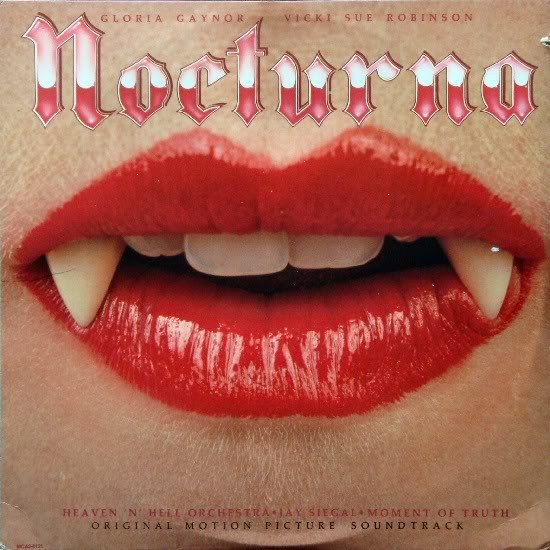
Although I haven't seen the movie, which is long out of print, there are some little clips on YouTube (see below) and reviews all over the internet, which generally seem to boil down to "awful, but fun." Released in 1979, (but filmed in '78) and directed by Harry Hurwitz under the alias 'Harry Tampa', it's been described as a campy, low budget disco vampire movie, with it's plot (without giving away too many spoilers) revolving around Nocturna, the granddaughter of Dracula (played by John Carradine). Having fallen on lean times, their Transylvanian castle has been turned into a hotel/disco where they invite a band (played by one time Salsoul group Moment of Truth) to play live. Nocturna falls for Jimmy, one of the boys in the band so to speak, played by the late Antony Hamilton (in what appears to have been his first major film role), who takes her to New York where romance, disco and vamipric ridiculousness apparently ensue..
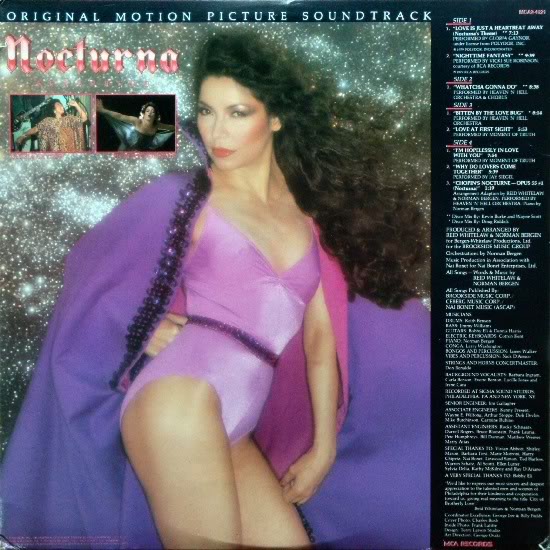
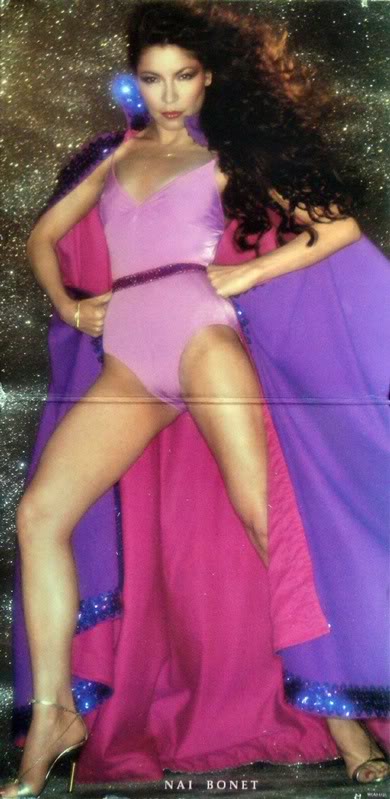
Although Yvonne DeCarlo (best known for her role in The Munsters) is listed as the 'star' in the intro, judging from her involvement as the main writer, executive producer and her role as the lead character, this movie seemed more than anything, like a vehicle for Armenian born belly dancer, sometime singer and actress (and I'd use that word loosely) Nai Bonet. Something of a vanity project of hers, she seemed to have had her hands in virtually all aspects of the film, all the way down to the soundtrack. Not only is her picture prominently splayed on the back cover and inside the gatefold sleeve, she was also given a loose, vague production (or executive production) credit, with one of her companies, Nai Bonet Music even taking part of the publishing on all the songs.
Although the film wasn't exactly meant to be scary, looking at the clips, the most glaring things would have to be either Brother Theodore's hilarious/creepy ranting, along with Nai Bonet's so-called 'acting.' Even with the simple lines she seems to have, she's barely convincing with her numb, catatonic delivery. Apparently they put in a topless bathing scene (for those of you into that) with her, which is evidently supposed to make up for some of that. Nevertheless, it's probably no wonder her IMDB credits drop off completely after 1979.
That said, despite the film's dubious credentials, the soundtrack is remarkably solid, being probably one of the best disco soundtrack albums I've come across. A double LP produced and arranged by Reid Whitelaw and Norman Bergen who together had also produced Ralph Carter (of 'Good Times' fame), Alfie Davison and pretty much all of Moment Of Truth's material, it's packed mostly (last two tracks aside) with full and hearty Philly-style meat-and-potatoes disco, much of which seems to have gone overlooked despite some of the high profile names attached to this.
The two major singles from this were the lead-off tracks by Gloria Gaynor ("Love Is Just A Heartbeat Away") and Vicki Sue Robinson ("Nighttime Fantasy"). Both were given special disco mixes on the album by Kevin Burke & Wayne Scott and Doug Riddick, respectively, with both given shorter versions on their 12" releases (which I haven't heard yet). Both singles ended up charting low to modestly on the Billboard Disco Charts in 1979 (Gloria at #81 and Vicki at #21), but despite the relatively modest success of both singles, I'd probably consider these among some of the best material that I've heard from both ladies. Exquisitely arranged with just the right amount of dancefloor intensity and high drama, both tracks are incredibly infectious and memorable. A good deal of that is likely due to the backing band full of notable Philly players like Larry Washington and his distinctive percussion, Jimmy Williams (also of Double Exposure) on bass, Bobby Eli and Dennis Harris on guitar, Keith Benson on drums, Don Renaldo's Strings & Horns, and the ubiquitous Sweethearts of Sigma (with Irene Cara also credited) providing their angelic background vocals. Given that and the time period, it's perhaps no coincidence why these tracks remind me in places of some of the tracks off Grace Jones' "Fame" (1978, Island) album.
In an interview with Jussi Kantonen for DiscoStyle.com this past February, Gloria Gaynor herself had commented on "..Heartbeat" after being asked about a recently released remixed version. As much as I personally enjoyed the track, apparently Gloria herself had a different opinion:
I never liked the old one, the new version is certainly better than that. I thought "Love Is Just A Heartbeat Away" was a corny title to begin with, and the arrangement of the the original was already badly dated when I did it. And the lyrics were dreadful, I would never in real life present words like that to anyone. In fact I only agreed to sing it out of courtesy to my then manager who also happened to be my husband..
This song has apparently been remixed several times, with severalroundsof remixes released in 1995, one of them by co-producer Reid Whitelaw as well as a more recent remix by Eric Kupper released last year (the one referred to in Gloria Gaynor's interview). A version of "Love Is Just A Heartbeat Away" was also produced by Tom Moulton for his Loose Change (1979, Casablanca) LP project released the same year.
Aside from the first two tracks, the two tracks contributed by Moment of Truth - "Love At First Sight" and "Hopelessly In Love With You" are also excellent. "Love At First Sight" is, in my opinion, the best of the two. An excellent piece of uplifting Philly disco, pounding rhythm and delicate piano flourishes complimented with a brilliant, uplifting melody and a muscular, soulful vocal, it seems too good to have remained an obscurity on here. Probably best known for their #3 Billboard disco chart hit "Helplessly" in 1975 (originally released on Roulette), Moment Of Truth were quite possibly one of the most underrated groups on Salsoul. Apparently no longer signed to Salsoul by this time, this song stands up to the great songs from their Salsoul period.. Although this evidently didn't become a single, referring back to Ms. Gaynor's comments about her own single, perhaps it was due to the fact that this sound might have been a bit dated as well by this time> However, if there ever was another contender on here, it would have to have been this one..
Of the other tracks on the album, there are two tracks anonymously credited to the Heaven 'N' Hell Orchestra, both a vocal ("Whatcha Gonna Do") and an instrumental ("Bitten By The Love Bug"). Of those two, my favourite is perhaps the latter, which features some energetic, yet sublime arrangements and some great galloping breaks in the middle. Although I do with they had kept the sax that they had used on the movie version of the song (see the third video clip below)..
Aside from that, there's the lone ballad on the album, "Why Do Lovers Come Together" performed by Jay Siegel (misspelled on the front cover as 'Jay Siegal'). A bit of a buzz-kill, but admittedly, a track that gets better with more listens. Siegel is probably best known as a member of the 1960's vocal group The Tokens, who had a huge hit with "The Lion Sleeps Tonight" in 1967. Also, not sure if Discogs is wrong on this one, but according to them, Siegel (credited as J. Siegel) was also one of the producers credited behind Sarah Dash big disco hit "Sinner Man."
Overall, I suppose it's not unusual for films of this calibre to have soundtracks exceeding the quality of the film itself, and while I haven't seen the movie to say so for myself, the reviews certainly suggest as much. On it's own terms, it's a solid and enjoyable record that's definitely worth seeking out for some unexpected treasures, especially for those who enjoy the Philly/Salsoul side of disco..
As far as the movie goes, there was some apparently some shadowy intrigue surrounding the film, with rumoursaboutthe film having been financed by laundered mob money. It likely persists due to the murder of one of the film's financiers, former actor/embezzler William H. Callahan in 1981, which remains unsolved to this day. Apparently the movie was only briefly released on video for in the early 80's and apparently, even then, only for rental. There's an original copy on eBay currently going for nearly $200 US, but there are also more reasonably priced bootleg DVDs out there, which are easy to find.. On that note, there's always YouTube, where there are some great, fun clips of the intro and some of the movies' disco scenes that I had to include here. Let me just say, Antony Hamilton was really something in his day..
Some Trivia: The year following the making of Nocturna, one of the stars of the soundtrack, Vicki Sue Robinson would get one of her first movie roles in a film called "Gangsters", which also featured Nai Bonet in a prominent role. As well, one of the producers of the soundtrack - Reid Whitelaw seems to be still active in the music industry, albeit in the business side of things these days with his company Reid Whitelaw Productions/Brookside Music Corp.. Whitelaw and Brookside Music seem to be quite prominent in the area of disco reissues and remixes (see the various remixes of Gloria's "Love Is Just A Heartbeat Away" linked above), currently owning and controlling the catalogues of the Philly Groove and Private Stock labels to name a couple.
It's been a little while, so I figured I might as well get something down on this record, one of my favourites and one which I've been holding on to for a little while now. This obscure and rather appropriately named late-disco project courtesy of the Montreal disco tag-team of George Lagios and the late Pat Deserio is a little something I had picked up exactly two years back in October '06. Those who've been digging in the disco crates will most likely know Deserio and Lagios as the producers behind such notable Can-Con Disco projects/acts such as The Bombers, Bob-A-Rela and Quebec record and film star Céline Lomez. Individually, Lagios had produced Canadian rock notables such as Michel Pagliaro in the early 70's and the ever-enduring April Wine in the early 90's. Deserio however was probably the most prolific in the disco scene in his own right, having produced projects such as Kebekelektrik, Sea Cruise and the rare and recently re-discovered cosmic favourite Dogs of War LP along with records by Monty Cantsin (AKA controversial Neoist performance artist Istvan Kantor), Canadian synth-pop icons Rational Youth and their landmark album "Cold War Night Life" (1982, YUL/Capitol) and others on his early 80's YUL label (named after Montreal's Dorval airport code) in the post-disco days.
As far as this album goes, while it was somehow in keeping with the apparent rock/bluesy influence that ran through a lot of their work together (perhaps owing, in part, to Lagios' background in that genre), it's still somewhat of a departure from the sort of thing one might have expected given the more direct, harder edged disco of Lagios and Deserio's Bombers or Bob-A-Rela albums, not to mention the electronic dabblings of Deserio in/with Kebekelektrik and Rational Youth for that matter.. To give a brief, simple summary, I'd probably describe Top Secret as Bob-A-Rela's tender, more laid-back sister album. Keeping still with Bob-A-Rela's rock-disco leanings, yet toning down the sometimes dark, urgent tempo and intensity that ran through much of that album, balancing it out with more evocative, vocally driven, melodic disco balladry of sorts.
Digressing from the music briefly, I have to make mention of the playfully anonymous album artwork on here.. While the filing cabinet on the front cover might be unremarkable on it's own, I thought the back cover and credits - illustrated like some sort of RCMP/FBI police file, were pretty clever for an album as destined for obscurity as this one was. Somehow the false profile on the back gives the unlikely description of a black female criminal from Montreal with red hair and blue eyes, along with three pieces of drug history obscured in masking tape, with one - 'hashish' still visible. A bunch of meaningless randomizations I'd imagine, still, you gotta love vinyl artwork..
However, in spite of the nifty layout, unless my copy is missing some sort of inner sleeve with more details, the album doesn't really give much credit in the way of actual musicians or vocalists. So far, I can guess that at least two of their usual suspects likely played on here, noted guitarist Walter Rossi, who lists this album on the discography on his website, as well as Mississippi bred, Montreal based Quebec rock legend Nanette Workman whom, if I'm not mistaken (and if I am, someone please correct me), with her sultry, smoky, slightly southern intonation likely provided some or a good deal of the lead and background vocals on the album.
As far as smoky and sultry go, the album's excellent opening track "What You're Doin' " (co-written by Walter Rossi), carried by it's easy riding guitar groove, with some bluesy accents, pretty much sets the tone for Side A and much of the softer, disco balladry of the album. The second track however, "I Like The D.J.," written by Rossi and Workman, bests it. Undoubtedly one of the most memorable moments on the album. Carrying on with the mellower disco groove, the playful, flirty disco themed lyrics, it's that killer, memorable chorus and melody (highlighted by some great, bright guitar riffs), which really elevate this song.
While Side A ends on a sunny note with "Call Me," another piece of pretty, flirty disco, Side B opens with "Dancin' Into Midnight," likely the best candidate for 'disco stomper' on the entire LP. Another one of the most memorable tracks on the album and perhaps the closest in style to Lagios and Deserio's better known disco projects (it probably wouldn't be out of place on Bombers LP, now that I think of it). With it's anonymously chirpy disco vocal chorus, combining with the insistent beat and bass, along with some swirling, hypnotic orchestral and synthesized levity, it's 7 minutes of misty, whirling disco fantasy.. If there was ever a 12" to be taken from this album (and I've yet to see one in my travels on and off-line), this should have been it. Interesting fact: "Call Me" and "Dancin' Into Midnight" are both credited to Deserio and Dogs of War principal Jack August, which I probably wouldn't have guessed had I come to this after hearing his work with Dogs Of War and The Zebras..
"Disco Darling," the second track on Side B is yet another highlight on the album and certainly among the best I've heard from Lagios & Deserio period. The Top Secret version here is ultimately the definitive version of this song, with a previous version released as "Dance On (Disco Darling)" on 12" by a one Randy Raider in 1977 on the Disques Direction label, also produced by Lagios and Deserio. The backing tracks on both versions are remarkably similar, yet with that said, the strained male vocals on the Randy Raider version are nowhere near the gentle, tender female rendition on this version. The female vocals along with the slower tempo and the less embellished remix on the Top Secret version make a much better compliment to the lyrics and the devastatingly pretty, memorable melody..
Aside from being a cover version, "Disco Darling" is notably the only track on the album not written by the various in-house names credited on all the others. The songwriter links (whether correct or not) on Discogs link to threeapparently Europeanwriters, which makes me wonder if there are any other versions of this song than the two produced by Lagios/Deserio floating around..
The final track "Jealousy," also credited to Pat Deserio and Jack August, is another quality track. With some of the most elaborate, uplifting arrangements on the album, a chorus and melody that doesn't disappoint, ending things beautifully.
Looking at and listening to an album with an approach that seemed to value mood and feeling over sheer tempo (not especially common in a year like 1979, it seemed) along with a name and image as anonymous as "Top Secret," they likely sealed this record's fate the moment they titled it. Yet, while this is, at least in my experience, one of the more obscure Lagios/Deserio productions, this also has to be one of their very best albums in both mood and melody. While for some it may not be as instant as their better known disco work, after a few dedicated listens, the gentle touch of the vocals and arrangements, and the uniformly strong, solid melodies subtly reveal their charms and yet ever so surely leave their mark.
I know it's been a while, so much so that I think I almost forgot I had this blog for a while there, but for those who still check here from time to time, I apologize for my prolonged absence. I've gotten some emails in the mean time that I still need to reply to, so I hope to get on to that in the next little while. In July after I had gotten my new turntable cartridge, I had mentioned doing some re-uploads. I managed to re-rip a couple of albums shortly after that post - Disco Delivery #55: Cissy Houston - Step Aside For A Lady (1980, Columbia) from this past June and from two years back Disco Delivery #25: Rinder & Lewis - Warriors (1979, AVI/Quality). I've updated the links on their respective pages, so hope you enjoy the music and improved sound..
In other updates, this is probably old news, but a while back I had promised a review of the Donna Summer concert (I know, welcome to three months ago) that I had planned to go to. Well I went on a little vacation to Vancouver, BC back in August and attended her concert in Richmond, BC while I was there... I always enjoy myself in Vancouver and this time was no different. I would have made a daytrip to Seattle if I had my passport, but unfortunately I didn't, so maybe next time..
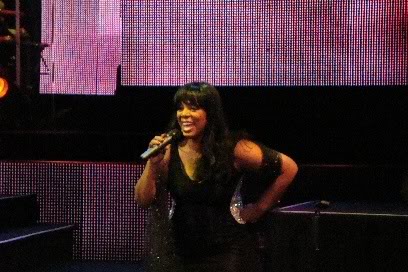
Either way, I absolutely didn't want to leave (as usual). Took a lot of pix and bought a quite a few records, or at least spent a shitload of money on them (they don't come cheap out there!). As far as the concert goes, it was pretty damn awesome! With the screens, dancers (yes, dancers, I kid you not) it was reportedly her most elaborate tour in a while, and I'm very glad I got the opportunity to see her. While there were elements of the show that seemed a little bit cheesy (those dancers as football players - please!) the Queen of Disco did not disappoint vocally or otherwise and neither did the crowd, for that matter.. I've heard of concerts or shows where people rushed the stage, danced in their seats, danced in the aisles, I have never actually witnessed such a thing until that night. Never did I think I'd see such an insane crowd at a Donna Summer concert and in Vancouver, no less, which never really struck me exactly as Disco City North, but perhaps I was wrong.. On another note, the same night James Murphy and Pat Mahoney of LCD Soundystem were doing their DJ gig as Special Disco Version at Celebrities (a local gay nightclub, apparently becoming increasingly popular among the straights), which I unfortunately missed. I was kinda bummed when I remembered, it would have made for an even better night, but oh well..
Anyway, with that, I'll refrain from writing a big long crazy review as per usual, however my friend Eric, whom I had a great meeting with after the show, pretty much summed it up in his great review @ the Donna Tribute site.. With that, I'll leave you all with a link to the pix I took during the concert..
Also, I will be putting up a new Disco Delivery post very soon, so stay tuned..
As much as I treasure my vinyl, dealing with it has been, at times, equal parts joy and frustration. Storing it, playing it properly, ripping it properly, all of it has been a real slow, gradual, trial-and-error process for me. With all the intricacies surrounding it, it's no wonder there's such a cult around the vinyl experience.
As far as my own experience goes, one of the downsides of getting my first decent stereo system some seven years ago was how it seemed to highlight all the weaknesses of the old, cheap turntable setup that I had. Every record seemed to pick up this unusual quality where the song at the start of the record would sound great. As the needle tracked inward, each song would sound progressively worse, until the song at the very end of the side would sound so harsh and muddy, it was almost unlistenable at times. I would later find out that the term for this was called "inner groove distortion." Even though different types of cartridges, tinkering with elements of your turntable setup (tonearm, alignment, tracking force etc..), along with different factors in the mastering process of each record are all factors in it's severity, it's nevertheless something that's inherent to all vinyl, in varying degrees...
Three years ago, with my cheap $5.00 Sears brand garage sale turntable on it's last legs, I had broke down (literally, I was nearly broke afterwards) and bought myself a much better turntable - a Technics SL-1600. Still an oldie, but a major improvement over my previous turntable (not the one pictured above, FYI). Along with the turntable, I purchased a new Shure M97xE cartridge, which I paid around $100 US on eBay for, thinking that would solve the inner groove distortion issue. The M97xE came highly, even universally recommended as a close second to the discontinued Shure V15VxMR, apparently the tracking granddaddy of moving magnet cartridges. Although the M97xE was an improvement, it never really solved the problem completely.
Eventually, I had just come to accept it as analogue annoyance. A chronic listening fatigue, if you will. Recently, after listening through my old Soulseek downloads, I had become discouraged hearing other user's rips of albums that I had also ripped for myself. I'd get frustrated wondering why other user's rips often had little to no distortion, where mine seemed to have tons of it. At that point, I decided to take a chance on the Audio-Technica AT440MLa cartridge based largely on a review I had come across of it's earlier model (the AT440ML). I've had it now for about a week an a half and I can't believe how much the distortion has been reduced. To my amateur ears, it seems nearly non-existent now on most of my records, many of which the old Shure cart had a hard time tracking. Let's just say that because of this, I've lost many hours of sleep from luxuriating in my vinyl these past couple of weeks... I don't think listening to my records has ever been this pleasurable, or even this much of a revelation.
At this point, I will be re-ripping the previous Disco Delivery post along with some of the others in the archives if/when I have some time. The awful distortion on my origial rips of the Cissy Houston album on the last Disco Delivery installment was one reason why I had held off a little bit before posting it.
I paid around the same price for the Audio-Technica as I did for the Shure ($100 US), so consider the AT440MLa a relatively low cost alternative for anyone out there looking for a solution.
Although there have been sporadic leaks of information about her upcoming album "Corporate Cannibal" for several years now, after some of the false-starts of the past, I wasn't going to about to get too excited until something definite showed up. To be completely honest, I've long been meaning to write something about Grace on this blog, but for me Grace is just one of those artists whom I've so admired and cherished, that I've often felt too intimidated to even start. Her voice, her sensibility and her outrageousness - that mix of charm and utter recklessness in her persona has always fascinated me.
As far the latest comeback goes, I suppose there's less and less reason now to doubt it's imminence. Having performed yesterday at London's Meltdown Festival (curated this year by Massive Attack), and with the widespeadpresscoverage and glowingreviewsthatshehasrecieved, I can only assume that this really is for real this time. She apparently performed four new songs and showed a new video for "Corporate Cannibal."
Although I've opined about Cissy Houston here before, to me, hers is one of those voices which beautifully and superbly united the worlds of disco and soul. A voice with depth, passion and power, never sliding into needless histrionics, there was also a gentleness and a genuiness there underscoring the power of her voice.. Although her own contributions have been overshadowed by the fame of her daughter, her vocals have left their mark on many a classic, having racked up a number of credits as a backup vocalist, particularly with many disco producers and disco albums of the time..
Looking past the absolutely garish, hideous cover art (which looks more like a really badly executed Christmas ad), musically, on this, her second disco record (released on Columbia in the US, EMI in the UK) and third with noted producer Michael Zager; Houston, Zager and Company pretty much pick up here where "Think It Over" (1978, Private Stock) left off. Although they seem to fine-tune and streamline their approach somewhat into a more consistent groove, especially with the disco tracks, they nevertheless stay largely within the same formula. While she doesn't attack anything with quite the same soulful vigour and drama as "Think It Over," the disco songs on the album are all especially and equally solid, building on the good points of the previous album, making what amounts to a record that's just as strong, if not even better.
Notably, the album's first side begins and ends with ballads. An interesting move, given that much of the album was loaded with disco tracks. Perhaps it was a sign of the times; an attempt, with disco's waning currency, to de-emphasize the 'disco' and give a different first impression. Certainly not the first time I've seen such a thing done.. Whether or not that was the case, somehow I suspect if the album had been released a year earlier, it would have most likely been the reverse. Whatever the circumstances though, the opening track nevertheless makes for a positive impression. A version of "Break It To Me Gently" (no relation to the Brenda Lee song, though not sure if Cissy's is the original of this one or not), later covered by Angela Bofill, it's placement at the start of the album probably takes away from some of it's effect, yet the performance itself is flawless. While the ballad-weary might find her dramatic, edge-of-tears reading to be a tad cloying; from her gentle reticence, to those desperate climaxes, Houston makes truly makes most of the moment. It seems reminiscent in some way of the approach that she took on much of her sublimely soulful 1977 self-titled record, where this song wouldn't have been out of place..
After the brief ballad intro, the album goes into disco mode with "You're The Fire," which would have perhaps been a more representative opening track. With prominent horns and bass, string embellishments; dramatic, towering vocals, even a plonky synth break, it's a trademark Michael Zager track of the time. As much as that works in it's favour, with it's endless lyrical with references to 'fire,''flames' and 'burning,' it's perhaps the most formulaic of the disco tracks on the album, with parts of the song sounding oddly similar to The Spinners' "Disco Ride" (listen to the bass and synth parts), yet another Zager production.
The following track however, "It Doesn't Only Happen At Night," one of the singles and perhaps the best remembered song off the album, would undoubtedly have to be one of the record's highlights. It's a slickly produced song, a piece of towering, infernal disco with an infectious opening bassline, swanky guitars, ornate keys, dramatic stabs of horns, strings and drums. All of it complimented with a vocal that powers through it all, unlocking the passion and release of the song's lyrics. The end of the chorus is really the killer here, with it's climax of pounding drums and blaring horns, one of those things that immediately brings to mind the the high points of her previous disco hits. Along with "You're The Fire," this song would end up peaking at a modest #24 in the Billboard Club Play charts in April 1980. The following year, Geraldine Hunt would also do a version of this song, which I haven't yet heard for myself, but which seems to be fondly remembered as well..
After ending Side One with "Just One Man," the only another ballad, the album really finds it's groove with the three disco tracks on Side Two. Opening with the title track, "Step Aside For A Lady," sporting a hooky bassline and sly guitar, it's a hot little stepper which seems as good an excuse as any for Cissy to inject a bit of bold diva attitude into the procedings. A perfect 'entrance' track, one would wonder how many drag queens would have dug this one back in the day.. Best part for me are those climactic horn stabs, a Zager trademark, at the beginning of the chorus and of course, the great break half-way through, with the bassline right up in the mix..
"What I Miss," the middle track on Side Two takes the tempo down a little bit from the other tracks, a nice respite from the other big, elaborate, string-laden disco productions that seemed to be her and Zager's calling card at the time. Cissy, who doesn't hold back with her vocals, even on this track, provides both the perfect accompaniment and balance to the groove, riding with it, yet infusing the track with enough personality and excitement to keep things from getting too plodding. With it's funkier, more laid-back bass-driven groove, this one's probably one of my personal favourites on the album..
From there, the album ends things on yet another high point with "Gonna Take The Easy Way Out," one of Zager's trademark full, rich productions - signature horn riffs and elegant strings underscored by a classy, almost Chic-esque guitar, this has to be one of her most underrated disco tracks. In fact hearing this track was what eventually convinced me to track this LP down, easily the highest point of disco drama on the album, it also has to be one of her finest vocal performances on the record, with the track's gentle buildup giving her the perfect opportunity for both vocal subtlety in the beginning and intensity, especially with those ad-libs.. Also of note on the vocals are great call-and-response interplay with the backgrounds on here, where a pre-fame Luther Vandross and his ultra smooth vocals really shine through (also notable: the wonderful, prolific Jocelyn Brown is yet another backup vocalist on the album). ".. Easy Way Out" was released on a 12", but judging from the timings listed, it seems the 12" version was pretty much identical to the LP version in this case.
Although this album, with it's unfortunate artwork and slightly awkward sequencing, is hardly flawless, the songs and the performances themselves are uniformly strong and exciting, the good points far outweigh the negative.. Even if the sound on here was a progression from her previous album; for the most part, it's still pretty much in keeping with Zager's production style at the time for acts like The Spinners, Ronnie Dyson etc... Perhaps it's both a good and a bad thing - on the one hand, the production values are excellent. However, on the other hand, by the time this album was released in 1980, Zager's richly produced, slick disco sound (not to mention disco in general) was likely considered so dated/passé by then, with all the things that had happened in the music industry, it probably wouldn't have stood much of a chance anyway. Although considering how, at the turn of the 80's, how many once vital disco acts seemed to rush out sub-par releases, either out of contractual obligation, or in an attempt to keep up with trends (or both), with this album being as strong as it is, perhaps this was still a triumph in it's own small way. Call it a victim of it's time, I guess..
Edwin Starr - Real Live #10 (1981, 20th Century Fox)
Gradually getting back to regular programming on here, I had recently picked up this 12" by one the late Edwin Starr, one of my favourite Motown soul shouters. One of Edwin's last singles, if not his very last for the 20th Century Fox label, and also the first of many one-off singles he would do throughout the 80's and 90's, mostly in the UK where he would record for/with the likes of Stock Aitken Waterman, the 1986 Paul Hardcastle-produced Disco Aid project and even Chaka Khan and the Utah Saints among others.
This single, produced by Edwin himself, is no "War" or even another "Contact," but a rather good attempt at a more early 80's post-disco boogie style. Although his explosive voice is rather contained on this one, it's a much better attempt at updating his sound than much of what was on his his last 20th Century Fox album from the previous year, "Stronger Than You Think I Am" (1980, 20th Century Fox) which overall, seemed a tad dated for 1980. By this point, it seemed Edwin hadn't been backed by a groove this funky in quite a while. For me, it's those jagged, meaty guitars that really make the groove of this record, especially in the break at around the 5.30 point where they get the mix all to themselves..
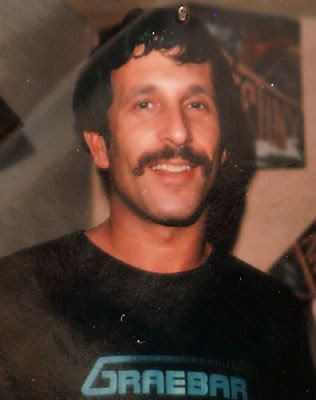
I just want to take a moment to acknowledge news of writer, DJ and all-around disco pioneer Barry Lederer's recent passing. Although I hadn't known him too well, I had briefly communicated with him via email after a nice comment he had left on one of my entries nearly a year ago. With this news, I now regret having lost touch with him since then. I remember him being friendly and surprisingly open and as far as myself, I remember being absolutely flattered that a pioneer like him, one who was as knowledgable as he was, would even be interested in talking with me.
Among other things, he was a major contributor to the disco movement as not only as a DJ, but as a writer for Billboard's "Disco Mix" column from 1976-82 and not to mention his work with the renowned Graebar Sound System, which had graced some of the greatest discos in the US. In our brief conversations, I now remember him even mentioning how he was thinking of writing a book about the disco era. While I'm not sure if that ever got off the ground, it's unfortunate that we won't have that priviledge anymore. Despite that, with the various interviews and contributions he has made to various disco websites in recent years, he nonetheless remained instrumental and generous in documenting disco music and the disco experience. Rest in peace, Barry.
UPDATE: Barry's sister recently emailed me to let me know that a tribute website has been set up at discobarry.com. There's an email address at the top of the page where one can submit their thoughts, prayers and memories, which will be published on the website.. Updates on the memorial service they will be hosting will be posted on the site as well..
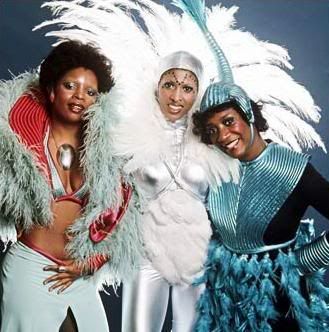
Hot off the comeback wire (I know that's what this blog has become lately, regular programming to return soon) - the return of Labelle is evidently fully official now. While this has been in the works for some time now, and even before this, the ladies have reunited on regular occasions, a new album, their first in 32 years (although the press release says 33, either their off with their math, or maybe they just thought 33 sounded better) is now in the pipeline. Set to be released on Verve Records the record is set to feature production from Gamble & Huff and Lenny Kravitz.
Although I'm still missing some of their albums, I can definitely say that together and individually Patti, Nona & Sarah released some stellar records in their careers. Their final album, "Chameleon" (1976, Epic) is an all time favourite of mine, not to mention Sarah's disco classic "Sinner Man," Nona's "Busting Out" with Material and her excellent 1983 album ("B-Boys," "Transformation" - written by Canadian rock icons Rough Trade, no less) and Patti's career goes without saying, obviously... Although I'm not sure theyll be able to fit in to them old space suits and feathered frocks and what not (well maybe Nona can), but I've no doubt the ladies can still deliver. Vocally, the three of them together are practically explosive..
Labelle Reunites on Verve Records for First Album of Original Songs in More Than Three Decades
Music's Most Revolutionary Female Trio Hits Studio With Rock Icon Lenny Kravitz and R&B Giants Gamble & Huff Producing
NEW YORK, May 27 /PRNewswire/ -- There are reunions and then there are reunions ...
Embodying one of music's most enduring one-word brand names, and boasting a genre-defying legacy that has successfully spanned three generations, our era's most influential female powerhouse is about to show a stifled music industry how to really turn it out.
Labelle is back!
Patti Labelle, Nona Hendryx, and Sarah Dash, R&B's most original and formidable trio are reuniting via Verve Records to deliver their first full-length studio album in more than 33 years.
The new recording, to be completed in June and on course for a global unveiling in the fall of 2008, is being produced by a trio of icons equally up to the task: cutting edge funk rocker Lenny Kravitz and longtime Labelle collaborators and 2008 Rock and Roll Hall Of Fame inductees, Gamble & Huff.
Transforming themselves from the classic-style 1960s girl group The Bluebelles into what one writer coined as 'the genre-bending rock supernova' of the 1970s, the innovative trio deftly combined glam rock, soul, funk, pop and gospel into a brash amalgam of breakthrough recordings such as "I Believe I've Finally Made It Home" from their pivotal second album Moonshadow (1972), and the groundbreaking "Lady Marmalade" from Nightbirds (1974)."
Labelle redefined the creative arc of the girl group, celebrating their three distinct personalities by donning outrageous costumes and addressing controversial issues in song and demeanor, shunning the cookie-cutter stereotypes that plagued most female singers of the era.
The group (which included Elton John on piano in its earliest incarnation) continually pushed gender boundaries in music of black origin, opening up for rock icons such as The Who and the Rolling Stones as they revolutionized the roles women played in R&B, rock'n'roll, and even fashion.
Often cited as a key influence for a new generation of female trailblazers such as Erykah Badu and Christina Aguilera, (the 2001 Missy Elliott-produced remake of "Lady Marmalade" featuring Aguilera, Mya, Pink and Lil' Kim snagged MTV's Video Of the Year, among other awards) the new songs crafted by Labelle also reflect the growth, wisdom and healing that exemplifies their individual storied paths after going their separate ways more than 32 years ago (though there have been several special events and live reunions since).
Braced, as always, by their trademark vocal firepower, the 2008 version of the supergroup still relies on their expansive range, show-stopping sense of theatricality, and as Nona puts it, their innate ability to "pull together as sisters and 'Labelle-ize' the music and the vibe and the spiritual side of what we do like nobody else on the planet."
Concocting an energized blend of uptempo songs and heart-wrenching ballads, the new recording includes the mesmerizing "Candlelight," the driving "System," the scorching "Superlover," and the old school/Gamble & Huff-helmed "Living Without You," resulting in an edgy but fan-pleasing album that once again finds Labelle embarking on a riveting musical narrative.
"The thread that always runs through is that we're sisters and we'll always be sisters," declares Patti. A connection between the three that may have frayed now and then over the years, but always remained unbreakable "The timing for us getting together was perfect," says Nona. "About a year and a half ago we met in the studio to record a tribute to civil rights icon Rosa Parks (the song "Dear Rosa" has yet to be released) and we just felt in our bones it was time to do this." It was Nona who tapped eclectic rocker Lenny Kravitz for initial production duty on the new disc. "We're friends and admirers of each other's work. We talked to him about the idea of us getting together and invited him to a session. He showed up that day at 5:00 and we haven't stopped working since."
Where Kravitz represents the next-generation appeal of the Labelle magic, legendary songwriters/producers Gamble & Huff were part of the Philadelphia/New Jersey nexus that helped launch the careers of the famous trio and give birth to the most popular soul sounds of the 1970s (O'Jays, Teddy Pendergrass, Harold Melvin & The Blue Notes, and others). In fact, Kenny Gamble and Patti Labelle grew up on the same street in Philadelphia, and Gamble was instrumental in helping to launch Labelle's career.
Such foundational strengths anchor the new album, eliciting the same kind of confidence that enabled Labelle to break the mold back in the 70s, with each member eventually taking flight in inspired solo careers that accentuated their respective gifts. Patti went on to sign with Gamble & Huff's Philadelphia International Records in the early '80s, releasing the seminal album I'm In Love Again that cemented her long and acclaimed solo career. Her subsequent duet with Michael McDonald, "On My Own," soared to #1 on the charts, with scores of hits and an impeccable live reputation rounding out more than two decades of acclaimed releases, television and film appearances, sold-out shows across the globe, and multiple awards, including her April 2008 Humanitarian Award presented in New York by the We Are Family Foundation chaired by Nile Rodgers.
Nona and Sarah (both hailing from Trenton, NJ) have also sustained compelling and highly successful individual careers. Sarah Dash has collaborated with such notable artists as Nile Rodgers and the Rolling Stones, (she even sang back-up on the Steel Wheels tour). Sarah also drew raves as a celebrated fixture of Keith Richards' solo outfit The Expensive Winos. She too, has written for the stage and is currently penning her autobiography, as well as staying involved in local Trenton community endeavors. Her recent appearance in San Francisco's hit interactive theatre presentation, Teatro Zinzanni, seamlessly blended her commanding performing style with European cirque, opera, and musical theatre.
Nona's songwriting and production ventures have led her to work with everyone from Dusty Springfield to the Talking Heads to Keith Richards, among dozens of other stars. A renowned tastemaker of both the rock and R&B worlds, she's contributed to the Showtime series Sleeper Cell soundtrack, working with Paul Haslinger, produced and written plays, and even launched her own label, Rhythm Bank, enjoying "sitting on the other side of the table for a change."
Labelle's long-awaited return to the studio signifies yet another chapter in the historic legacy of the group. But all three members are quick to assert it's not the final one. There will be a tour. After all, the live component of Labelle has often been cited as their most unforgettable dynamic.
"We're going to bring to the fans everything they've been asking for. We haven't lost our edge," assures Nona. "I feel we're better because of everything we've gone through," seconds Sarah. For a group whose roots indeed go all the way back to opening up for icons such as James Brown and Otis Redding, leave it to Patti to wrap it up -- true Labelle style. "I think all you gotta say is 'we're here.' We're like that caged bird. If you love it, you open the door and let it fly because you know it's going to come back stronger. Well, we're back, baby. Anyone that knows Labelle knows we don't know how to hold anything back."
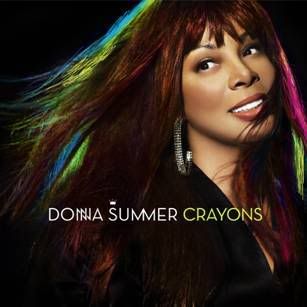
Unsurprisingly, "Crayons" has been one of my frequent listens this past week, and so far reviews have been about as mixed as the genres on the record. Admittedly, even despite my own initial skepticism, I've found a lot to love on this record. It's hard to believe that all of seventeen years have passed since the last time Donna Summer has released an original album (and about eight since her last aborted comeback). In the intervening years, her status as "Queen of Disco" and her classic recordings with Moroder & Bellotte seem to have only gained currency, so understandably expectations have been anything but modest. Despite that, "Crayons" comes across as less of an opportunity to affirm her title as the "Queen of Disco" and capitalize on the appreciation, or at least the spirit of her earlier work than it is an excuse to pick up where she had left off nearly 20 years ago and record what is possibly the most diverse, self consciously current, accessible pop records of her career. Depending on one's perspective, it's either a laudable move or a missed opportunity, and it seems almost every review out there seems to fall in either one category or the other..
In a time when the music industry seems to require veteran artists to release endless streams of standards/cover albums (the first suggestion her label brought to the table, not surprisingly), I'm not sure that there's an album out there now that manages to be so unabashedly trendy, yet so un-trendy at the same time. In my mind, she deserves a good deal of credit for bucking the trend and at nearly 60, putting out an original pop record, however out of place it may seem. While the likes of Madonna and Kylie Minogue, having perfected the impeccably timed pop singer reinvention, may be able to pull off something similar without the same sort of criticism someday; between her seventeen year absence from recording and her still strong association with the disco era, considerable vocal talent notwithstanding, one can hardly say the same for Ms. Summer.. Unlike a near decade ago when the likes of Cher and Tina Turner were putting out hit records with younger producers, in the last four or so years it seems, the thought of an aging diva staging a comeback with a pop record as polished and commercial as this one today, produced by a laundry list of current hitmaking producers feels almost like a critical death wish..
With songs like "Stamp Your Feet," seemingly tailor made for a Nike commercial, it's hook copping the Gwen Stefani/Fergie-inspired (or not so inspired) 'spelling bee' trend, to "Mr. Music", where she opens with a line about 'hooking up her iPod, shaking her body and being 'naughty, naughty', to "Crayons" (featuring Ziggy Marley) which sounds like K-os crossed with Rihanna, or even "The Queen Is Back" with it's Mary J. declarations backed with ABBA chords and hip-hop beats, parts of the album sound, to put it honestly, almost embarassing on paper. Admittedly, given all that, it would be extremely easy to completely dismiss the album altogether, if the results weren't as surprisingly and seriously enjoyable as they actually are.
Despite how they may come across on paper, the aforementioned first four tracks end up being some of the most infectious tracks on the record. The single, the Greg Kurstin produced "Stamp Your Feet" makes the perfect combination of dance-appeal and current pop-radio friendliness and "Crayons" (also produced by Kurstin), despite the surface similiarities to her less-than-stellar 1983 single "Unconditional Love," thankfully comes across infinitely better. Even the J.R. Rotem tracks - "Mr. Music" and "The Queen Is Back" with their slightly awkward combination of Donna and their urban styled production values, end up being some of the most memorably catchy tracks on the record.
Although not without it's low-points - namely the gimmicky, overproduced "Fame (The Game)" and "Slide Over Backwards" on which she adopts a southern alter ego whom she calls Hattie Mae Blanche Dubois, other album highlights include the latin styled "Driving Down Brazil," as well as Toby Gad produced "Science of Love" with it's memorable melody and impassioned vocal and lyric, which is, aside from the ones already released, perhaps the most obvious single on the album. As well, the more 'unplugged' tracks on the album, "Sand On My Feet" and the personal "Be Myself Again" and the socially conscious "Bring Down The Reign" are also notable moments, successfully bringing Donna and her voice into a setting in which she has rarely, if ever been heard. In so doing, they're perhaps the two tracks which most dramatically and clearly confirm the album's ambitions..
The first single and # 1 Billboard Dance hit "I'm A Fire" produced by Sebastian Arocha Morton emerges as another obvious highlight along with the international/US Circuit City bonus (also produced by Morton), "It's Only Love." Out of all the others, they are the only two tracks which seem to perfectly bridge the feeling of Donna Summer's classic disco recordings with today's contemporary dance/electronic aesthetics. It has to have been at least thirty years since a Donna Summer record has captured the sheer sensuality and sexiness in her voice as perfectly as "It's Only Love".
Although it's questionable whether this record will appeal to the same people who would buy a Fergie or Rihanna record, given how influential the work of Giorgio Moroder, particularly her work with him continues to be among newer generations of producers and listeners, there would likely be no shortage of younger, perhaps lesser known, but no less able and ambitious producers willing to return her to the forefront of contemporary electronic/dance music, if she so wishes to in the future. Anyone expecting as such with this album however, would probably be disappointed. Despite that, as a quality pop album and as a showcase of Summer's versatility, it's a roundly successful effort. Although her last original album was released seventeen years back, it's been even longer since Donna herself has sounded this engaged and exciting. So while this album may not singlehandedly untie her legacy from the past, she's at least proved that she's not about to be trapped by it, either. Hopefully the next album won't take another seventeen years.
As a side note, I've got my tickets to see her in Vancouver (well, Richmond actually) this coming August on her summer tour. It'll be my first time seeing her live, so I can't wait! I'll make sure I'll post a review and maybe some pix when I get back..


 This song, "Change," taken from her final album "Z-licious" (1979, LeJoint/London) seemed like something of an oddity. Written, produced and arranged by Cusseaux herself, it was, in my opinion the best track on what was otherwise a weak album, by her standards. Bringing a blistering consciousness to the dancefloor, it's perhaps not the sort of thing escapist soundtracks were made of. The fire in her delivery, the hopeful, yet critical lyrics, occasionally veering into hectoring, preachy territory (all you sinners.. won't be winners.. when the master.. comes around on judgement day.. etc..) along with the rawness of the arrangement behind it, are what seemed to make this an unusually captivating single. It's those very qualities in the lyrics and the music: the urgency, the frustration coming through with the call for change which seem to give this track a strange sort of currency and relevance today.