Showing posts with label David Rodriguez Jr.. Show all posts

Friday, February 07, 2014

Liner Notes:
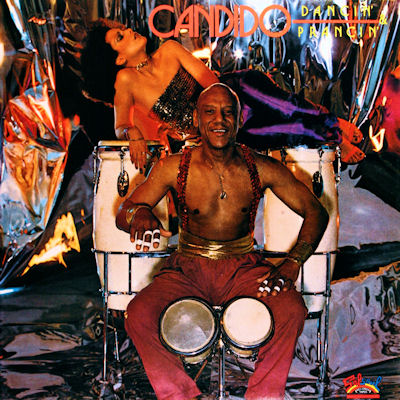
Candido - Dancin' & Prancin' (1979, Salsoul /
2012, BBR/Cherry Red)

Although this is my first post on one of my liner note projects, this actually wasn't my first liner note assignment, those would be a couple of France Joli reissues on the Gold Legion label in 2011 (more on that in a future post). My latest, for the "Patrick Adams Presents Phreek" (1978, Atlantic) album reissued on BBR was released just this week, however, I'm starting here because this is the first one that I've actually been compensated for (thank you, good people at BBR/Cherry Red!) and one that overall, despite some twists and turns along the way, that I was fairly happy with..

When this album was offered to me, I was more than willing to take the assignment, as this was one record that had been a favourite of mine, ever since hearing it some eleven years earlier. Unlike quite a few disco albums that I love, this wasn't one that I had discovered through a record store, but from an early online purchase as a teenager, and still a few years before I was able to obtain a credit card (money orders were still cheap then, as I recall). I had little idea what to expect when I bought this, aside from the fact that it was described as a CD reissue of a genuine Salsoul album (released on the Charly label in the UK), which was more than enough for me.

After listening to it, even without having a great deal of context on this album, it had struck me as one of the more intriguing disco records I had heard up until that point. I had no idea how significant Candido Camero was as a percussionist, often mentioned alongside Afro-Cuban legends like Chano Pozo and Mongo Santamaria, and how upon coming to America, he would play with just about anybody that was anybody in the jazz world. Nor did I realize how much of a staple "Jingo" had become and how often it had been covered and remixed thoughout the years. At the time, this was the first album I'd bought where it wasn't a singer, or a producer, but a percussionist that was getting top billing. As unorthodox as it may have seemed to me, this album sounded nothing like a commercial shotgun marriage that the times or the situation may have suggested, but one that actually came with a deep, even elemental disco sound that not only recalled the genre's roots, but at times ended up sounding oddly contemporary in ways that I hadn't quite expected, twenty some years after its release.


Candido - Thousand Finger Man
Uploaded by tkind1

Fast-forward eleven years later, as soon as I started researching for this essay, a few roadblocks. First, the licensors stipulated that any interviews with the artist or any persons involved with the recording had to be approved by them first; second, none was forthcoming; third: even if I did get approval, as it turned out, quite a few of the key personnel were no longer around to be interviewed anyway. These days, whether because of the squeeze on the CD market, or in spite of it, the standards for reissues are generally a fair bit higher today than they had ever been, and that's more often than not reflected in the liner essays on many of the BBR reissues in particular, where input from the principals has become if not essential, often expected. That said, time was ticking and I'd have to do without any outside quotes if I were to ever finish this. As it turned out, that was okay, since that had me trying to compensate in other ways, which, in part, had me delving into the Latin side of the Salsoul enterprise a lot more than I had expected to.

Starting with The Cayre Brothers' Caytronics label (essentially, Salsoul's parent company) where they began licensing Latin music from major labels in Latin America and Europe for release in the US, to what they did with Salsoul, one can't help but admire the Cayre Brothers and their entrepreneurial skill. At a time when major labels in the US paid little attention to the Latin market, to today, when such a thing as the Latin Grammys exist; one could say that the Cayres were one of the pioneers in seeing the potential of Latin music in America and from there in seeing the potential of Disco with Salsoul, which I'm sure, still pays handsome dividends today.

One of the major thrusts of my liner essay was that this album was ultimately one of the last to fulfill the original promise of the Salsoul label, that marriage of Salsa and Soul, of Latin music and Black music that had informed a lot of its early successes with Joe Bataan and The Salsoul Orchestra, one that was foundational to disco in America.. As it turns out, this wasn't lost on Salsoul themselves, as a June 1979 article in Billboard (basically a promo for this record) entitled "Salsoul Back to Mix of Hispanic and Black Musics" had indicated.

Going back to my third roadblock, if I had done this just over a year or two prior, I would have probably been able to talk to Woody Cunningham and Norman Durham both of Kleeer, who had both since passed away (in 2010 and 2011, respectively), and who practically, along with Candido himself, made up the core of this album's rhythm section.

Another person I'd hoped to make contact with was the album's producer Joe Cain. Writer David Carp had published a profile on Joe Cain for Descarga.com in 1999, which is easily the most comprehensive article on the man's work that I've read anywhere. And while it was over a decade old, providing that the email address still worked, I hoped he'd be able to provide a lead in case I did get permission. While I was able to contact David Carp, sadly he would inform me that Joe Cain had passed away some 8-9 years earlier, so unfortunately that too was also out of the question. As it was, Carp's article on Joe Cain provided plenty of background information that I was able to use for this.


Candido - Hands of Fire (Manos de fuego) (Documentary)
Uploaded by MVDmusicvideo
 

While Candido Camero himself is still alive and if one can believe it, still performing occasionally at the age of 92; whether or not he would have been willing to talk to me for this, I would have loved to have had the opportunity. Again, I didn't have permission, so unfortunately I'd have to go without his words also. In the absence of quotes from the man himself, I ended up turning to Ivan Acosta's 2005 documentary - "Hands of Fire" (see above) which is fully viewable online, and easily the definitive exploration of Candido's life and work out there today. Needless to say, this too proved absolutely invaluable to me.
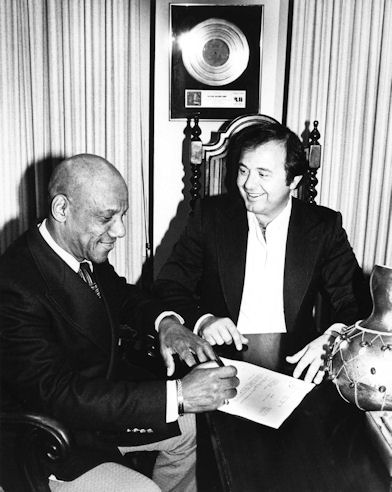
Candido with Salsoul's Ken Cayre
(photo: Doug Young, courtesy: Brian Chin)
Although people involved with the record were off limits, one person that I did end up going to was music writer/historian Brian Chin, who had written for Record World and Billboard in the past and who has also authored quite a number of liner note essays over the years. He ended up providing some key insight into the Afro-Cuban influence in disco and the brief history of remixer/DJ David Rodriguez, Jr. who did the mix for "Jingo". As well, a few months after submitting my essay, Brian took out his copy of the album, a test pressing in which he had found an accompanying press photo - a little-seen shot of Candido with Ken Cayre, taken when he signed his Salsoul contract. Brian generously sent me a scan for it to be included in the reissue. I wasn't sure whether it would make it under the wire, but thankfully it did and has been reprinted on the first page of the booklet, so massive thanks to Brian for his help and generosity here..


Corrections/Clarifications:

There were other percussionists who dabbled in Disco at the time, like Willie Bobo and Candido's old friend Mongo Santamaria, to name a couple of peers that I mentioned in the liner notes. I was perhaps stretching things when I mentioned that "no one had really placed a percussionist like Candido into a full length disco setting before," in which I meant to say that neither of those two recorded full disco albums centered around their percussion quite like this one that Candido did. Unfortunately, I had neglected to mention two other big ones who did. Although not necessarily of the same Afro-Cuban tradition, there was King Errisson and his 1977 "L.A. Bound" album with Mike Theodore and Dennis Coffey, and Ralph MacDonald, whose "Calypso Breakdown" was on the Saturday Night Fever soundtrack. I suppose one could split hairs and say that perhaps Errisson's album was centred more around him as a singer, rather than a percussionist, and that MacDonald's 1979 album "Counterpoint" wasn't entirely disco focused, but in my case, it was an omission that I should have addressed.

Also, at one point I talk about the arranger on the bulk of this album, Louis Small, who had also worked on Kleeer's records and albums by Sylvester and Inner Life. I had mentioned at one point, that he was "bringing his broad experience across both Latin and Disco fields to the proceedings." Unfortunately, I got this one somewhat backwards. This album pre-dated his work with Inner Life and Sylvester and possibly also Kleeer. Whether this album is what lead to him working on those disco projects, I wasn't able to figure out either, but this was one other thing I should have caught earlier..

Liner notes aside, as far as the music is concerned, a couple of super rare acetate versions of "Thousand Finger Man" and "Dancin and Prancin'" had surfaced just late last year. While these had been re-pressed (unofficially, of course) on vinyl, I only wish these had come out earlier, so maybe someone would have been able to find the tapes and possibly include them on this reissue. Finding tapes would have probably been a long-shot in itself, but perhaps something to flag in case of any future reissues (to add to all the others, see Competing Reissues, below).

Candi's Funk, the follow-up album:

Listening to Candido's follow-up Salsoul record, "Candi's Funk," I couldn't help but feel like that record was a major drop in quality from this album, which had me wondering if maybe that was just an album comprised of this record's throwaways. One other thing that made me wonder about that, was that on this album, three of the four tracks were arranged by Louis Small, with only one track, the last one - "Rock and Shuffle (A-Ha)" arranged by Carlos Franzetti. On "Candi's Funk," Franzetti was the arranger on all the tracks. I thought perhaps Candido and Joe Cain maybe did a series of sessions with both arrangers, with the best cuts selected for this record and the leftovers cobbled together later for "Candi's Funk." Given that I wasn't able to talk to any personnel to confirm my suspicions, I didn't bother mentioning this in the liner essay, but it remains a hunch, so am putting it out there anyway..

Competing Reissues:

I should also say that this isn't the first time this album has been reissued on CD. Aside from the Charly reissue from the mid 90s that I mentioned earlier, there was the Candido Salsoul Anthology released in 2005 back when Suss'd Records in the UK did their own Salsoul relaunch which included all the tracks from this album. Unidisc here in Canada reissued this album a few years later when they were putting out a number of Salsoul albums. Also, more recently, the Octave Lab label in Japan put out their own reissue, as part of their own Salsoul reissue program which they've been doing seemingly right alongside BBRs reissue program. I don't have the recent Japanese Octave Lab reissues, so I can't speak to its quality, but going back to what I mentioned at the beginning of the post though, it's a pretty accurate reflection of the state of disco reissues today, where there are not only a large number of albums surfacing or re-surfacing on CD, but are even given competing reissues in different territories (hence, why they aren't officially 'competing,' but with a great deal of reissue/catalogue album purchases done online, who is anyone kidding?)

Looking at and listening to this BBR reissue though, the attention to detail that they've consistently put into the presentation of their releases sets the bar pretty high among reissue labels and to my ears, this is probably the best that this album has ever sounded. So take that for what it's worth.. Either way, I'm glad to have played a small part in helping keep this record out there for everyone to enjoy.

PURCHASE:

candido - dancin' & prancin (remastered cd) (1979, salsoul / 2012, big break/cherry red)
amazon.co.uk | amazon.com | dusty groove | big break records

latin jazz u.s.a. presents: candido - hands of fire (manos de fuego) (documentary dvd)
amazon.com | descarga.com | mvd entertainment group

LINKS:
facebook: big break records
facebook: candido camero fans
discogs: candido - dancin' and prancin' lp
big break records: candido - dancin' and prancin'
google books: billboard - salsoul back to mix of hispanic and black musics (june 16, 1979)
drum! - drumming for fanatics: candido: the father of modern conga drumming (by bobby sanabria)
descarga.com - meet joe cain (by david carp) (april 29, 1999)
discogs: joe cain
discogs: louis small
discogs: carlos franzetti
soultracks: kleeer's woody cunningham dies (january 10, 2010)
discogs: woody cunningham
soultracks: kleeer bassist norman durham dies (november 4, 2011)
discogs: norman durham

CATEGORIES: LINER NOTES

Wednesday, February 21, 2007

Disco Delivery #35:
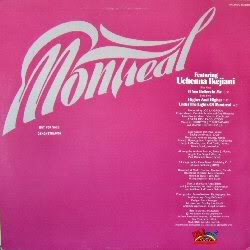
Montreal featuring Uchenna Ikejiani (1979, Salsoul)


Montreal feat. Uchenna Ikejiani - Higher And Higher
Montreal feat. Uchenna Ikejiani - If You Believe In Me
Montreal feat. Uchenna Ikejiani - Under The Lights of Montreal

As promised earlier, some Canadian disco this time around..

One of the things that Montreal is well known for, then and now, is most probably it's vibrant nightlife and cultural scene. Even after the 1970s, when Montreal was surpassed by Toronto as Canada's largest business centre, culturally speaking Montreal was and still is in a class of it's own. The sheer amount and quality of disco records that came out of Montreal in the late '70s and early 80s was one significant indication of that. I don't have a specific number, but just going by my own digging experience, the number of disco records coming out of Montreal far outnumbered anything from anywhere else in Canada.. Just a list of some of the more prolific disco producers out of Montreal: Michel Daigle and Dominic Sciscente (Black Light Orchestra, Alma Faye Brooks); Tony Green (France Joli); George Lagios and Pat Deserio (Bombers, Bob-A-Rela); George Cucuzzella and Peter Di Milo (Erotic Drum Band, Nightlife Unlimited) and of course Gino Soccio and the husband/wife team of Denis and Denyse LePage behind Lime who need no introduction.. Another one to add to the list would have to be Joe La Greca, who helmed this project. La Greca would produce (or otherwise have his hand in) some pretty significant Montreal disco, like, for example Kat Mandu's "The Break," the first Lime LP and of course, a great deal of Carol Jiani's material. La Greca's collaboration with Carol Jiani began with this album with Carol featured under her real name, Uchenna Ikejiani. Recorded in 1978, but released the following year by Salsoul, evidently this LP was her very first recording and along with MTL Express (1978, Unidisc), one of the earliest La Greca productions I've come across..

This past November, Carol did a webchat of sorts on the discomusic.com forums, which yielded some interesting and often entertaining answers (the lady loved her booze!).. According to her answers on the webchat, she met Joe LaGreca while at Montreal's Concordia University, through a studio musician they both knew. When asked about any more specific memories/details regarding the making of this album, she replied:
ALL I REMEMBER FROM THE DAYS OF MONTREAL ALBUM WAS THE AMOUNT OF WINE AND CHAMPAGNE ETCC LOVED THOSE WILD DAYS WE ARE CALMER NOW

..which gave me a little chuckle. Sounds like she was a lot of fun back then..

Anyway, it also reminded me of a story I was told by a guy I was in contact with a few years back.. Unfortunately, I've since lost contact with him, but he was apparently a good friend of Carol's back in Montreal. I probably shouldn't tell this story, but anyway, the jist of it was that the woman on the cover was not Carol, but in fact, a model called in at the last minute.. Evidently Carol was scheduled, but unable to make the photo shoot. As for why.. well, let's just say it fits into a certain pattern developing here...

As far as the album itself goes, this one has to go down as one of my favourite Joe La Greca productions. Like most of the albums he was involved with, there was a real percussion-heavy style to it with this deep, dense drum on the bottom along with this flat, crashing, cascading drum sound layered right on top.. That flat, heavy crashing drum in particular seemed to be a trademark on many La Greca productions and that generally percussion-heavy style on other Montreal disco as well (ie. Erotic Drum Band). With that, there's also a certain stripped-down efficiency to the album's sound; all the tracks are started off and and anchored by this identical, sharp, choppy hi-hat sound along with those hypnotic, supple basslines (courtesy of Serge LaMarche). Granted, while that may have been the backbone, there are also a great deal of effects on the backup vocals as well as those striking, punctuated blasts of horn and/or synth in the mix. While putting all of that together may sound slick on paper, it didn't sound quite as such on record. Perhaps the prominence of that bass and hi-hat anchor, Jiani's simple yet effective vocals, or perhaps the bits of rock guitar and unadorned piano trills give it something of an unpolished, uncomplicated, stripped-down quality. Though given that Salsoul had an interest in the album, it may have had a bigger budget attached to it than some other Montreal disco albums of the time, yet that simple, efficient, rough-around-the-edges aesthetic is still very evident on the album, which also seems typical of quite a bit of Montreal disco. While perhaps necessitated by financial limitations, it's become something of a trademark and at least in this case, a rather refreshing one. When executed as it is on this album, it's not so much a detraction, but something which manages to give the record it's own exciting and engaging quality without being overly slick and polished..

Of the three tracks on the album (yes, only three), the first track which captured me was the Side Two opener, "Higher and Higher." Opening with that hypnotic hi-hat and bass along with those light, but loopy synths, this track just had an instantly captivating quality to it. That urgent vocal combined with that relentless bass which lures you in, backed by those horns keeping you hooked and finishing the job. Before you know it, you're half-way through the track and lost in the middle of some kind of musical labryinth where things really start to get trippy (check out those crazy, high-flying vocal effects). It's not so much an ecstatic, euphoric high that this track alludes to, but a darker, wilder, more mysterious and entrancing one. It's one of those tracks which draws a fine balance between the rhythmic and the electronic, with the bass and horns commanding your attention and those key, yet understated synth parts and vocal effects creating that soaring, trance-like atmosphere..

The big draw on the album, given it's length was likely "If You Believe In Me," with all thirteen minutes covering Side One. I have to say, I love the layered, spacious mix on this track, which has more breaks than you can shake a stick at. Much like "Higher and Higher," the track is carried by that hi-hat/bass combo, although with a much greater melodic emphasis particularly with that piano in the mix giving it a slightly lighter touch. A lighter touch in the beginning at least, before descending into an extended orgy of crashing drums and percussion; mad, menacing loopy synths and that aural haze of cooing, moaning, whooping vocals in the background. The whole track, especially in the second half, also has this inescapable tension between light, ordered melodic sanity and all-out rhythmic madness, with the track continually switching back and forth between the two. Slightly chaotic perhaps, but oddly captivating nonetheless.

With that though, if there's any track on the album that exemplified rhythmic madness, it's the last track, "Under The Lights of Montreal." Completely instrumental, it's the only track on the album not featuring Carol (AKA Uchenna) in any audible capacity. Much like the other tracks, the first half of the song is tempered by an understated piano keeping things rather light and pleasant before the second half. At that point, the drums break loose and the whole thing descends into this penetrating, unyielding, almost tribal dancefloor voodoo. The shortest track on the album, but perhaps the most intense.

As far as Carol's vocal is concerned, comparing it to her later records, her relative inexperience seems evident on here. Perhaps it was her youth, or that maybe she was half-in-the-bag while recording (kidding!). Whatever the case, let's just say at this point her voice hadn't yet grown into the full, husky and gutsy instrument that it would later become. If anything though, while the fullness wasn't there, there was still that certain unpretentious gutsiness to that mananged to be completely endearing and captivating at the same time, in spite of her limitations. If anything, it was not a voice that would be (or even could be) reduced to cooing breathily in the background. I suppose in that way it sort of reminds me of Madonna's early recordings. It's often said, especially with her first album, that what Madonna lacked in range and general vocal prowess she made up for in attitude and spunkiness. I'd say the same thing for Carol's voice on this album. While she would be capable much more depth and power than this album or that my Madonna comparison would indicate, on these recordings she definitely has that distinct personality to her voice which makes up the difference.

Regardless of that, a few years after this she would have her big breakthrough with "Hit N' Run Lover." It wasn't just a breakout hit for her, but the gift that kept on giving so to speak. Not only was it remixed for it's US release, but Carol herself has re-recorded it at least twice, most recently last year in 2006.

Evidently, Jiani would later leave Montreal for the UK, where she would work with Ian Levine on a few singles as well as re-record "Hit N' Run Lover" among other things. So far, her last full-length album was "Superstar" (1996, Popular/Lime, Inc.), which I believe was a Canadian-only release and reunion of sorts with the Montreal crew. In my opinion, that album was one fabulously hyper-produced euro-fied 1990's Ni-NRG effort, which I'll admit has become one of my most cherished guilty pleasures.. These days, based in London, Jiani has been on something of a comeback trail recently, with not only the re-recording of "Hit N' Run Lover," but evidently some new recordings on the way (covers mostly). Either way, it's good to hear a diva from back in the day releasing new material. Check her Myspace to hear one of the newest versions of "Hit N' Run Lover."

As far as LaGreca is concerned, I'm not sure what he's been up to lately, but one of the last things I've seen him credited on was the Los del Mar version of the infamous "Macarena," the cash-in copycat of the Los del Rio original, which will undoubtedly be a mainstay of '90s nostalgia in years to come (God help us)..

Although Joe La Greca is credited as the primary producer on this album, the album's co-producers, Dominic Sciullo and Guy Rheaume as well as it's mixers, the late Bobby 'DJ' Guttadaro (one of the first superstar DJs) and David Rodriguez, Jr. likely deserve a good deal of credit for the record's sound as well. Interestingly, after this album one of the co-producers, Dominic Sciullo along with this album's executive producer, Vincent Ciambrone would produce a record called "Boogie People" (1979, Magnum/GRT). Although that record isn't quite as good as this (at least in my opinion), it had a slightly similar sound and feel to this album, which seems to confirm their contribution to this LP. Given also, how influential the mixing process was for many disco records, the (most likely) Salsoul-appointed mixers Guttadaro and Rodriguez were probably responsible for giving the finished product a good bit of extra polish and focus as well..

Overall though, this record to me is one of the more significant documents of the Montreal disco sound, an early pairing of one of it's biggest producers with one of it's biggest singers. Certainly one of the more interesting albums to come out of Salsoul, and in it's own right, an excellent albeit brief document of some of the eclectic disco sounds that were coming out of Montreal during this time.

So far the only track off this album to make it to CD is "Higher and Higher," which was included in the recent compilation Salsoul Presents Disco Trance and Cosmic Flavas (2006, Salsoul/Suss'd)

I should also add: that Montreal logo on the album cover is so awesome, it ought to be on a t-shirt..

LINKS:
MONTREAL FEATURING UCHENNA IKEJIANI LP @ DISCOMUSIC.COM
MONTREAL FEATURING UCHENNA IKEJIANI LP @ DISCOGS
CAROL JIANI @ MYSPACE
CAROL JIANI'S OFFICIAL SITE
CAROL JIANI @ DISCOGS
CAROL JIANI @ DISCOMUSIC.COM
CAROL JIANI WEBCHAT (NOVEMBER 2006) @ DISCOMUSIC.COM FORUMS
CAROL JIANI (AKA UCHENNA IKEJIANI) @ DISCOMUSEUM
JOE LA GRECA @ DISCOMUSIC.COM
JOE LA GRECA @ DISCOGS
BOBBY ''DJ'' GUTTADARO @ DISCOGS
BOBBY ''DJ'' GUTTADARO @ DISCOMUSEUM.COM

PURCHASE:
SALSOUL PRESENTS DISCO TRANCE AND COSMIC FLAVAS (INCLUDES ''HIGHER AND HIGHER'') | AMAZON.COM | DUSTYGROOVE.COM

PREVIOUS RELATED ENTRIES:
SUNSHINE ON MY MIND... (JANUARY 7, 2007)

CATEGORIES: DISCO DELIVERIES, CAN-CON DISCO, WHAT EVER HAPPENED TO..

Search this blog