Tuesday, April 10, 2007

Disco Delivery #39:
Penthouse Presents The Love Symphony Orchestra (1978, Talpro)


The Love Symphony Orchestra - Let's Make Love In Public Places
The Love Symphony Orchestra - Let Me Be Your Fantasy
The Love Symphony Orchestra - At The Football Stadium

I had originally come across "Let's Make Love In Public Places" some five years back, while searching for some of Alec R. Costandinos' material on WinMX (remember that?) where somehow, someone mislabeled ".. Love In Public Places" as a Costandinos track.. It was pretty obvious after hearing it, that it wasn't a Costandinos track. For one thing, the arrangments don't bear that much similarity to Costandinos' style nor was this anywhere to be found on any of his discographies. I confirmed shortly after that it wasn't one of Costandinos' projects, but from a lesser known disco project promoted by Penthouse Magazine. Anyway, after finally getting the album in the mail recently and listening to it, I just had to put this one up..

Sub-titled "pulsating disco and romantic moods for loving and dancing," I believe this was one of only a handful of albums Penthouse Magazine put out (or was associated with). I suppose if you were going to put the Penthouse brand on the cover, you might as well deliver the goods so to speak and with that sexy, quintessentially 70's vaseline-on-the-lens soft-focus cover, it certainly does on that front. Lavishly packaged in a tri-fold sleeve, the inside features a 12x24'' 'Penthouse Pet' (which one exactly, I'm not sure) plus some other soft-focused vintage porn titillations (last three links are NSFW, if you must know). If anything, the pictures and packaging certainly promise nothing less than a lavish, elegant soft-porn disco symphony (see the liner notes) and when it gets down to the grooves, it certainly doesn't break any them..

That said, despite the Penthouse branding, the bare breasts on the inside and the promises they all make, the likes of Cerrone's "Love In C Minor" and Donna Summer's "Love to Love You Baby" still manage to out-do this one in terms of sheer heaviness. For one thing, unlike those records it actually doesn't sound like anyone actually had, pretended to have, or could have had an orgasm (or simulated anything close to it) while making this record, yet it hardly matters.. The A-side "Let's Make Love In Public Places" remains one of the most deliciously sexy, escapist disco fantasies that I've ever heard. While the B-side opener "Let Me Be Your Fantasy" seems to have gotten the most attention from disco enthusiasts in recent years, for me the former is the best track on the album. Perhaps made for loving as opposed to dancing and perhaps a little less of a heavy in-the-moment romp and more of a light, playful, adventurous one; despite it's racy theme, there's a certain characteristic innocence about this record that I absolutely love.

Although producer Mitch Farber's production credits in the disco field aren't many, the All Music Guide listing him primarily as an arranger and producer in the Jazz field (largely for the defunct Muse label), he seems to have appeared as a writer and/or arranger on at least a few disco productions that I've found, usually by or alongside Warren Schatz. The Brothers' excellent Don't Stop Now (1976, RCA) LP and the Inner City Symphony "Disco Magic" (1976, Midland International) LP are at least two that I've come across so far. Although this album appears to be one of the few actual disco production credits for Farber, his production and arrangements on this record are absolutely excellent and flawless. Those elegantly swirling, soaring, gloriously melodic strings perfectly capture that certain light, dreamy feeling of playful abandon which singlehandedly elevates this record. Along with the beautifully lush, atmospheric percussion touches with those bells and chirping whistles giving it a bit of an "in the jungle" feel, the whole thing sounds captivating in the most pure and innocent sort of way. For me, it's that very quality which makes this record not only a beautiful piece of music, but an exemplary reflection of it's time. One can't help but connect this record to the common hedonistic depiction of the disco era, especially in how it so beautifully makes a naughty, forbidden pleasure sound like the most innocent, natural thing in the world. It gives a kind of harmless, joyful childlike quality to this naughty, adult urban fantasy which by itself sets this record apart, making it both a little lighter than some of it's aforementioned peers, yet in it's own way, a bit racier and sexier at the same time..

The wonderful instrumental arrangements on the track are perfectly complimented by session singer Diva Gray's vocals and her back-up chorus (which includes other well-traveled New York session singers like Gwen Guthrie, Lani Groves and Yvonne Lewis). Gray not only gives a perfect, understated vocal performance here, but an exceptional acting performance as well. Every word, every gentle daring phrase uttered so convincingly, she practically brings those cleaned-up Penthouse Forum fantasy lyrics to life.. Her effortlessly airy, expressive vocals perflectly capture the playful mischeviousness of this mythical woman daring her man to make love to her in public, to take her "in a cafe, make it on a subway.. a restaurant." With the way she gently urges you to take her on, daring you to "take your love in public places, make your love in public places," her tender voice promises sweet, extatic thrills without even actually doing so. You can almost see her knowing, assuring little wink with her gentle assurances: "am I sure? of course I'm sure.. mmm, I can make you sure, too..."

"...Love in Public Places" goes on for some 12 minutes, yet it's one of those tracks that's so richly produced, none of those minutes is wasted. Whether led by a glorious string arrangement, or a 'spiral on the bass drum' (as described on the label), there's always something in the mix to keep the listener engaged.. A little trivia in case anyone's interested: the great lyrics on this track were written by Carlotta McKee who has also written for the Petrus/Malavasi project Zinc, in 1982 as well as for Irene Cara along with another disco artist/session singer, Gordon Grody. Also, aside from Gwen Guthrie, Diva Gray etc.. a few of the other notable, prolific musicians on the record include Randy Brecker on the Fluegelhorn, Andy Newmark on drums, along with Sam Figueroa and Ray Chew (both of whom I've seen on a bunch of albums that I have) on percussion. If anything, they certainly spared no expense on high calibre musicians..

"Let Me Be Your Fantasy," which opens the flip side, pretty much continues the "love in public places" theme.. Although with the drums and hi-hats further up front (along with a bit of a shuffle), this one would probably be the more danceable of the album's tracks. Lyrics are a bit more minimal on this one, with the bulk of them consisting of: "..let me be your fantasy, tell me 'bout it baby.. let me be your fantasy, I wanna love you baby.." until the man (played by Neil Shephard, also the co-writer) comes into the story, countering the woman's adventurous fantasies with his own, more vanilla versions: "...let's make love in private, no unfamiliar places.. put on your best dress, let's party in the closet.." The whole thing then culminates with a bit of playful tension with the "...Love In Public Places" melody reprised and the two vocalists trading verses: "let's make love in public places....let's make love alone in private..." The section that follows however is probably my favourite part, with the percussion out in full force, punctuated by that deep, elastic drum sound which totally makes this one for me..

While the previous has a bit of playful tension, the final (and shortest) track, "At The Football Stadium" wraps things up with our frisky couple deciding on a locale: "it's not the game we came here for... don't care who wins just as long as we score..". Just as the main melody gets reprised, we see the man finally give in to his ladies' fantasy: ".. let's do it your way, come on be my teacher, help me shake off my inhibitions.. we're on camera, network television.. making love.. ".. Too bad it doesn't show them getting arrested for indecent exposure afterwards, but I guess that would be another album altogether.. Compared to the others, it's perhaps a bit of a throwaway track, but it manages to end things quite nicely..

Recently, I found out that the versions on the 12" release with "Let Me Be Your Fantasy" on the A-side and "Let's Make Love In Public Places" on the B-side are actually different from the album version (contrary to what I actually thought), and were specially mixed by Savarese (thanks to discomusic.com user ashley_k for this info), so that's another something for me to track down. As far as I know producer Mitch Farber wouldn't produce any other disco projects, but would release an album under his own name in 1982 called Starclimber (1982, Muse). Singer Diva Gray's credits however, largely as a backing vocalist are extensive to say the least. The All Music Guide has the most complete run-down, but I'm sure even that's not fully complete. Aside from appearing, often times along with Luther Vandross during the disco era, on albums by Chic (and others produced by Rodgers/Edwards), the Kenny Lehman disco production, Lemon (1978, Prelude) and later on records by the likes of David Bowie, Celine Dion and the Talking Heads, she can also be heard as lead vocalist on a couple of tracks ("Paradise" and "Hold Tight") on Change's awesome "Miracles" (1981, RFC/Atlantic) album.. In addition, Gray would recieve top billing on a disco album called "Hotel Paradise" (1979, Columbia) produced by the relatively obscure Luigi Ojival, billed as Diva Gray feat. Oyster, which I have yet to hear.. I'd certainly love to know of more, but so far those are the only others that I've found with Gray as a featured lead vocalist. If her extensive discography is any indication though, Gray was undoubtedly (and perhaps, still is) one of the most prolific, hard-working session vocalists out there..

Overall, what I love about this record, especially "..Love In Public Places" is it's playfulness and that innocent freedom-without-consequence brand of disco-era sexuality which makes it such a quintessentially escapist disco record.. In other words, much like "Love In C Minor," "Love To Love You.." etc.. it's truly, through and through a product of it's time; the type of record that has rarely been duplicated or imitated since. After all, it's not too often that you come across any 10-minute orchestral odes to public naughtiness these days.. In any case though, this record is undoubtedly one of the most delightfully sexy disco indulgences that I've come across...

Some trivia: Aside from this album, another disco/dance music production credit for Mitch Farber (the only other one I've found so far) is on a 12'' by Koffie, a cover of the Dreamgirls showstopper, "And I'm Telling You I'm Not Going" from 1983. I haven't heard it yet, so I can't say if it's any good or not, although it's certainly something I'll be keeping an eye out for..

In case anyone's interested, so far the only track from the album to appear on CD is the LP version of "Let Me Be Your Fantasy" on the excellent disco rarities compilation Disco Spectrum 2 (2000, BBE).

LINKS:
THE LOVE SYMPHONY ORCHESTRA @ DISCOGS
PENTHOUSE PRESENTS THE LOVE SYMPHONY ORCHESTRA LP @ DISCOGS
PENTHOUSE PRESENTS THE LOVE SYMPHONY ORCHESTRA LP @ DISCOMUSIC.COM
THE LOVE SYMPHONY ORCHESTRA - LET ME BE YOUR FANTASY/LET'S MAKE LOVE IN PUBLIC PLACES 12'' @ DISCOGS
MITCH FARBER @ ALL MUSIC GUIDE
DIVA GRAY @ DISCO MUSEUM
DIVA GRAY @ ALL MUSIC GUIDE
DIVA GRAY @ DISCOGS
PENTHOUSE MAGAZINE @ WIKIPEDIA
PENTHOUSE RECORDS

PURCHASE:

DISCO SPECTRUM 2 (2 CD)
CD UNIVERSE | AMAZON.CO.UK | AMAZON.COM

CATEGORIES: DISCO DELIVERIES

Wednesday, April 04, 2007

The return of Ultra Naté: Grime, Silk & Thunder


Okay, I know this is a bit of a detour from what I usually post (there will be more classic disco very very soon, I promise) but I have to say right now that I'm totally in love with some of Ultra Naté's latest stuff. Ever since I was turned on to her "Situation: Critical" (1998, Strictly Rhythm) album six years back, she's been one of my favourite and certainly one of the most consistently satisfying artists working in dance music today. In between now and her last album, she's given birth to a son, added 'house DJ' to her resumé and put together a new album, which is definitely one of my most anticipated releases of the year.. One of the things that I loved about her past work is how quite a bit of it beautifully referenced classic disco, often with Chic-inspired guitarwork and elegant string arrangements capturing the feel of disco in the most classy, genuine sort of way without sounding the least bit dated.. "Incredibly You" off "One Woman's Insanity" (1993, Warner Bros.), "New Kind of Medicine" off "Situation: Critical" as well as "Pretender" and "Dear John" (which featured an El Coco sample) from her last one, "Stranger Than Fiction" (2000, Strictly Rhythm) are a few that come to mind. Though judging from "Love's The Only Drug," the first single (produced by Eric Kupper, Brian Pope and Ultra herself) off her upcoming album, she'll be taking things to a whole new level on the upcoming record.. The whole electro-disco vibe, especially that jagged, robotic Moroder-esque pulse totally sold me when I first heard it, not to mention the video as well..


Ultra Naté - Love's The Only Drug
Uploaded by becstupak

Love the retro touches with the glistening soft focus shots and those multiplying effects.. Much like the track, the video makes some choice disco/retro references, yet does it in such a way that is fresh and visually stunning.. It's a long way from what was evidently the original cut of the video, which somehow reminded me of low-budget amateur porn.. Perhaps that was the aesthetic they were originally going for but either way, unlike this newer version, the original seemed totally mismatched for the track..

I also have to say, I thought that little reference in the lyrics: "you and me, high on ecstasy" was just perfect on this track..

Another track that's supposed to be on the album is "Freak On," her 2005 single with Stonebridge (who also mixed her upcoming record). This one originally appeared on his "Can't Get Enough" (2004, Hed Kandi) album and was one of a few excellent singles that came off that record. Love the glossy synths on this one..


Stonebridge (feat. Ultra Naté) - Freak On
Uploaded by goalgappa

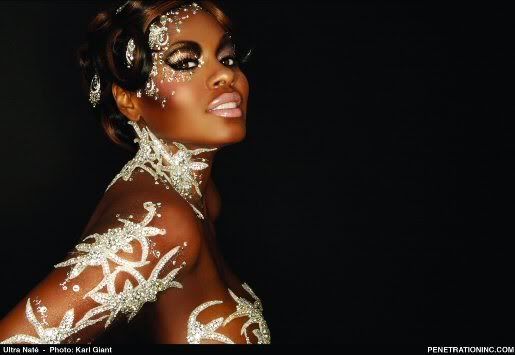
Apparently the next single, a cover of the Pointer Sisters' classic "Automatic" has already hit the clubs and is currently climbing up the Billboard dance charts (see Wikipedia).. I just found the full video on YouTube, which for the life of me, I just can't stop playing.. I must admit, I was initially skeptical of this cover version, but both the track and the video (directed by Karl Giant) totally hit the mark. Harder, bolder, and sexier than the first single, it's almost if not just as good as the Pointers' original.

Just to be on the safe side and 'cause other bloggers have posted similar warnings, this video is probably NSFW... But whatever though, it's on YouTube so it's not like you'll actually be seeing any naughty bits or anything..


Ultra Naté - Automatic
Uploaded by karlGiant

If any of these tracks are anything to go by, and if the official press release is to be believed, and I quote: "from club bangers and soulful house, to electro-boogie to pop gems and hybrid-disco," this is gonna be like a musical wet dream come true.. The upcoming album, "Grime, Silk & Thunder" is due to be released May 22nd in the US on Tommy Boy's Silver Label imprint.. Can't wait!

LINKS:
ULTRA NATÉ'S OFFICIAL SITE
ULTRA NATÉ @ MYSPACE
ULTRA NATÉ @ PENETRATION INC. (PRESS RELEASE)
ULTRA NATÉ @ DISCOGS
ULTRA NATÉ @ WIKIPEDIA
ULTRA NATÉ @ ALL MUSIC GUIDE
ULTRA NATÉ - LOVE'S THE ONLY DRUG 12'' @ DISCOGS
STONEBRIDGE vs. ULTRA NATÉ - FREAK ON (CD SINGLE) @ DISCOGS
ABOUT.COM: DANCE MUSIC/ELECTRONICA - INTERVIEW WITH ULTRA NATÉ
ULTRA NATÉ PRESENTS SUGAR

PURCHASE/PRE-ORDER:

ULTRA NATÉ - GRIME, SILK & THUNDER CD
CD UNIVERSE | AMAZON.COM


CATEGORIES: NUDISCO, VISUAL DISCO

Thursday, March 29, 2007

Disco Delivery #38:
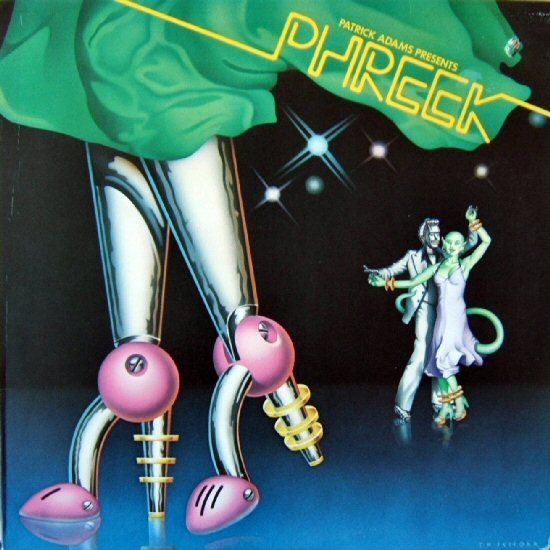
Patrick Adams Presents Phreek (1978, Atlantic)


Phreek - Weekend
Phreek - Weekend (Promo 12" Version)
Phreek - Everybody Loves A Good Thing
Phreek - May My Love Be With You
Phreek - Much Too Much
Phreek - I'm A Big Freak (R U 1 2)
Phreek - Have A Good Day

I know I'm long overdue for a Patrick Adams entry, I'm not sure why it took me this long since Patrick Adams was one of the first producers I got into when I started collecting disco.. Even before that, Musique's "In The Bush" was one of my first favourite disco records as heard on one of my parents' cheapo K-tel 8 tracks. I remember when I finally got it, I played the hell out of that first Musique album, first on LP and then on CD..

Anyway, Patrick Adams hardly needs an introduction since he is already widely recognized as one of the most brilliant and prolific producers to ever come out of disco. The word 'genius' has often been used to describe him and given his prodigious talent, prolific output, distinct sound and of course the great material that has resulted, it's no wonder why. Granted someone who was as prolific as he was (and I'm not yet even close to hearing even a significant fraction of his output), is bound to have some duds to his name, yet when he was good, he could be downright brilliant. For that alone, I'd certainly consider him a disco auteur of the highest order. Like his other top-flight disco production peers (Costandinos, Chic Organization, Norman Harris, Moroder, etc..) and contrary to the typical rockist categorization of disco, there was never anything anonymous about a Patrick Adams production. If it wasn't the intricate, propulsive percussion style or the effortlessly brilliant, airy melodic sensibility, or that dash of quintessential Patrick Adams-style super-freakiness, something about the vibe, the arrangements and the overall style always let you know exactly who was behind it.

Interestingly and somewhat ironically, his independent, experimental and rarer lo-fi efforts on the P&P labels with Peter Brown seem to be getting more attention in recent years than some of his bigger-budget, more polished efforts like this one. While his P&P material seem to be getting rather regular reissues on CD these days (see the recent "Master of the Masterpiece" CD for one example), if there is any Patrick Adams project out there that's practically crying out for a CD reissue, it's this one. In my opinion "..Phreek" is right up there with the first Musique album; although perhaps less commercial overall than the first Musique LP, this album combines everything I love about Patrick's work. Aside from putting together a bunch of his protégés, associates and regular collaborators (Christine Wiltshire, Leroy Burgess, Venus Dodson etc.. Patrick Adams and Friends, if you will) on one album, the sound on the LP combines the moogy experimental touches of some his earlier material (see Cloud One) with the polish of his later efforts (see Musique and Herbie Mann) along with his overall melodic brilliance and trademark rhythmic sensibility all in one LP..

The album starts off with "Weekend," the big single off the LP. Co-produced and co-written (along with James Calloway) and co-arranged by Leroy Burgess (who, it probably goes without saying, is quite a prolific writer and producer in his own right), "Weekend" is perhaps more of a Leroy Burgess track than anything else. That said, "Weekend" is a feisty track of celebratory independence, like "Runaway Love" with extra funk and tempo, if you will. One of the highlights of the track, aside from the great string arrangement and bass backbone is Christine Wiltshire (credited on the album as both Christie Shire and Christine Wiltshire) and her great vocal which has both a sassiness and vulnerability to it that fits this track perfectly. Wiltshire, in my estimation seems to be one of the more underrated vocalists in disco. Despite (or perhaps because of) being a rather busy session singer on projects by Patrick Adams and others (Candido, Lou Reed, Poussez to name a few), she apparently never released an album or any singles under her own name. I guess because of that there doesn't seem to be a whole lot known about her either, but according to her entry on Jahsonic (that is, if I understood it right), Wiltshire was also Patrick's partner/girlfriend at the time, which along with her obvious talent probably explains her frequent working relationship with Adams at this time.

The Promo 12" version of "Weekend" mixed by Issy Sanchez, who was behind many of the mixes in Atlantic's DSKO series of 12" promo singles, gives more prominence to the bass and vocal and some piano touches at the end. Overall though, this is one of those instances where the album version actually outshines the 12" Version. For me, the LP mix is generally tighter and packs more of a punch than the 12" mix which just as an aside, was recently put on CD on the compilation "Journey Into Paradise - The Larry Levan Story" (2006, Rhino). Burgess (without Adams) would produce another version in 1981 on Sleeping Bag Records under the guise Class Action, with Christine Wiltshire reprising her role as vocalist, adding a little extra sass to her vocals that time around. The Class Action version was a great cover, and is almost (and I really mean almost, just by a hair) as good as the original. There was also the Todd Terry version in 1988 (remixed again in 1995), which I'm not quite as fond of, but which gave this track new life all over again, cementing "Weekend" as a classic of both disco and house..

The second track "Everybody Loves A Good Thing," written by Adams and Burgess is a wonderful joyful uptempo duet between Venus Dodson and Burgess himself featuring some great syncopation and a catchy, infectious melody. Though Dodson doesn't seem nearly as polished a singer as say, Christine Wiltshire, her vocals along with Burgess have a certain charming chemistry to them. Dodson, who seems to have been something of a Patrick Adams protégé would release the awesome single "Night Rider" (1979, RFC/Warner Bros.) the following year which has got to be another one of my all time favourite Patrick Adams productions.

That said however, the last track on Side One is undeniably one of the high points of this album. "May My Love Be With You," written by Adams and Richard Weeks (of The Jammers, Weeks & Co.) has got to be one of the most sublimely sweet grooves that I've ever heard and perhaps the most memorable melody on the album. With a great spoken-word monologue vocal performed by Donna McGhee (who I'm guessing also performed those glorious vocal adlibs as well), it's probably one of the most soulfully sweet things Adams has ever put to record. With those contemplative spoken-word vocals, soaring ad-libs, chirpy synth touches and absolutely killer basslines (courtesy of Norbert Sloley who Adams used quite regularly), this track just has a certain floating, dreamy quality to it.. Though the lyrics are slightly contemplative, about a man from her past that has departed her life and the good times they had, they're hardly depressing. Her reflections are like wonderful, misty, romantic memories flowing back sending out nothing but warm thoughts and good wishes to him, wherever he is. And so it has the same effect on the listener with those ad-libs perfectly complimenting the warmth of the spoken vocals, sending out nothing but good vibes of joy, happiness and warmth. Definitely one of the best tracks on an album already full of great moments and certainly one on my personal "Best of Patrick Adams" list... As a side note: the vocalist, Donna McGhee's lone LP "Make It Last Forever" (1978, Red Greg) produced by regular Adams collaborator (and fellow hero of the disco underground) Greg Carmichael, has become highly sought-after over the years. Though it was reissued on CD recently, original copies of her LP (last time I checked) still seem to command a hefty pricetag on eBay and elsewhere.

Side Two, opening with "Much Too Much," which like "Weekend" was written by Burgess and Calloway and produced by both Adams and Burgess, is yet another high point. This track in particular, seems to have Leroy Burgess' stamp all over it. With that devastating bass right up front, that percussion ringing in the background and Burgess taking full lead vocals this time, it vaguely reminds me of Burgess' Logg project for Salsoul, albeit much more slickly produced. Given that, I guess it's no wonder why this one also sounds more like a Leroy Burgess track (an excellent one at that) than a typical Patrick Adams track.. Gotta love the catchy refrain on this one and that break as well, with the horns, bass and synth given extra exposure in there.. That said, as good as this track is, one of the biggest highlights on the album has got to be the next one..

The fifth track on the album, "I'm A Big Freak (R U 1 2)" has got to be right up there as one of the most blatantly sexy, hedonistic tracks Patrick Adams has ever done. Tapping into the same vibe that made "In The Bush" such a delicious pleasure (check that great horn arrangement) and completely outdoing himself in the process, "..Big Freak," with all the moaning, crashing whips, hard chanting, loopy synths and relentless tribal percussion is nothing less than ten minutes of throbbing sexual intensity. Later into the track the whole thing descends into some seriously mesmerizing moogy freakiness, with the whole moog/moaning interplay making it sound at certain parts like the woman was literally being pleasured by those relentlessly penetrating synths. If anything at all, certainly not your regular vanilla, between-the-sheets sort of thing, if the title didn't make that obvious enough.. On top of it all, with the backup vocalists sounding like they were having a party in the background, it makes the whole thing sound like something out of a Studio 54 VIP room orgy session.. In other words: pure unadulterated disco style sexual hedonism. Like other musical examples of that disco era hedonism and unlike what often passes for it today, there are no elaborately over-the top lyrical confessions, none of the innuendo so obvious it cancels itself out; it's all in the atmosphere. The interplay of the different elements: the whips, the moans, the freaks in the background, the atmosphere it all creates says and suggests more than any elaborate lyrical dirty-talk ever could. For me it's definitely the boldest, and certainly one of the most memorable tracks on the album.

It would be hard to top "..Big Freak," but the album manages to end on a pleasant note with the appropriately titled "Have A Good Day." Largely consisting of the lyrics: "everybody.. be happy and gay.. put a smile on.. and have a good day" and Patrick's trademark loopy synth-scapes in the background, it's a perfectly fitting 'goodbye' track for the album.

Overall the Phreek LP is, to me, one of the high points in Adams' illustrious discography, not only because it combines some of the best elements of both his early and later disco work, but manages to combine all those elements into an album that completely satisfies from start to finish. In other words, a prime example of "all killer, no filler" like quite a few great records (Herbie Mann's Super Mann, to name just one) Patrick Adams had produced in the late '70s.. Certainly one of those albums that examplifies why Adams was not only prolific but one of the more distinctive producers to come out of disco..

Aside from his disco work, Adams also played a part in hip-hop into the 80s as an engineer on albums like Eric B. & Rakim's landmark "Paid In Full" (1987, 4th and Broadway) album and Salt N' Pepa's "Hot, Cool and Vicious" (1986, Next Plateau) among others. In recent years, Adams has been one of the most forthcoming producers from the disco era. He's one of the few who gives interviews fairly regularly and who maintains an active presence on the web. His website, while somewhat primitive, is full of info from the man himself about his beginnings, the genesis of "In The Bush" and some of his own personal thoughts among other things .. Aside from that, Patrick also has a Myspace profile where he posts a regular blog and regular podcast on Podomatic as well. Out of the interviews with him that I've come across, the best ones to me are the interviews on disco-disco.com and the more recent one with In Da Mix Worldwide.. I've found his interviews to be pleasantly insightful reads, so check 'em out if you haven't already..

Just a note about the audio source, I had originally wanted to do a post on this last year, but my vinyl copy was a bit too dirty to rip properly. I recently bought another copy of this LP on eBay, which as luck would have it, also needed a good cleaning. So these rips are not mine, but ones that I've found elsewhere. Also, while the others were ripped from vinyl, the 12" version of "Weekend" was taken from a CD source. While both the both the 12" and album versions of "Weekend" as well as "Everybody Loves A Good Thing" have found their way to CD, the album still remains woefully out of print. Hopefully someone out there does a CD reissue of this in the not too distant future.. As I said earlier, if there's any Patrick Adams LP that's practically crying out for one, it's got to be this one..

LINKS:
PATRICK ADAMS PRESENTS PHREEK LP @ DISCOGS
PHREEK - WEEKEND (PROMO 12") @ DISCOGS
PHREEK - WEEKEND (PROMO 12") @ DISCOMUSIC.COM
PATRICK ADAMS @ ALL MUSIC GUIDE
PATRICK ADAMS @ DISCOGS
PHREEK @ DISCOGS
PATRICK ADAMS INTERVIEW @ DISCO-DISCO.COM
PATRICK ADAMS INTERVIEW @ IN DA MIX WORLDWIDE
PATRICK ADAMS OFFICIAL WEBSITE
PATRICK ADAMS @ MYSPACE
PATRICK ADAMS PODCAST @ PODOMATIC
PATRICK ADAMS @ JAHSONIC
LEROY BURGESS @ DISCOGS
LEROY BURGESS' OFFICIAL SITE

PURCHASE:

DISCO CONNECTION CD (INCLUDES "WEEKEND" - ALBUM VERSION)
CD UNIVERSE | AMAZON.CO.UK | AMAZON.COM | DUSTY GROOVE

DISCO CONNECTION, VOLUME II CD (INCLUDES "EVERYBODY LOVES A GOOD THING")
CD UNIVERSE | AMAZON.CO.UK | AMAZON.COM | DUSTY GROOVE

JOURNEY INTO PARADISE - THE LARRY LEVAN STORY (2 CD) (INCLUDES "WEEKEND" - PROMO 12" VERSION)
CD UNIVERSE | AMAZON.COM | AMAZON.CO.UK

THE MASTER OF THE MASTERPIECE: THE VERY BEST OF PATRICK ADAMS (2 CD) (INCLUDES "WEEKEND")
CD UNIVERSE | AMAZON.COM | AMAZON.CO.UK | DUSTY GROOVE

CATEGORIES: DISCO DELIVERIES

Wednesday, March 14, 2007

Disco Delivery #37:
Midnight Rhythm (1978, Atlantic)


Midnight Rhythm - Workin' & Slavin' (I Need Love)
Midnight Rhythm - Midnight Rhythm
Midnight Rhythm - Climb/Rushin' To Meet You

Updated 8/23/07

A couple of months ago, I received a kind email from one of the producers of Midnight Rhythm; Robby Adcock, who clarified a few of the questions I had along with some of the factual errors in the original post.

Robby also kindly offered to give me a history behind the Midnight Rhythm project, which was not only generous on his part, but also quite interesting in how far back the genesis of Midnight Rhythm went and the names and influences that went into it's production.

Anyway, I've only now gotten around to updating this entry with all of the additional information. With the wealth of information that Robby gave me, I decided to revise this from a regular 'Disco Delivery' mini-essay into both an overview and interview of sorts with producer, Robby Adcock about the record and his own background in the music business..

Major thanks to Robby for giving me the permission to reproduce his emails and for taking the time out to write down his recollections for me..

____________________________________________________

Midnight Rhythm was one of those many records which I had come by at the used record shop, practically by accident. There were no preview stations at the store, so I knew absolutely nothing about it. Nevertheless, this would be one of the most rewarding record purchases that I would make at that time. That was some four years ago now, and it's been a favourite of mine ever since..

Produced by Joe Long and Robby Adcock (who were also behind the disco version of Handel's Messiah - "Hallelujah 2000," among other things), this one-off project is an excellent slice of the darker side of disco. It sounds like the sort of thing that would have been played at a steamy leather bar, right along side a "dark disco" staple like the Skatt Bros' "Walk The Night." You can practically smell the poppers and sweat just listening to this.. Robby Adcock would later mention to me that the sound he envisioned on the record was, quite appropriately, tailored to the Midnight to 1 A.M. peak-hour crowd at the gay discos - combining a soaring, theatrical sensibility with a harder, grittier edge. Essentially, to paraphrase Adcock's own description: like "Voyage meets The Village People."

While the chain gang and commanding male chorus almost immediately set a deep, dark atmosphere; it ends up being deep and dark in the most grand, epic and climactic sort of way. I'd credit that to the beautiful and highly effective juxtaposition between the harder, deeper elements like those propulsive, hypnotizing synths, guitars, basslines and drums with the uplifting female vocals, glistening harp and piano as well as those occasional, yet essential touches of orchestral strings..

The opening track "Workin' & Slavin' (I Need Love)" is perhaps most representative of those elements. While not quite as climactic or intense as the others, it's probably the track which best displays both the heaviness and richness of the production in it's full splendour, giving just enough room in the mix for the various layers to come through.. The section right after the middle is probably my favourite with the strings, synths, bass, guitars and piano given full exposure in that sublime breakdown.. In one of his e-mails (below), Robby Adcock described how the atmospheric sound effects on this song came about:

"The 'factory' sounds on "Workin’.." were a combination of a couple of iron skillets, a length of chain and a wooden crate, and an early primitive synthesizer making the steam sound. It was all played manually one part at a time.... skillet and chains on one, steam on two, grunts on three, rest on four, etc..etc... The “factory whistle” at the beginning of the record was a toy train whistle I had and I overdubbed it several times at different tape speeds to make it sound the way it did."

The title track at the end of side one is perhaps the boldest, most effectively climactic track on the LP. "Midnight Rhythm" takes that epic juxtaposition of the previous track even further, adding a choral element and a horn section which add an extra richness to the whole thing. Those verses with the sweet vocals of Kathryn Ward and Tricia Johns along with the addition of Hodges, James and Smith (whose contributions were added later, by co-producer Joe Long) acting as a counterpoint to the gruff male vocals just after the beginning is one of the best examples: "Takes so long, but it's worth the wait (midnight.. rhythm..)" with the two parts escalating right after one another into a brief, yet epic trance driven by what sounds like a layered piano and deep, heavy synths. That section is simply a teaser however for the other two climax points, one right in the middle leading into a bright, uplifting melodic chorus; the other right at the end. The final climax at the very end is, quite fittingly, the ultimate buildup with the ladies leading into that tense, escalating wall of sound, building and building until it abruptly peaks, dropping off into a soft, heavenly choral sound. That ending for me, is pure bliss..

The last track, "Climb/Rushing To Meet You" covering all of side two, takes the epic grandiosity of side one to new heights and lengths, or at least attempts to in any case. At some fifteen minutes in length, it tends to wear a little thin before the end. That said, first half picks up where side one left off, escalating and propulsive, juxtaposing the gruff chanting with the sweet, elevating female vocals (once again courtesy of Kathryn Ward, Tricia Johns along with Hodges, James and Smith), although with a greater melodic emphasis this time, especially on the "Rushing To Meet You" section. "Rushing To Meet You" is perhaps the closest thing to a conventional disco track on this album, with the female vocals in full display effectively adding to that melodic element. The track only wears thin once the male vocals come in again later on, attempting perhaps to bring a little focus to the extended instrumental section. Overall, in this case, one of those times where a shorter version may have been more effective. While side two for the most part, doesn't have the tight consistency of side one, nonetheless, it still has it's worthwhile moments..

Though the theme and sound of the record is firmly entrenched in the late 70's, the genesis of this project however goes back to the early 70's. Robby Adcock explains the story of Midnight Rhythm, from the very beginning, with his first association with co-producer Joe Long:

"...Where to start? Joe Long (Joseph William Long aka Joseph W. Long) was the owner of a little 8-track studio in Tarzana called Fat Chance Recording. In late 1971, I dropped over there on a tip from steel guitar player Al Perkins, to see about a recording engineer job he told me was available. I met Joe Long and his sidekick Andrea Krusoe. The very first recording session I did there was with Freddy Cannon ("Palisades Park," "Tallahassee Lassie," etc.) and a guy named Harry Garfield who later became a big-time A&R guy at Capitol Records.

Probably within 6 months, two things of significance happened. A huge bombastic guy named Oliver Walrus (aka Gary Levine) who had a band named after him came through the door of the studio looking to be recorded. About the same time, another group called C. M. Lord came rolling through the door. Oliver Walrus and his guitar player, Robert Franklin, were both fairly prolific songwriters and outstanding performers. In fact, the whole band was outstanding and were a hardworking club band all over the greater L.A. area. C.M. Lord named after lead singer and writer Cathy Mitchell Lord, was also a formidable local band. Most notable was keyboardist and writer Stephen J. Hines or Steve Hines as he was known.

I was enlisted by Joe Long to record and develop both of those groups into recording acts using Fat Chance as a springboard for the careers of all concerned. The studio was a very popular place mostly because of the price, but also because of the unique sound of the room. It had very little modern equipment, but the room was the draw. Many “big-timers” from the Hollywood music scene of the early 1970s came to record or overdub there. They would then take their tapes to a state-of-the-art studio in Hollywood and do their final mixes.

I did the music part and Joe Long did the “business” part. I wasn’t very savvy about the business in those days and was very trusting. Needless to say my trust was misplaced.

At any rate, Oliver Walrus and crew ended up with a one shot contract on Janus Records and their first (and only) album was entitled “Walrus”. I have a copy somewhere, but right now I can’t tell you the album number. Fighting between band members and some funny business stuff with Joe Long blew the whole thing apart. I haven’t listened to it in over 30 years, but I know there were some hits on the record that never saw the light of day. The record company also didn’t have a clue how to choose singles even though they had huge success with Z.Z. Top, and others, at the time. (stay with me because there’s method in my long-winded story)

C.M. Lord also ended up with a singles deal on London/Hi Records. I believe the first and only single was “Your Love is Like The Morning Sun” written by Al Green. Cathy Mitchell Lord was a great writer but none of her songs saw the light of day. (Tommy's note: Years later, in 1981, Cathy Mitchell Lord would eventually release an album, "Flashback" (1981, Montage) using the name C.M. Lord, which would later be reissued on CD by the disco reissue label Hot Productions)

Walrus and C.M. Lord were happening right at the beginning of the underground disco scene that had come over from Europe and was making inroads into gay clubs on both coasts by 1972 or ‘73.

Gary Levine (Oliver Walrus) had written some songs I recorded in the beginning with his group that were great performance songs but had little or no value as commercial radio singles at that time. They were too long and didn’t seem right for the radio play of the day. I don’t remember when it was (probably in 1977), but an idea popped into my head about two of his songs, “Workin’ and Slavin’" and “I’ve Got So Much Soul.” I started thinking that if the two were juxtaposed musically and texturally, so to speak, they might make an interesting disco record. The Village People had already hit the scene with their male dominated group vocal sound, and another favorite of mine, Voyage, had a first single/album out with soaring white female-sounding vocals that really appealed to me. Voyage was very theatrical and descriptive. My idea was part Village People, part Voyage, but with the male part much grittier. The idea was to juxtapose the gritty, sweaty laboring men in the “Workin’ and Slavin’.." part with the sweet, clear beckoning white girls on “I’ve Got So Much Soul” part. It was geared for the Midnight to 1 AM peak at mainstream gay discos. This was all before Saturday Night Fever introduced it to straight clubs.

Let me go back to Steve Hines. Steve became a most integral part of the whole process. Another musician named Randy Mitchell (guitar player), who I believe still plays live with Donna Summer, formed the core rhythm section with Steve on almost every record. Mitchell did all guitar parts and Steve played all keyboards and helped arrange most all the records we did. He and Joe Long and I wrote the two songs for “Love at First Bite” ("Dancin’ Through The Night" and "Fly By Night") although Joe left my name off of one of them.

Anyway, “Workin’ and Slavin’” prompted a whole album, “Midnight Rhythm,” and I turned to Gary Levine songs again. “Climb, Climb, Climb” which had appeared on “Walrus” was chosen as well as C.M. Lord’s “Rushing to Meet You.” Another choice was Steve Hines’ instrumental “Beans” which was reworked and renamed “Midnight Rhythm.” These songs were chosen mostly because Joe Long had wrangled the publishing rights earlier to Levine’s and Lord’s songs. This had been a main cause of friction between the artists and Joe when they later realized the value of their intellectual property that they had signed over to a less-than-upright music biz character. This is, of course, an old, old story.

All of the “Midnight Rhythm” songs were recorded at a little studio in Culver City, California (just up the street from MGM Movie Studios) called Golden Age (formerly Golden Avatar). It was owned by a Hari Krishna guy named Carl Lange or Krishnakanti as he preferred. It was a totally cool little place designed by Jeff Cooper and apparently funded by the Krishnas, although Carl was the actual owner. Carl did most of the engineering of the recording. I backed him up from time to time.

The players included Hines and Mitchell. I can’t even remember who played bass and drums on the basic track as they were replaced later on to improve the sound of the kick drum and snare as well as the performance of the bass. (I seem to remember playing the bass drum with my hand and a beater. There was not much “midi” in those days and we didn’t record with time code or any syncing devices). The singers
included Hines, Mitchell, Long, and me on the “Workin’ and Slavin’ part, and Kathryn Ward, Tricia Johns, and Charlie Merriam on “So Much Soul”... Charlie Merriam also wrote and conducted the string arrangements for the whole album.

The Hodges, James, & Smith stuff was added after the fact. Joe Long took the finished tapes, without any consultation, to New York, added a different bass player (Jimmy Williams) and had Richie Rivera do the mix.

I am going to stop at this point about Midnight Rhythm. There is one other person who never received much credit for his contribution to Midnight Rhythm. That person’s name is Robert (“Bob”) Small. He was chiefly responsible for "Workin’ and Slavin’ " getting signed at Atlantic. He was pretty much marginalized by Joe Long after it was all over..

Robert "Bob" Small, as Robby would later tell me was an ad executive who had notably come up with the slogan for Playtex's "Cross Your Heart Bra." On the back cover, Small was prominently credited for the conception of Midnight Rhythm. Small was also credited as a producer on the 12'' of "Workin' and Slavin" (though not on the LP). Small would later apparently go on to be a director of music videos as well as one of the co-creators of MTV's "Unplugged"..

Richie Rivera, who is co-credited (along with Joe Long) for the mix on the album (with Richie's 'trademark': "Midnight Mix by Richie Rivera" on the back cover) was apparently one of the more well-known DJs/disco mixers at the time. That said, his output is perhaps one of the more underrepresented out there today. While his most famous mix would easily be the 12" of Anita Ward's "Ring My Bell," I'm especially fond of his mixes on Asha Puthli's L'indiana (1979, Dash/TK) LP (which I hope to put up here very soon) and for the Jürgen S. Korduletsch production, Gaz (1978, Salsoul). Some of his other mixes include Liquid Gold's hit "My Baby's Baby," (which he co-mixed with none other than Joe Long) as well as others for the likes of Voggue, Erotic Drum Band, Bob-A-Rela (highly sought after, apparently) and Melba Moore. Like many disco mixers, Rivera started out as a DJ in places such as the Sandpiper on Fire Island and other venues before making bringing his expertise to the studio as a mixer, like many other DJs in the late '70s.. Judging from the precious few mentions of him on the internet, evidently and unfortunately Rivera has since passed away. Aside from that not a whole lot seems to be known about Rivera. DJ's Portal does however have a small picture of him, right beside a request for more info. With the movement these days towards cataloguing and recording the works of some of the disco era's DJ pioneers (see recent compilations of Tom Moulton, Walter Gibbons and Larry Levan's work), perhaps Rivera might be one of the next.

In regards to Joe Long and Richie Rivera's final mixes in New York, I later asked Robby about his opinion on their mixes and what elements he was happy or unhappy with. Evidently we agree on the rather overwrought results on side two..

I thought the mix on "Workin' and Slavin'" was the best. The track was kept simple so the parts stood out pretty well. I really liked what bass player Jimmy Williams did with his overdubbed part. I thought whatever he did was totally appropriate and brought a great feel to the track. I thought Richie's mix and edit on "Workin'.." was very good. I expect at that time Joe was intimidated by Ritchie and the whole NY gay music biz scene and he was all caught up in his insecurities, etc., so it sounded like he just let Richie do his thing without interfering or giving much input. I remember at the time I thought the mixes of "Climb..." and "Midnight..." were not up to what they should have been.

These tracks were recorded after the Atlantic deal was made based on "Workin' and Slavin'." When I listened to them again recently, I realized the same thing. There were so many musical parts that weren't brought out that would have made those cuts stronger. Those cuts also had more "junk" added by Joe Long in New York that muddied up the track and made it less musical. The edits were also too long and the whole thing, especially "Climb..." became too grandiose. There was always this thing with Joe Long about "adding" something else to the track. It seemed like in his brain a song was never finished, and he would want to keep adding the next “great idea” until it was just a big mush of sound without any focus. He would then insist on having all the parts "up front" which is impossible sonically, but he would keep pushing faders up and knocking the mix out of balance. The modest success of "Workin' and Slavin'" must have boosted his sense of grandiosity and he let it all loose on "Climb.." and "Midnight..". There were some really musical and melodious parts that were overshadowed by his attempts to always keep trying to make everything intense. Nothing ever subtle. I remember feeling disappointed then and I felt the same way recently. It's too bad. What was pretty good could have been bordering on great if it had been kept more simple. I always suspected drugs played a part in all of that. That was always a point of contention.

It would have been interesting to hear the difference in mixes and see the difference in sales if Richie Rivera would have been able to just mix and edit the tracks without help from Mr. Long. It's all theory. The same thing happened with "Hallelujah.." Steve Hines, Charlie Merriam and I recorded the whole thing ourselves in LA with C.M. Lord doing the “Christmas Story” middle part. It's another tale I won't go into here, but the final product was also a disappointment compared to what it could have been.

That said, one of Robby's more positive memories of his Midnight Rhythm experience is when the record broke at New York's legendary 12 West, particularly witnessing the dancefloor reaction and hearing the record over the club's renowned Graebar sound system:

12 West was one of the "break out" clubs for new records and often set the standard for new releases, etc. "Workin' and Slavin'" was broken there and I was there for that. I remember seeing Ahmet Ertegun and Clive Davis sitting there in their suits while hundreds of gay guys without shirts sweated and danced. Their Graebar Sound System was the smoothest, clearest, most "hi-fi" system I had ever heard in a club. It was like listening to the best studio monitors in the best mix room. It was totally loud and totally clear.

Aside from the "Halleljuah 2000" single, as Robby mentioned above, Long and Adcock would also produce the soundtrack for the 1979 film "Love At First Bite." The soundtrack was released on the Casablanca subsidiary label, Parachute Records. It would be the last thing Long and Adcock would do together. Evidently, as Robby hinted above, the partnership would not end well; the result of what has become an unfortunate, but all too common music business story.

He apparently spent so much of Parachute Records’ money, by the time it was all said and done, that it pretty much became their demise. What he was good at was taking other people’s work and putting his hands on it, then taking credit. He has a long, long history of that.... I parted company with Joe Long after the “Love at First Bite” songs were finished and submitted for the film. I had had more than enough of him and being cheated out of money and credit. My name was most noticeably omitted as producer when the record came out. It was not a good record, although it could have been. It was even more grandiose than “Climb/Rushing to Meet You” if that’s possible. It took me a long time to finally understand what was going on and to break through my naivety. It was a hard lesson to learn.

A 12" of "Fly By Night" would be released from the soundtrack album, which featured Pat Hodges (one of the ladies of Hodges, James and Smith) on vocals.

In 1979, Long would go on to produce a disco version of the Christmas carol "O Holy Night" (1979, Pronto) as The Joe Long Sound featuring, once again, Pat Hodges along with well renowned session singer Clydie King on vocals. Some twenty years later in the 90's, Joe Long would work with Pat Hodges once again and produce another 12", a remake of one of the C.M. Lord/Midnight Rhythm tracks - "Rushin' To Meet You" (1999, Raw Nerve) which I haven't heard yet, but am certainly curious to. In addition to these, Long also produced, for and along with Edwin Starr a little known 1980 remake of one of Edwin's classic hits - "Twenty Five Miles" for 20th Century Fox Records as well as a little known 12" on Salsoul entitled "Megatron Woman" (a companion to Patrick Cowley's "Megatron Man" by any chance?) under the guise of Native Love ..

As far Robby Adcock's individual credits were concerned, they were a little convoluted to me at first. Initially I had thought Robby Adcock and the cellist on this record Robert L. Adcock were one in the same. However, Robby Adcock later confirmed to me that this was not true, but he and Robert L., however, were regular collaborators:
I must say, I am not nor have I ever been "Robert L. Adcock" or most of the other names you tagged me with. I actually used to request that string contractors call Robert Adcock, the cello player, to be on orchestral sessions I was producing (in L.A.). I would then kid him about us being cousins throughout the session. When I was in Nashville, there were a couple of Adcocks who played on sessions. One was a banjo player and the other a violinist with the Nashville Symphony. The main name switch has been done by others before I had enough understanding to ask for proofs of things before they were released. Because of that ignorance on my part, my name was often misspelled "Robbie" Adcock. A few times it was listed as "Robert" Adcock. I don't remember it ever being "Bob" but it might have been. Who knows!? The music business was a screwy place. I am sure little has changed with the people in it.

After the disco era, Adcock would relocate to Nashville where he would continue his work as a producer for acts like Riders in The Sky, for whom he'd produce a couple of albums and Clint Eastwood protégé, Jill Hollier. On the disco side of things, Yuki Takahashi (thanks for the comment!) of the Disco45 blog also mentioned another single he had produced - "Monday Mona Lisa Club" for the Japanese duo Pink Lady (apparently big stars in Japan at the time, but in the US probably best remembered in the annals of camp obscurity for their ill-fated NBC variety show "Pink Lady.. and Jeff"). Along with Pink Lady, Robby would evidently produce another Japanese artist named Jun Sugisawa around the same time. Robby briefly explains how the Japanese projects came along:

After I split from him (Joe Long), I started getting lots of offers to work from many sources. The Pink Lady stuff was one of those things. Paul Drew (major AM Radio legend) had signed them for management in the States and his office called to ask if I would record some “Disco” tracks with them. Their label in Japan also asked me to cut a disco single with Jun Sugisawa. “The Boy Next Door” was one side and the other was a Japanese song (I am sure they published) whose title I cannot recall. It was actually the ‘A’ side of the single. Pink Lady’s ‘A’ side was “Mona Lisa...” It was all recorded at Golden Avatar. My long time engineering mentor Bart Chiate did the recording. We mixed it at the Record Plant in L.A. The late Angelo Solar of “Backstreet” in Atlanta did the disco mix. Charlie Merriam did the orchestral arrangements, and he, Kathryn Ward and Trisha Johns did the background vocals. We ate lots and lots of Sushi and had a wonderful time.

Just before the disco crash of 1979, Adcock was also in the process of working on some other disco projects for Motown, one for two of the key session personnel on Midnight Rhythm: Charlie Merriam and Kathryn Ward as Merriam & Ward, as well as another for which Carl Bean (he of the excellent, classic gay disco anthem "I Was Born This Way") would cut a vocal. Unfortunately, due to the disco crash of that year and the resulting industry turmoil, neither of those projects would see the light..

After disco and his time in Nashville, Adcock would retire from the music business in the late 1980's and would earned his masters degree in clinical social work. Today he currently teaches and runs his own practice in Miami, Florida.

Overall, Midnight Rhythm, regardless of it's relative obscurity today, is nothing less than a grand, epic and excellent hard-driving disco production. If nothing else, in my estimation, one of the more unique disco albums I've come across; combining the complexity and polish of an orchestral disco masterwork, along with a darker, heavier element to the sound which brings it into a different class altogether. Certainly one album that I recommend picking up if you ever come across it..

Once again, special thanks to Robby Adcock for his generous contributions

SUBSEQUENT RELATED LINKS:
MIDNIGHT RHYTHM REDUX (THURSDAY AUGUST 23, 2007)

LINKS:
MIDNIGHT RHYTHM LP @ DISCOMUSIC.COM
MIDNIGHT RHYTHM LP @ DISCOGS
MIDNIGHT RHYTHM - WORKIN' & SLAVIN'/I NEED LOVE 12'' @ DISCOMUSIC.COM
MIDNIGHT RHYTHM - WORKIN' & SLAVIN'/I NEED LOVE 12'' @ DISCOGS
MIDNIGHT RHYTHM - CLIMB/RUSHIN' TO MEET YOU 12'' @ DISCOMUSIC.COM
ROBBY ADCOCK @ DISCOGS
JOE LONG @ DISCOGS
ROBBY ADCOCK @ ALL MUSIC GUIDE
RICHIE RIVERA @ DISCOGS

CATEGORIES: DISCO DELIVERIES, INTERVIEWS

Thursday, March 08, 2007

The Supremes - Mary, Scherrie & Susaye (reprise)


Just took down the files on the "anniversary" post.. And as promised now, a repost of the very first Disco Delivery entry..

As I said on the original post, "Mary, Scherrie & Susaye" is quite honestly one of my favourite albums ever, of all time.. If anything, certainly one of the most underrated, overlooked albums ever released by Motown or The Supremes. Last month, after listening to the album again, I took a look at the old entry and it just felt so incomplete, it was practically crying out for something more... Given that it's one of my favourite albums I felt a little justice was in order and that it deserved to be just as verbose and long-winded as all the others.. So with that I edited some things, added some extra description, put back some details that I took out in subsequent edits at the time...

Needless to say, the entry is more to my satisfaction now. Though I figure since I did all that, I might as well repost the music in case some of you missed out the first time around.. So just for the repost, I've added another track - "Sweet Dream Machine" which I didn't put on the original entry.. Not the most discofied track on the album, but definitely not one to be missed.. If you liked the dark disco-funk of "Come Into My Life," or the joyous abandon of "Let Yourself Go" or any of the other great tracks on the album, don't sleep on this one..

Anyway, without further ado, here it is:

Disco Delivery #1: The Supremes - Mary, Scherrie & Susaye (1976, Motown)

And in case you end up craving more.. Here, courtesy of the Supremes 70's Blog (many more great videos there!) and YouTube are some Supremes video treats from a rare, early music video project that the ladies did:


The Supremes - You're My Driving Wheel
Uploaded by ivyfield


The Supremes - Let Yourself Go
Uploaded by gmcclo1974

I have to say, as much as I love seeing these ladies on video doing their thing to usher in the video age, some of the choreography on "You're My Driving Wheel" is pretty darn hilarious: the "driving wheel," those robot moves, what were they thinking!? Put that together with a pregnant Mary and her giant, awkward maternity sequins, the relatively primitive video concept and it's all just a little rough around the edges... That said, they do manage to get it together quite beautifully on "Let Yourself Go." Either way though, seeing this lineup in action is a rare, fabulous and charming visual treat.. Someone put the 70s Supremes on DVD already, dammit!

PREVIOUS RELATED ENTRIES:
ONE YEAR, ONE MONTH AND ELEVEN DAYS OF DISCO DELIVERY.. (FEBRUARY 21, 2007)
DISCO DELIVERY #1: THE SUPREMES - MARY, SCHERRIE & SUSAYE (1976, MOTOWN) (JANUARY 10, 2006)

CATEGORIES: RE-DELIVERIES, VISUAL DISCO

Tuesday, March 06, 2007

Don't deny yourself, just come inside..


Bonnie Oliver - Come Inside My Love (Vocal) (1979, LeJoint/London)
Bonnie Oliver - Come Inside My Love (Instrumental) (1979, LeJoint/London)

Bonnie Oliver - Come Inside My Love (Vocal - pitched down)
Bonnie Oliver - Come Inside My Love (Instrumental - pitched down)

That's the invitation on this awesome record from '79, which I picked up on 12" some four years ago now.. I wasn't even really looking for 12" singles at the time (I felt albums were a bigger bang for my buck back then), but this still remains one of my favourite finds so far..

I personally can't get enough of the desperately dark, seductive feel on this record. That feel is evident right from the beginning when those congas, handclaps and supple, galloping bass come in and cut right to the chase. Coming in right after are the real big hooks on the record: that glistening, spacey synthesizer along with that intense interplay between the strings and horns. That call/response interplay between those last two elements are probably the biggest parts of the record which they work to great effect on here, gradually escalating their power and intensity as the record progresses. Towards the end, their combined sound practically bounces out of the mix like a swift, sonic kick in the rear.. Put all that together with those trippy synthesized sound effects shooting and sliding all over background (which are even more prominent on the instrumental), the penetrating call of those backup vocals and of course Bonnie's vocals right over top phasing in and out of the mix, stretched and echoed all over the place, singing out her seduction in that understated, yet powerful style.. The result is a compelling mix of something sexy and just a little bit sinister... Deep, dark and delicious in other words (just the way I like it)..

Another one of the things which fascinated me about this record were the bits of mystery which (quite appropriately) surround it.. For the most part, not a whole lot seems to be known about this record or some of the people involved in it. The singer Bonnie Oliver doesn't seem to have too many traceable credits on the 'net, although she is listed as a backup vocalist on The Originals' "Come Away With Me" (1979, Fantasy) LP, which I have here, so I'll assume that she might have been primarily a session singer.. As far as the producer, Wiley Hicks goes, not much seems to be known about him either, but judging from the listings on Discogs he seems to have a smattering of credits on some fairly obscure projects, namely: this one, Ednah Holt's first single for West End and a 12" by an act called Holt '45. Not sure if he is the same Wiley Hicks behind all these country line dancing videos, but it would be rather interesting if he was..

On the other hand, Tom Savarese, the man who mixed this record was one of the most well-known and prolific DJs and mixers in the disco scene at the time. Some of his biggest mixes include Chic's debut, "Dance, Dance, Dance," Macho's "I'm A Man," and "Love Disco Style" by the Erotic Drum Band to name a few.. Given those credits, the powerful, hard-hitting style of this mix (right up there with his mixes of Chic and Macho, in my opinion) seems to have his stamp all over it.. In addition to his mixing credits, he was awarded by Billboard Magazine a couple of times on account of his DJ skills and was also a key player in the establishment of the Disconet service. DJ's Portal has a much more complete run-down of his history and accomplishments than I could give here, along with some quotes from Tom Savarese himself, so check out that link sometime...

Along with Savarese, the other notable name on the record is it's writer, Lonnie Johnson, who would estabish the Scorpgemi label. On Scorpgemi, Johnson along with disco auteur extraordinaire Patrick Adams would be behind the 1982 Shades of Love classic "Keep In Touch (Body To Body)," featuring Meli'sa Morgan on vocals in what is probably her earliest outing. Additionally, not sure whether it came before or after this one, Johnson also produced a version of "Come Inside My Love" (which I haven't heard yet) in 1979, under the Shades of Love banner featuring another up-and-comer, Lisa Fischer on vocals.

As much as I think this is a great record, "Come Inside.." was probably not the type of record that would have topped any charts. Nevertheless, it's one exemplary piece of the deeper, darker, underground side of disco which is ripe for rediscovery..

Just in case some of you are wondering about the pitched-down versions.. I decided to put those up, since believe it or not, that was the way I had originally discovered the record. My cheap turntable at the time was so beat down it would play records a touch too slow.. After I finally realized that and heard the record at the proper speed, I personally thought the pitched down version (very slightly, I might add) brought out the intensity of this track a lot better.. So thanks to the pitch control on my newer (though still old, but much better) turntable, both are up here in case anyone else out there agrees..

LINKS:
BONNIE OLIVER - COME INSIDE MY LOVE 12'' @ DISCOMUSIC.COM
BONNIE OLIVER - COME INSIDE MY LOVE 12'' @ DISCOGS
WILEY HICKS @ DISCOGS
LONNIE JOHNSON @ DISCOGS
TOM SAVARESE @ DJ'S PORTAL
TOM SAVARESE @ DISCOGS
SHADES OF LOVE @ DISCOGS


CATEGORIES: MINI DELIVERIES

Search this blog