Showing posts with label Warner Bros.. Show all posts

Wednesday, March 18, 2009

You got it, I got it..


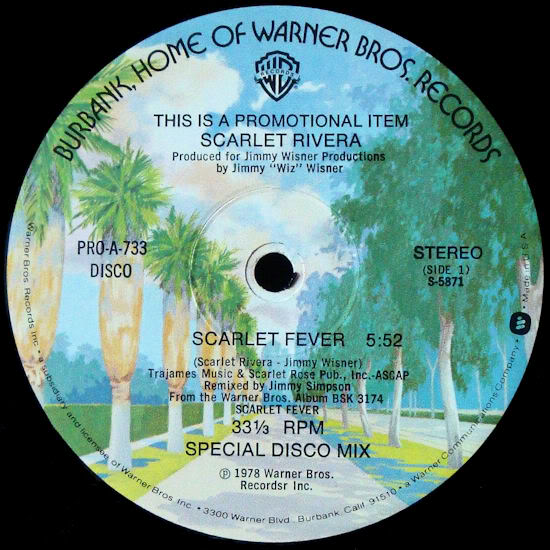
Since picking this up a few years back, this little obscure disco one-off from violinist Scarlet Rivera has become a real favourite of mine. From what I've gathered Rivera had come to prominence after playing on Bob Dylan's 1976 "Desire" album and the accompanying Rolling Thunder Revue. Shortly thereafter Rivera would release a couple of albums of her own for Warner Bros., this track being the lead off of her second LP of the same name.

Produced by Jimmy Wisner, who had a hit of his own in 1961 with "Asia Minor," a rock and roll adaptation of Grieg's "Piano Concerto in A Minor" released under the alias Kokomo; as a producer and arranger, Wisner go on to would work on records by the likes of Nina Simone, Miriam Makeba, Tamiko Jones, Herbie Mann and Carly Simon among others..

A clever play on her name mixed by the prolific Jimmy Simpson, the extended version on the A-side makes an indelible first impression. Opening with a heavy, bumping beat and an infectious bassline, the soft whispery vocals highlighting the minimal and memorable (albeit in that charmingly trite, infectious way) chorus, along with Rivera's delicate, soaring violin at the top of the mix end up making this one swirling, sexy slice of disco. Although her "Scarlet Fever" LP has since been reissued on CD, this promo only 12'' mix wasn't included on the reissue and hasn't (as far as I know) made it to CD/digital..

Listen: Scarlet Rivera - Scarlet Fever (Promo 12'' Version) (1978, Warner Bros.)
Listen: Scarlet Rivera - Scarlet Fever (Edit) (1978, Warner Bros.)


Although with disco tracks, it's usually 'the longer, the better,' the shorter version on the B-side is also worth a listen. Jimmy Simpson isn't credited on that mix, but the vocals at the top of the track, along with the extended string crescendos end up making the most of the nearly three and a half minute edit on the flipside.

In a 2003 interview with the Bob Dylan fanzine Freewheelin', when asked about 'doing disco,' Rivera had distanced herself from this track, without actually mentioning it by name, saying in no uncertain terms that she hates the song and was pushed into doing it:

Q: You have done Disco music?
A: No, on my very first record my producer pushed me into doing a song like that and I hate the song. I don’t like the record now! He took advantage of me and I have learned from that. I now know who that artist is!

Rivera's feelings notwithstanding, from a disco point of view, I think "Scarlet Fever" holds up pretty well. In retrospect, "Scarlet Fever" can probably be categorized alongside disco efforts of noted instrumentalists like Herbie Mann and Candido. Although a one-off as opposed to the full-length disco efforts of Candido and Mann, this track, at least in my estimation, did a good job of incorporating her string stylings into a nice ephemeral piece of disco fever..

PREVIOUS RELATED ENTRIES:
DISCO DELIVERY #52: STAINLESS STEAL - CAN-CAN (1978, WARNER BROS.) (TUESDAY FEBRUARY 5, 2008)
DISCO DELIVERY #43: WARDELL PIPER (1979, MIDSONG INTERNATIONAL) (MONDAY AUGUST 27, 2007)

LINKS:
DISCOMUSIC.COM - SCARLET RIVERA - SCARLET FEVER 12''
WIKIPEDIA: SCARLET RIVERA
WIKIPEDIA: JIMMY WISNER
DISCOGS: JIMMY WISNER
ALL MUSIC GUIDE: SCARLET RIVERA - SCARLET FEVER LP (REVIEW)
DISCOGS: JIMMY SIMPSON
FREEWHEELIN' (TAKE 13): INTERVIEW WITH SCARLET RIVERA (BY MASATO KIRO)

CATEGORIES: MINI DELIVERIES

Saturday, April 12, 2008

Disco Delivery #54:
Willie Hutch - Midnight Dancer (1979, Whitfield/Warner Bros.)


Willie Hutch - Disco Thang
Willie Hutch - Midnight Dancer
Willie Hutch - Kelly Green
Willie Hutch - Never Let You Be Without Love
Willie Hutch - Everyday Love
Willie Hutch - Deep In Your Love
Willie Hutch - Everybody Needs Money
Willie Hutch - Down Here On Disco Street

A gifted songwriter, guitar player and a great singer as well, the late Willie Hutch was, in my opinion, one of the greatest talents at post-Detroit Motown. Not counting all the albums he has released, songs he had written and produced; his classic scores for blaxploitation flicks like "The Mack" and "Foxy Brown" have, alone, ensured his legacy with old and new generations alike. Much like Norman Whitfield, albeit without the same sort of grandiose style, Willie Hutch's work had a gritty elegance that seemed to stand out in the Motown pack.. Combining blistering funk, with a wonderful melodic sensibility and a warm, passionate, soulful touch, his style was unmistakable.

I had first discovered Willie Hutch some seven years back, while skipping class one Friday afternoon. Heading straight for the HMV, I'd picked up a cheap VHS copy of "Foxy Brown," just for the hell of it.. Between Pam Grier, Willie's soundtrack, the pimps, prostitutes, drug pushers, gratuitous titillation and clumsy fight scenes, I don't think I could have asked for a better introduction to the wierd, wonderful world of Blaxploitation. Having loved not only the movie but Willie Hutch's awesome score, I had gone from there and picked up a copy of "The Very Best of Willie Hutch" (1998, Motown) shortly after. Between the Foxy Brown Theme and his brilliant covers of "Stormy Weather" and "The Way We Were," along with hard hitters like "In & Out," I'd become a fan from then on..

Although certainly not among the first names that comes to mind when one thinks of disco, one would be hard-pressed to argue with the influence of danceable funk like "Slick," "Brothers Gonna Work It Out," and "Get Ready For The Get Down" on the genre. Although like many of his contemporaries, he'd seem to have a harder time getting noticed during the disco era, he nonetheless continued to make some strong records during this time. After his last LP for Motown, "Havin' A House Party" (1977, Motown), he'd make the jump to super-producer and former Motown colleague, Norman Whitfield's own Warner-affiliated Whitfield label for a couple of albums. His first album for Whitfield "In Tune" (1978, Whitfield), was produced largely by both Whitfield and Hutch, apparently being the first of Hutch's LPs to credit an outside producer. Although he hadn't garnered any big hits on Whitfield, I'd consider the two albums for the label to be excellent records. Contrary to what I had expected, this particular album, "Midnight Dancer," his second and final for Whitfield was written and produced entirely by Hutch himself. I'm not sure if it's the only Whitfield LP release to not have Norman involved as producer in some capacity, but it has to be one of the few.

Despite some of the disco overtures in the artwork and songs, the material on this record actually seems closer to his righteously soulful, well established style than the previous album for Whitfield. For me though, the first two tracks are probably the most sonically stunning. "Disco Thang" with it's opening combination of strutting bass riding the top along with Wah-Wah Watson's lush guitar work and swelling strings (arranged by Gene Page) makes a perfect opener. Rooted in funk, driven by a heavy, greasy bassline and a stunning horn arrangement; it's probably the anthesis of the main disco trend of the time of higher energy and higher tempos, but whatever it's disco credentials, it's a nice six minute piece of luxurious dancable funk..

The title tune and second track, "Midnight Dancer," one of my favourites on the album, definitely takes the cake for sheer sonic awesomeness.. If it weren't for the credits, I would have sworn Norman Whitfield had a major hand in this. While Norman's name is largely absent from the official credits (aside from a general thank you for 'creative input'), Willie definitely seemed to take a few cues from Whitfield's style, especially with those killer, space-trippin' sci-fi synth stabs (used to great effect when paired with those swirling, swelling strings).

Although Hutch also seemed to try a little of Whitfield's 'mama said, papa said' storytelling style in the lyrics, for all of his talents, he just didn't seem to have quite the same knack for it (at least if this song is any indication). For example, around the four minute mark, ostensibly, we're led to believe this is a song about a young man who "learns all about groove that he can" and grows up to become the "Midnight Dancer," spreading his "boogie, boogie" all over the land. Then the break comes in, which is awesome by the way - synth-stabs front and centre; lyrically speaking however, it all falls apart when our Midnight Dancer decides to go into funk preacher mode:

"In the beginning, the Creator gave song and dance, he gave the heart, the horn and the drums.."

"And the thundering of the drums motivated the spirits of all men women and children"

So far, so good.

"And now with song, we bring you the drums of the midnight dancer, to release the energy of your soul."

Which evidently translates as..

"and I mean Dance! Dance! Dance!"

And if anyone didn't get that:

"and I mean.... SHAKE YOUR DONKEY!!!"

I've never heard anyone tell me or anyone else to shake their 'donkey' before, much less make it a clarion call. Anyway, I suppose that's one donkey that has long since rode off the lexicon..

If the title track was lyrically awkward, he more than redeems himself however with three of the tracks which lie at the heart of this album. "Kelly Green," "Never Let You Be Without Love" at the end of Side One and "Deep In Your Love" on Side Two are three songs which have some of the most genuine, heartfelt lyrics and performances on the album. While those averse to love ballads might remain unmoved, the lyrics of these songs (which thankfully avoid much of the maudlin cliche's of the genre) epitomize the sort of uncompromising poetic, sentimental beauty that I've always associated with some of the finest classic R&B balladry. With wonderful melodies, genuine and unpretentious lyrics sung soulfully and passionately, all the while complimented with Gene Page's arrangements and Wah-Wah Watson's unmistakably luxurious guitar work, these songs have to be among some of Willie Hutch's most underrated work.

Towards the end of the album, things go back into more uptempo material, first with "Everybody Needs Money," a little piece of funkdified social commentary. To quote one verse: "...some say that money's the root of all evil, but I.. disagree with that..," he later goes on to lament the price of gas, rising cost of living etc... My, how times have changed..

The album closer, "Down Here On Disco Street" quite appropriately makes the most bold overture to disco on the album. Opening with a deep, delicious bass, much like the title implies, as a funky disco ode to the escapism of the disco scene, it carries on with a nice groove that goes full circle with the album opener.

One of Willie Hutch's lesser known albums, "Midnight Dancer" probably doesn't top some of his Motown work, particularly excellent albums like "Mark Of The Beast" (1974, Motown) or any of his soundtracks for example, but it nevertheless remains a solid, enjoyable album in it's own right. While it's not typical of the straight-ahead, higher energy disco that was popular in 1979, nor of much of the disco that I've covered here in the past, it nonetheless stands up well, both as a solid, enjoyable album as well as an example of the more funk oriented disco that probably didn't get as much attention in the genre's waning years.

After his stint at Whitfield, Hutch would go on to write one of Gwen McCrae's most enduring dance hits, "Keep The Fire Burning." Around the same time in 1982, he would also have his biggest club hit with "In & Out", a single which gave him a second coming of sorts at Motown, where he would end producing for acts like The Four Tops, Junior Walker and Carrie McDowell (see "Uh Uh, No No Casual Sex"). Although he wasn't quite as prolific the second time around, he would contribute a couple of songs to "Berry Gordy's The Last Dragon" as well as release one last album for the label "Making A Game Out Of Love" (1985, Motown). Sadly, Hutch passed away at the age of 60 in September 2005, he had continued making and releasing new music right up until his later years, his last album being "Sexalicious" (GGIT) in 2002, released on his own independent label.. From The Jackson 5's "I'll Be There" and "Brothers Gonna Work It Out" to later hits like Gwen McCrae's "Keep The Fire Burning," and his own "In & Out" and "The Glow" he had undoubtedly left behind a stunning, enduring musical legacy.

In 1998, evidently to promote his then recently released best-of CD, The Dallas Observer did an excellent article on him, entitled "He'll Be There," which is thankfully still available online in it's entirety. Well worth reading for a look into the man's life and music. Shortly before his death, he also recorded an interview along with some live performances which have been put on to a DVD entitled "The Willie Hutch Story," released by the Expansion label in the UK, which I'm certainly curious to see ..

LINKS:
WILLIE HUTCH - MIDNIGHT DANCER LP @ DISCOGS
WILLIE HUTCH - MIDNIGHT DANCER LP @ DISCOMUSIC.COM
WILLIE HUTCH @ ALL MUSIC GUIDE
SOULWALKING - WILLIE HUTCH PAGE
THE GUARDIAN - OBITUARY: WILLIE HUTCH (BY GARTH CARTWRIGHT) (TUESDAY OCTOBER 4, 2005)
EURWEB - WE REMEMBER SOUL SINGER WILLIE HUTCH (SEPTEMBER 21, 2005)
THE DALLAS OBSERVER - HE'LL BE THERE (BY ROBERT WILONSKY) (OCTOBER 29, 1998)

CATEGORIES: DISCO DELIVERIES, IN MEMORIAM..

Tuesday, February 05, 2008

Disco Delivery #52:
Stainless Steal - Can-Can (1978, Warner Bros.)


Stainless Steal - More Than Meets The Eye
Stainless Steal - Messing With You (Is Like Messing With The Devil)
Stainless Steal - It All Comes Down To Love
Stainless Steal - Can-Can

These days, Giorgio Moroder's well deserved reputation as an innovator and pioneer in disco and in electronic music has become quite firmly established (and well-explored on a few of my previous entries). However, the contributions of his frequent right-hand man/ co-producer, (particularly with their material for Donna Summer and Roberta Kelly), Pete Bellotte seems to have been somewhat overlooked in comparison. With so much of the focus being on Moroder's innovations, often times on the albums where they're both credited as producers, it's not always clear where one's contributions ended and the other's began..

In listening to some of Bellotte's productions outside of his partnership with Moroder, the easy way to describe Bellotte's style (in relation to the Moroder/Bellotte productions) would probably be to envision a heightened emphasis on the rhythm section. While that's obviously an oversimplification, in comparison to a lot of the Moroder or Moroder/Bellotte records, the synthesized element, while still prominent, rarely seemed to go beyond sweetening or colouring on most of Bellotte's productions.. More specifically though, Bellotte's productions seemed to have a distinct emphasis and style particularly on the guitars and horns, which is especially evident on this album and is perhaps Bellotte's most obvious stylistic stamp.

Comparing the output of Moroder & Bellotte individually, I'd say Moroder's own productions were generally much more consistent and distinctive, not to mention more prolific than Bellotte's. I'd give him that distinction even just for the excellent Suzi Lane and Battlestar Galactica records he did. Bellotte's output, on the other hand, while not without it's high points, was obviously less so. Case in point, Elton John's "Victim Of Love" (1979, MCA) album, evidently Bellotte's most prominent effort as a solo producer, it would give him the dubious distinction of having produced what is likely the most discredited effort of Elton John's career. It's a record that's been so widely maligned by fans and critics alike that even the artist himself has since disowned it. Then again, to be fair, Giorgio also gave us The Sylvers' lamentable effort (or non-effort as it were) "Disco Fever" (1979, Casablanca), so I suppose it goes without saying that Moroder certainly had his share as well...

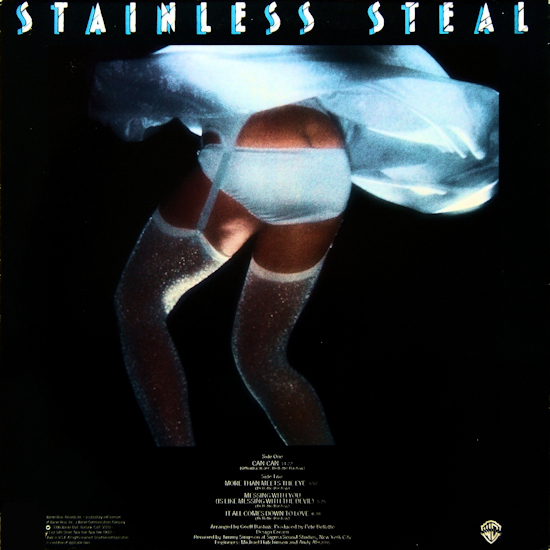
Anyway, point is - duds aside, Bellotte still managed to deliver some rather underrated work in his own right. This album in particular, evidently one of his lesser known productions has some of my favourite work of his. Produced of course by Bellotte, arranged by frequent collaborator Geoff Bastow, I'd assume some of the usual Munich Machine suspects (Keith Forsey, Gary Unwin, Thor Baldursson etc.. ) also had a hand in this, but with the back cover giving out no musican credits and little else aside from bum of an anonymous model, there's really no telling for sure.. The one name that does stand out in the brief credits is Jimmy Simpson, who mixed the entire album and is also likely responsible for a good deal of it's excellence as well. Prolific as Simpson was, this is seems to be the first (and so far the only) time I've seen his name attached to anything associated with Moroder or Bellotte or any of their circle of collaborators.

Taking up all of side one, the main attraction on the record seems to have been the bombastic 14 minute disco version of the Can-Can (AKA Jacques Offenbach's "Galop Infernal"). Straight out of the "do a disco version of anything and it'll sell" school of thought, as an idea, it's as derivative as it gets.. With it being a classical piece associated with dancing, I suppose someone would have done it eventually.. That said, as much as something like this isn't really supposed to be any good, it's redeemed quite wonderfully by some great arrangements and improvisation, which keep things exciting and engaging. Certainly no small feat with 14 minutes at one's disposal. The sections at the 3 minute and the 11 minute marks are especially nice, with the arrangements at both points putting an unmistakable 'Munich Machine' stamp on things. In some ways this reminds me somewhat of the disco remake of Handel's Messiah, AKA "Hallelujah 2000" by Hallelujah 2000, particularly at the start and the finish, so fans of that might enjoy this one as well. Granted, this track's perhaps a bit too twee and bombastic to sway any disco cynics, and while I wouldn't exactly consider it a highly inspired moment myself, it definitely comes across much better than one might expect it to..

For me though the best part of the record would have to be the three tracks on side two - all written by Bellotte & Bastow. All three are similar in their feel and tempo and are fairly minimal in their lyrics, largely consisting of the repetition of the title verse (or variaton of it) by an anonymous vocal chorus. Instrumentally speaking though, I find these to be some of the best examples of Bellotte's own sound and style. Sublime, yet lively and even whimsical at times, the distinctive synth sweetening, somewhat lighter than those on a Moroder production, along with the prominence of those signature guitar riffs (which I'm guessing are courtesy of either arranger Geoff Bastow or Mats Björklund) and horns are all over these tracks.

As far as the tracks themselves go, "More Than Meets The Eye" is the wordiest (which isn't really saying much) and perhaps the strongest of the three.. Opening with a simple, funky guitar line easing into a sublime string arrangement; with those signature guitar riffs and shooting synth stabs, it manages to makes an strong impression without the bombast of the A-side. The following track, "Messing With You (Is Like Messing With The Devil)" is probably the most synth heavy, opening with a great loopy, whimsical synth, with the delicate string arrangements pretty much taking over from there. However, the sexy, blissful break in the middle of the track, laden with strings and a sly bassline is definitely one of the highlights on here, definitely my favourite part of the track. The last selection on the album, "It All Comes Down To Love," a fun little track with it's unmistakable strut and warm keys which probably make it the most identifiable with the established Munich disco sound that he and Moroder as well as the likes of Kunze/Levay had pioneered. It has to be said here as well, that the sensual break, with the wispery vocals and lush instrumentation are to die for.

For me, one of the things that I notice about the side two tracks are how spacious and, in a way, less frantic than say, the A-side and some of Belotte's other, more well-known productions like Trax's "Watch Out For The Boogie Man!" Marsha Hunt's "The Other Side Of Midnight," and Melba Moore's "Burn" to name a few of the ones I've heard so far. Perhaps that is where Jimmy Simpson's involvement may have come in... Overall though, while all three tracks seemed to rely on repeated lyrics and hooky riffs to some degree, these three tracks are mixed and arranged well enough that there's enough interesting musical variation in them to balance out the repetition (the wonderful string-laden instrumental section in the middle of "Messing With You" to name one good example).

While this is likely the most anonymous out of all the albums Pete Bellotte produced, not to mention one which seemed to come and go without a trace (perhaps even moreso than usual), this has definitely become one of my favourite Bellotte solo productions.. When I had stumbled across this album a little while back, it honestly wasn't one that I had especially high hopes for, especially given how anonymous and unknown it was (in spite of it's well-known producer). At best, I was hoping for at least something worthwhile - one track, even. At the very least, after listening to the album I would have been able to say that I'd heard all fourteen minutes of a disco version of the Can-Can and lived to tell it... Nevertheless, all that aside, this little album pretty much exceeded my initial expectations. The fact that it was a production from a recognizable which I hadn't heard or heard of before proved to be an added bonus. I guess the most rewarding finds are often the most unexpected.

Just a little side note: While Bellotte seems to have kept a rather low profile, the BBC caught up with him for a brief update/interview in 2004 just around the time he was inducted (with Giorgio Moroder and Donna Summer) into the Dance Music Hall Of Fame (which seems to be up in the air, as of this writing). The article: "In Tune With Britain's Disco King" is the most recent interview that I've found with him so far...

PREVIOUS RELATED ENTRIES:
BBC RADIO 2: CLASSIC SINGLES - I FEEL LOVE (SATURDAY DECEMBER 30, 2007)
DISCO DELIVERY #43: WARDELL PIPER (1979, MIDSONG INTERNATIONAL) (MONDAY AUGUST 27, 2007)
DISCO DELIVERY #40: MUNICH MACHINE - A WHITER SHADE OF PALE (1978, CASABLANCA) (SUNDAY APRIL 29, 2007)
DISCO DELIVERY #14: SUZI LANE - OOH LA LA (1979, ELEKTRA) (SATURDAY APRIL 8, 2006)
DISCO DELIVERY #5: GIORGIO MORODER - FROM HERE TO ETERNITY (1977, OASIS/CASABLANCA) (FRIDAY FEBRUARY 3, 2006)

LINKS:
STAINLESS STEAL - CAN-CAN LP @ DISCOGS
PETE BELLOTTE @ DISCOGS
PETE BELLOTTE @ ALL MUSIC GUIDE
BBC NEWS: IN TUNE WITH BRITAIN'S DISCO KING (BY TOM BISHOP) (WEDNESDAY SEPTEMBER 29, 2004)

CATEGORIES: DISCO DELIVERIES, WHAT EVER HAPPENED TO..

Friday, March 31, 2006

Disco Delivery #13:
Move your body all around..

I decided to do something a little different this week.. Instead of posting about a particular album, I just decided to post a bunch of songs that I'm digging at the moment..


Madleen Kane - Rough Diamond

Madleen Kane - Let's Make Love (1978, Warner Bros.) | LINK TWO

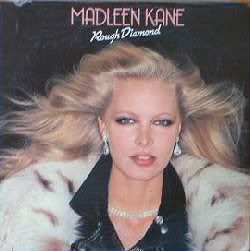
This one is from Madleen Kane's first album "Rough Diamond" (1978, Warner Bros.). A former model from Sweden, she would be a fixture in the disco/club scene right into the mid '80s. The production team of Michaële, Paul and Lana Sebastian produced this song as well as the entirety of her first two albums, which included some of her biggest hits like "Rough Diamond" and "Forbidden Love." She would later work with Giorgio Moroder and UK Producer Ian Anthony Stephens, yet none of them would really capture her as well as the Sebastians did. With their full, classy, and (at times) almost orchestral production they managed to capture a certain willowy charm and sexiness in what seemed to be an otherwise limited voice (just see her album with Giorgio Moroder)..

This song wasn't a single as far as I know, but is just a great example of that certain pure, carefree sexiness that many disco records captured so well.. Check out that light wah-wah guitar (I believe that's what it is) chugging along in the background..


AKB - Stand Up, Sit Down 12''

AKB - Stand Up, Sit Down (1978, RSO) | LINK TWO

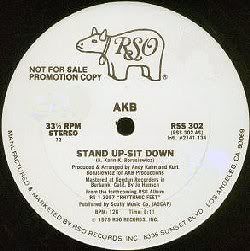
A great piece of piano-driven disco from the production team of Andy Kahn and Kurt Borusiewicz, who were best known for producing Karen Young's big disco hit "Hot Shot" (1978, West End). Hot off the heels of their hit with Karen Young, they put together this studio group, named AKB after their combined initials. AKB would put out only one album called "Rhythmic Feet" (1979, RSO) on which this song is included. Not much in terms of lyrics and vocals, which basically consist of "..stand up, sit down, you gotta move your body all around.." But it's got a great backing, with a hot drum pattern, handclaps and those great piano riffs.
LINKS:
AKB @ DISCOMUSEUM.COM


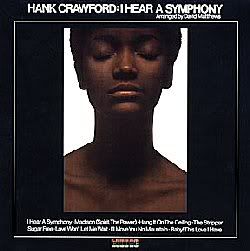
Hank Crawford - I Hear A Symphony

Hank Crawford - I Hear A Symphony (1975, Kudu) | LINK TWO

Noted Saxophone player Hank Crawford dipped his toes into disco territory early on with this cover of the 1965 Supremes hit. Such an exquisite blend of soul, funk and a bit of smooth jazz into what was then the emerging disco sound.. Interesting fact: Patti Austin is the main vocalist on this song, which also made the disco charts for some 9 weeks in 1976.
LINKS:
HANK CRAWFORD - I HEAR A SYMPHONY LP (REVIEW) @ ALLMUSIC.COM


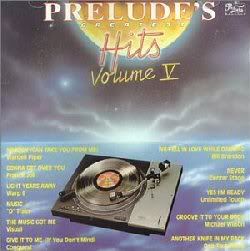
Prelude's Greatest Hits, Vol. 5

Wardell Piper - Nobody (Can Take You From Me) (1984, Prelude) | LINK TWO

Fast forwarding into the early/mid '80s for a bit of that post-disco, pre-house electro-funk sound.. Earlier on, Wardell had released a dynamite disco album in 1979, which yielded a couple of minor dancefloor hits. Into the early 80s she continued to release singles sporadically. One of those being this one for the once-mighty Prelude label; one of the leading independent disco labels of the time. By 1984 they weren't pumping out as many singles or hits as they once did and would close two years later in 1986, this also being among the last singles they would release. This song, produced by the relatively unknown James Batton, was later included on a CD called "Prelude's Greatest Hits, Vol. 5, yet I don't even think it charted on any of the Billboard charts. Still, this song just has a really great groove with it's sharp, minimalist synth-driven production and Wardell's smooth, controlled vocal. To me this song is just cool as ice..


CATEGORIES: DISCO DELIVERIES

Search this blog